Bentonville Bridge
An existing pedestrian bridge in Bentonville had one job: get people from one side to the other. For the people crossing it every day, SkB Architects saw an opportunity to make that short trip more comfortable and memorable.
New weather protection, lighting, color, and materials change the experience along the length of the bridge while working with the structure already in place. The improvements provide greater protection from sun and rain, make the crossing easier to navigate, and give a piece of everyday infrastructure a more considered presence within the campus.
Bentonville, AK
Pedestrian Bridge Renovation
Transportation / Infrastructure
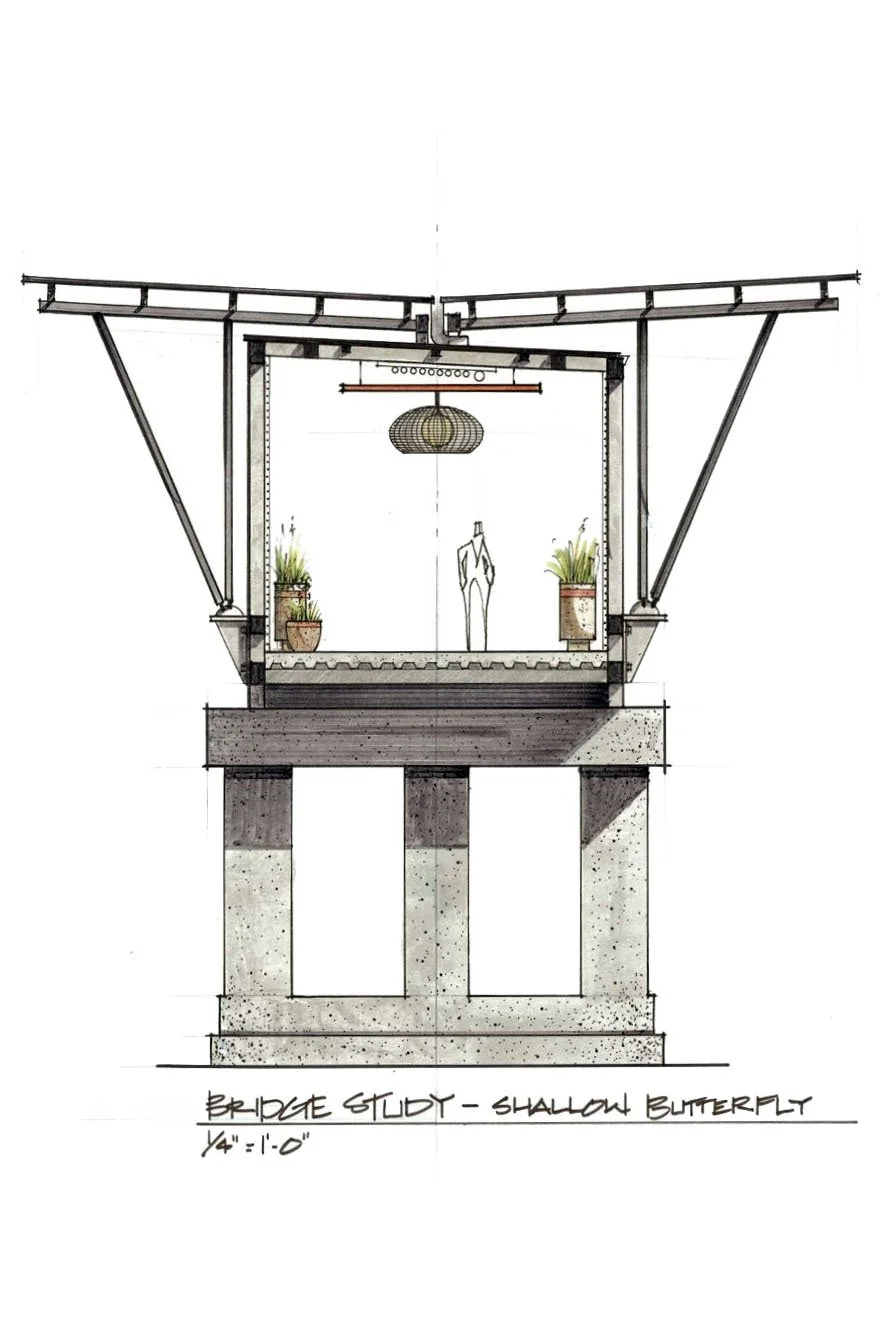
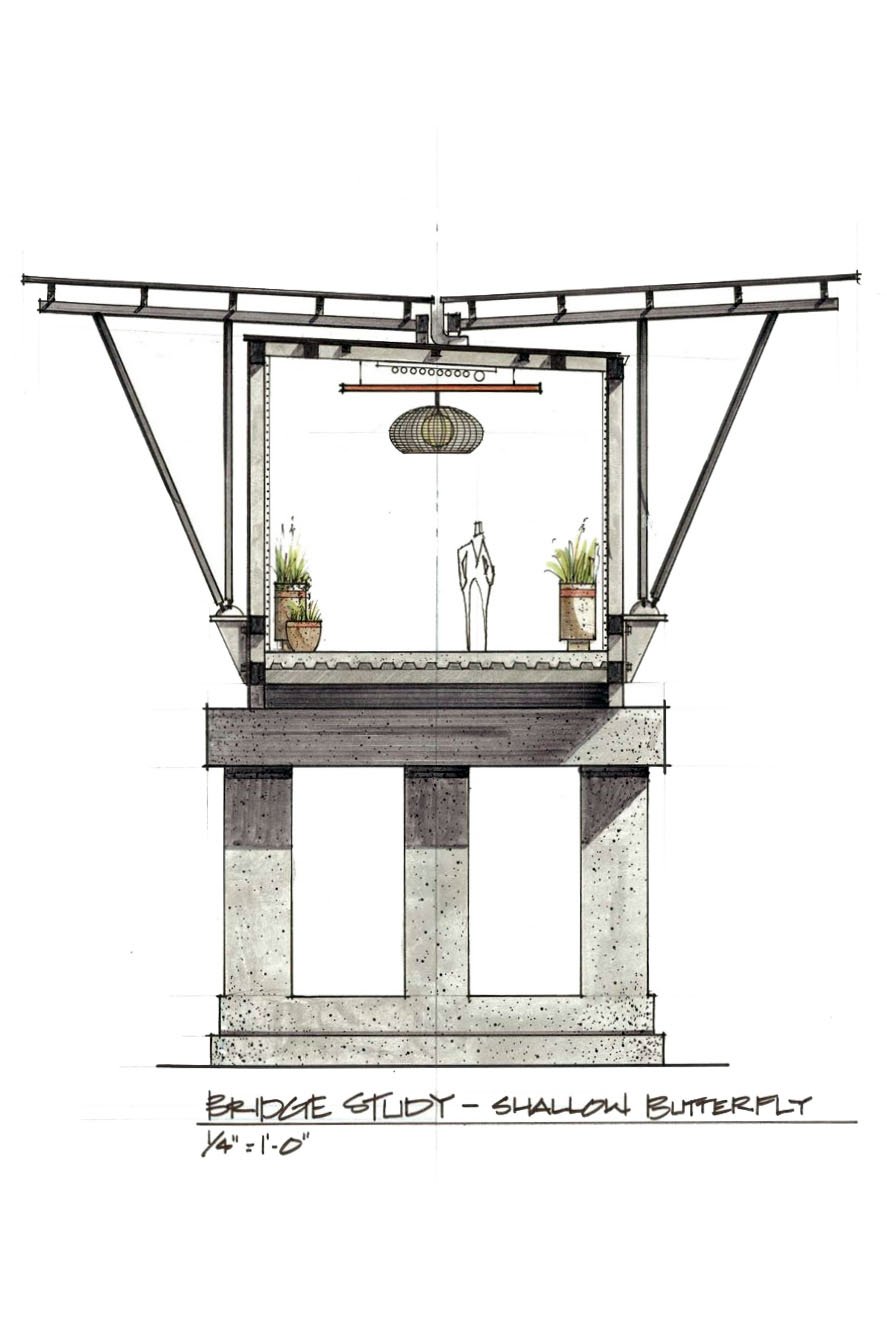
Concept sketch exploring how interior lighting, roof re-designs and human-scale elements could transform the existing pedestrian bridge into a more welcoming, elevated architectural experience.
Concept
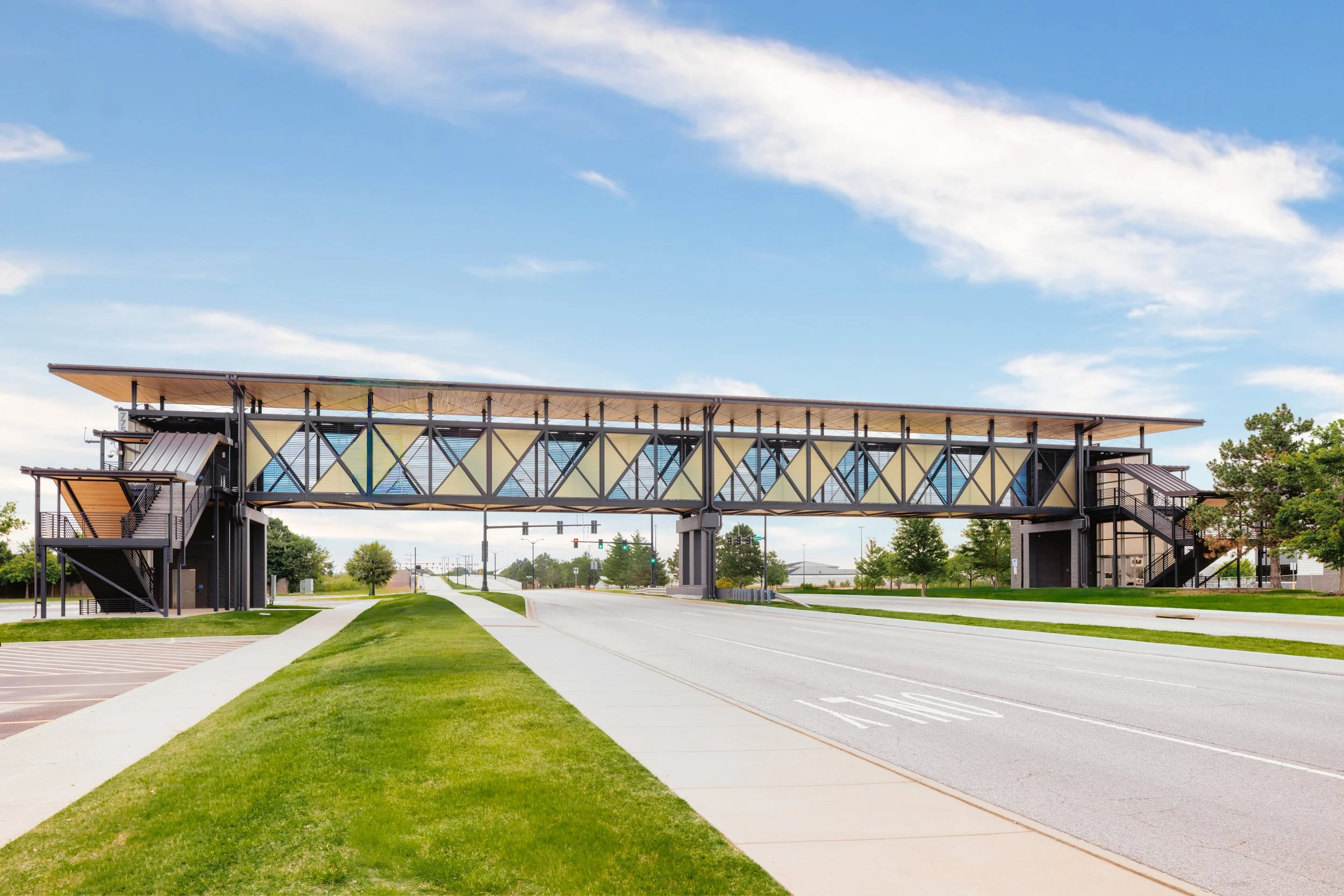
Rather than replacing the existing bridge, the project builds upon its structure, demonstrating how targeted architectural interventions can fundamentally change the experience of bridge. The design balances brand identity with everyday usability, introducing color, material and light in ways that enrich the journey across the bridge and the pedestrian experience looking at the bridge.
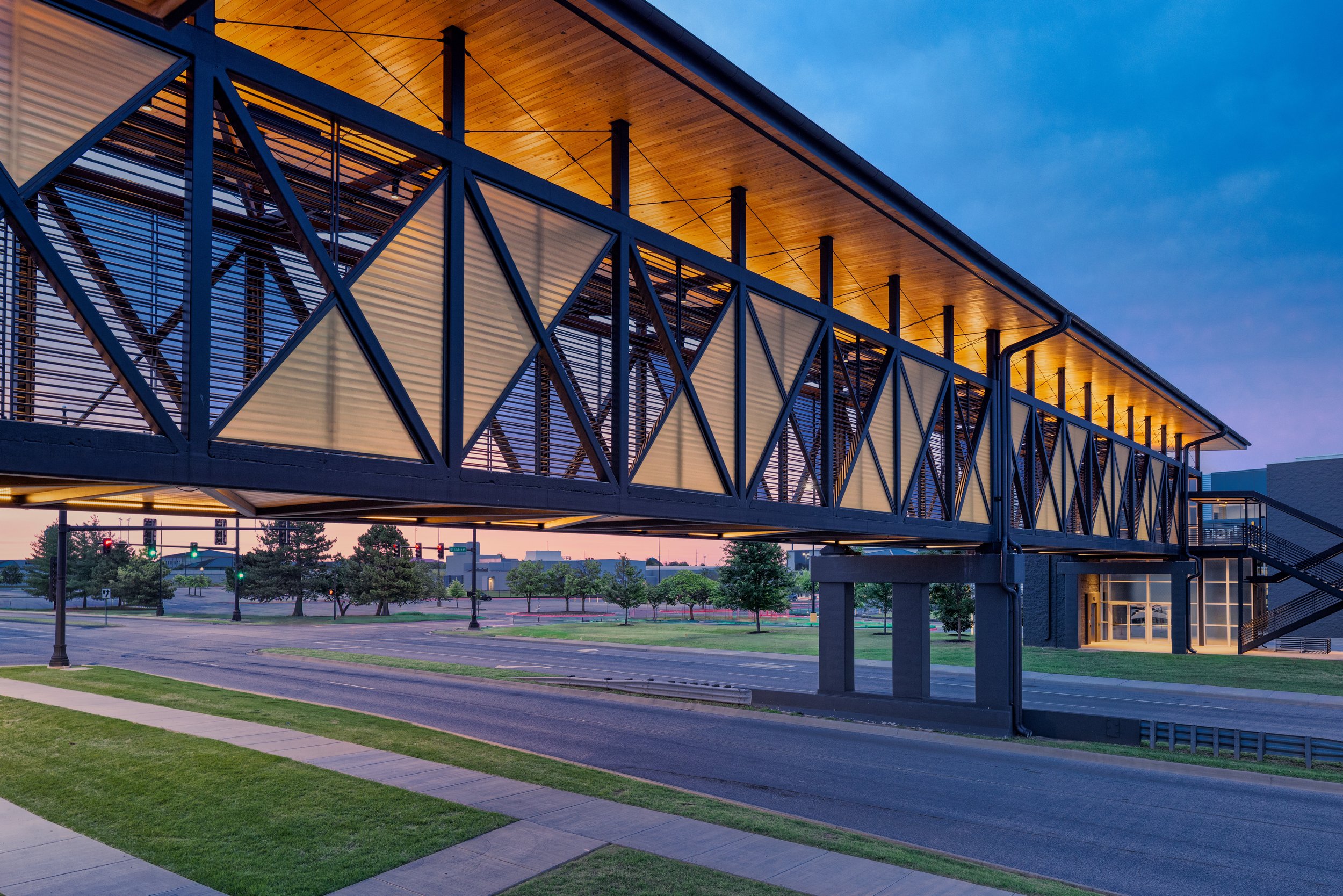
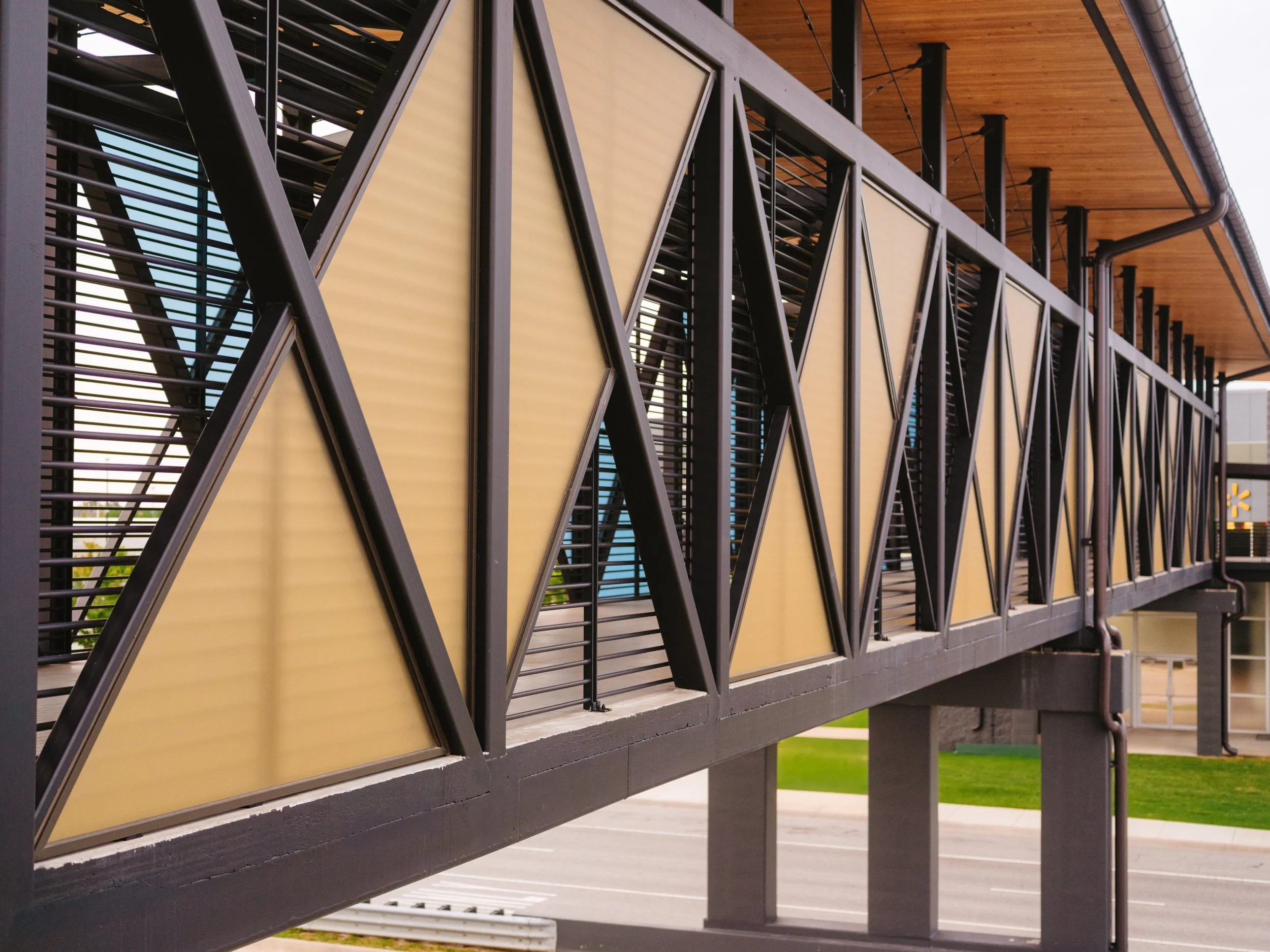
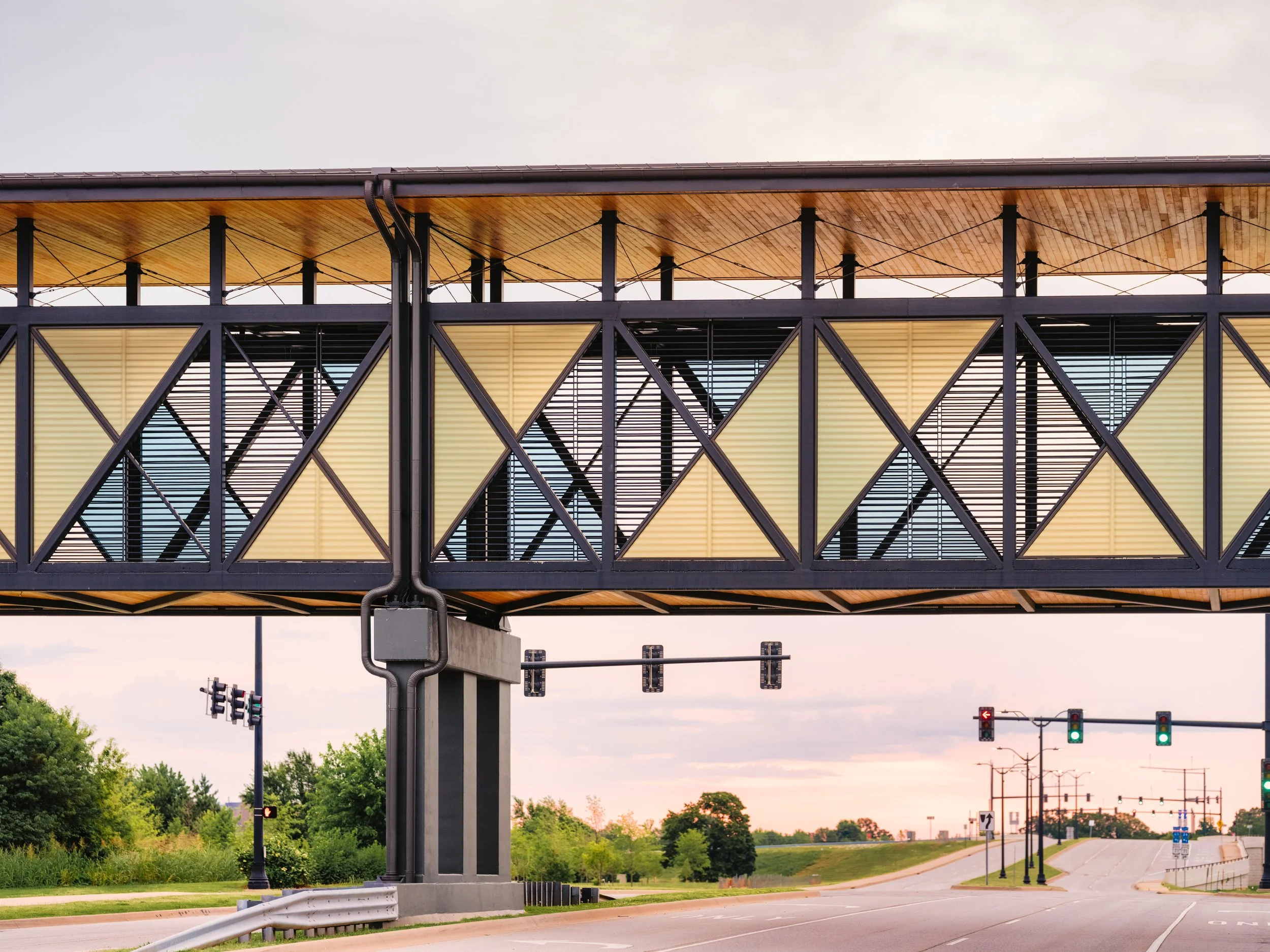
Glass panels reflect the client's brand colurs throughout the day as natural light changes, while timber slats introduce warmth to an utilitarian bridgrpreviously defined by steel and concrete. Functional improvements, including a new roof enclosure, lighting strategies, and radiant-heated bridge deck and stair treads, ensure the bridge remains safe and accessible throughout Arkansas winters.
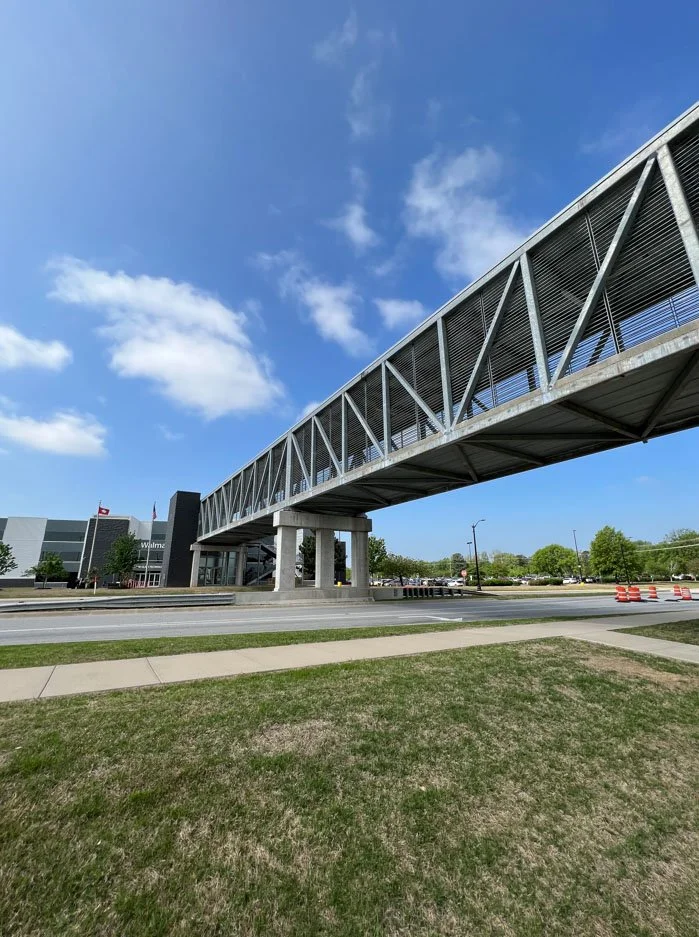
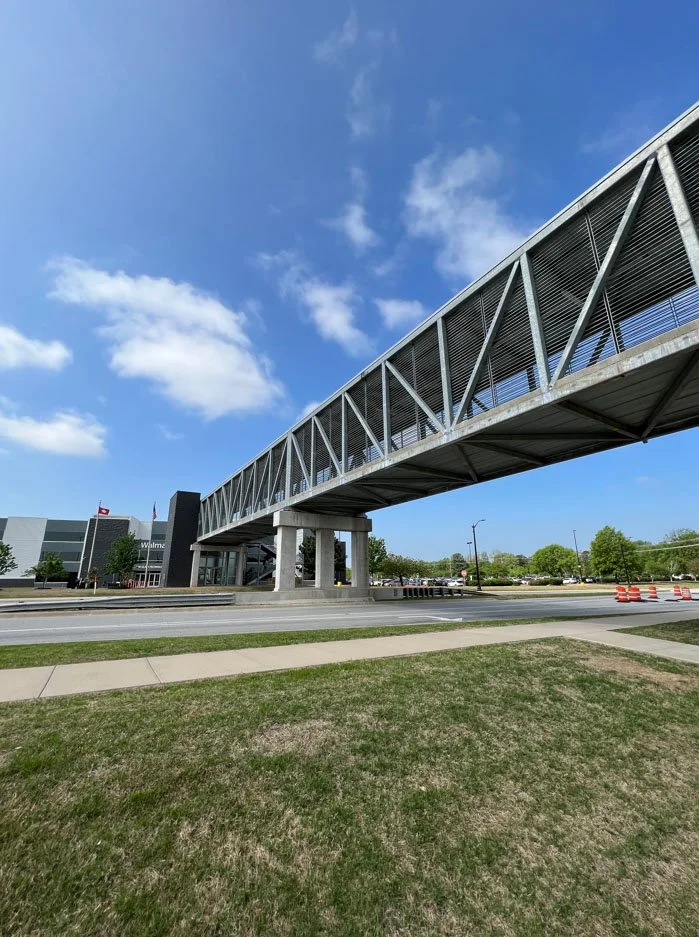
Before: existing, utilitarian bridge offering nothing but practicality.
Reimagining Infrastructure
The existing bridge fulfilled a practical function but offered little beyond safe passage between buildings. The renovation shifts its role from circulation infrastructure to an architectural experience that contributes to the identity of the campus.
Rather than concealing the original structure, the design works with it and builds upon it, demonstrating how renovation can achieve significant transformation through carefully considered architectural interventions.
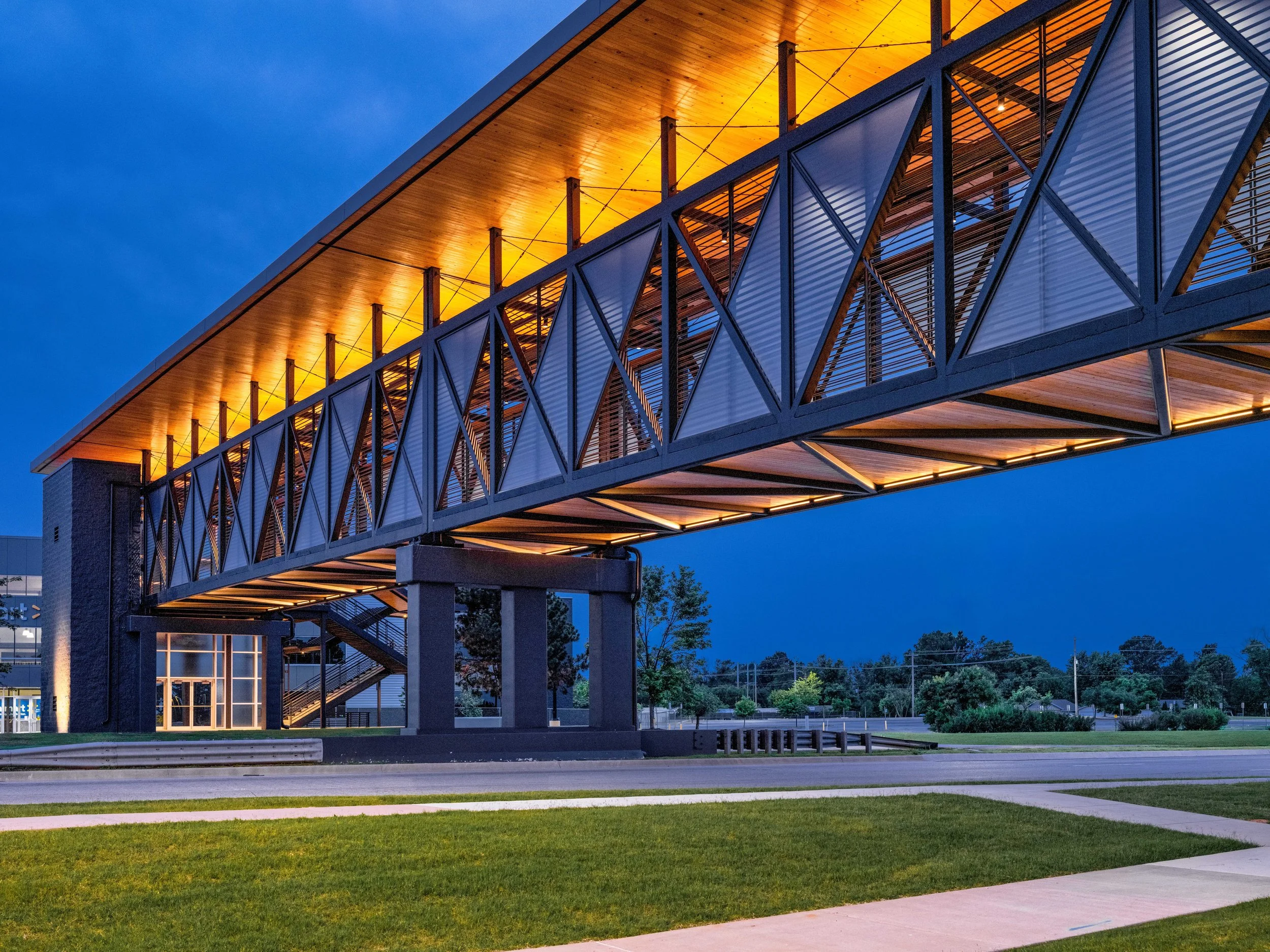
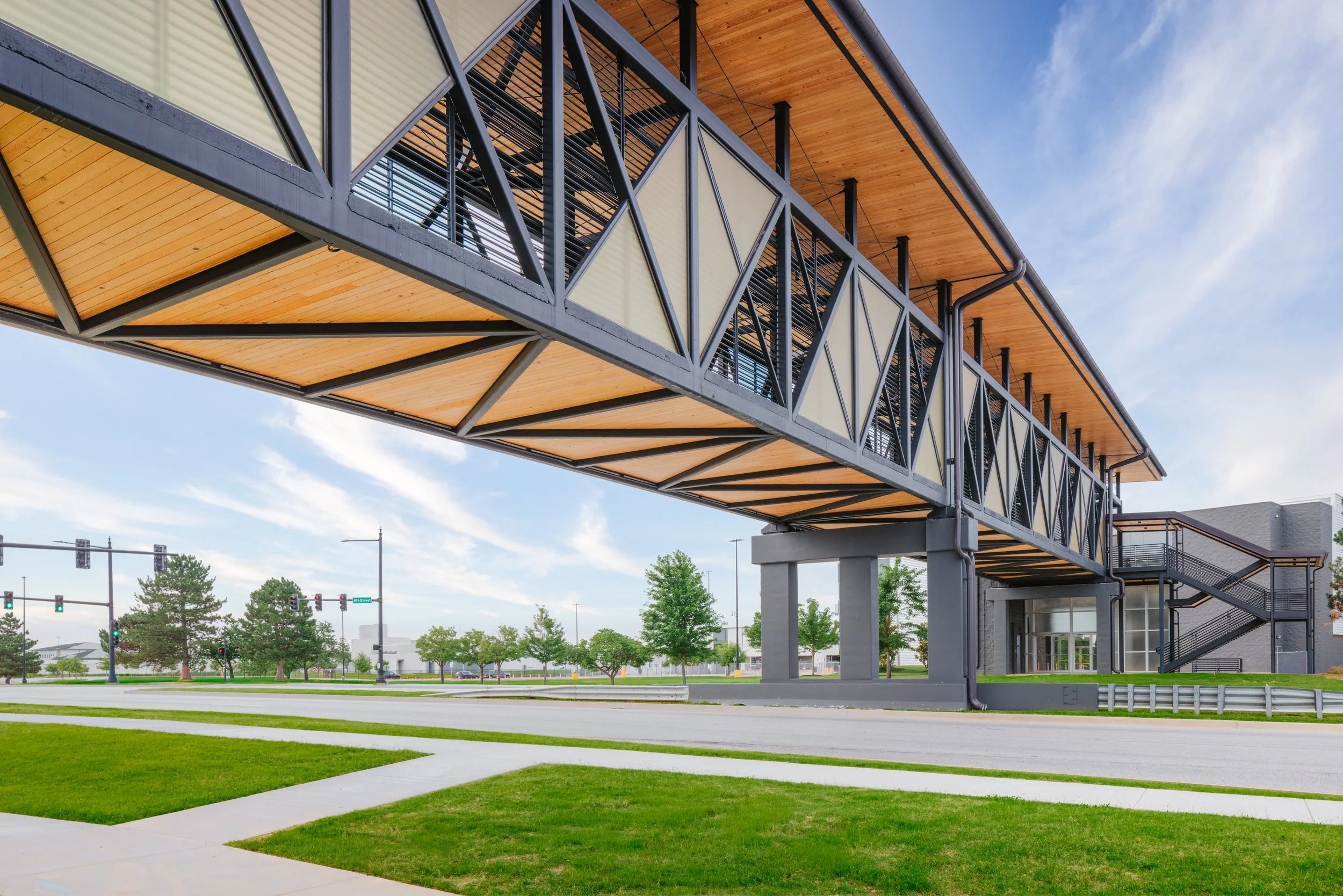
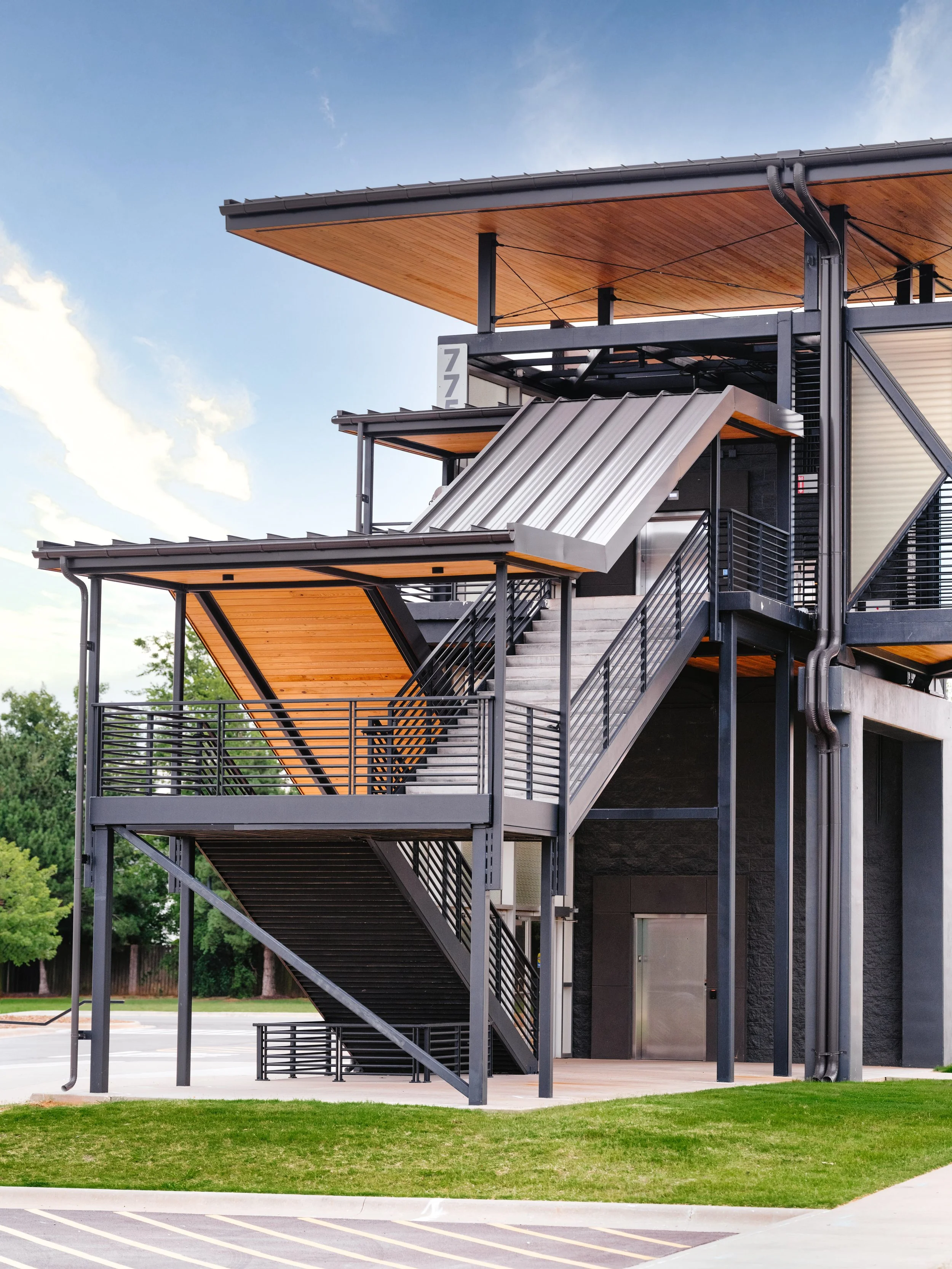
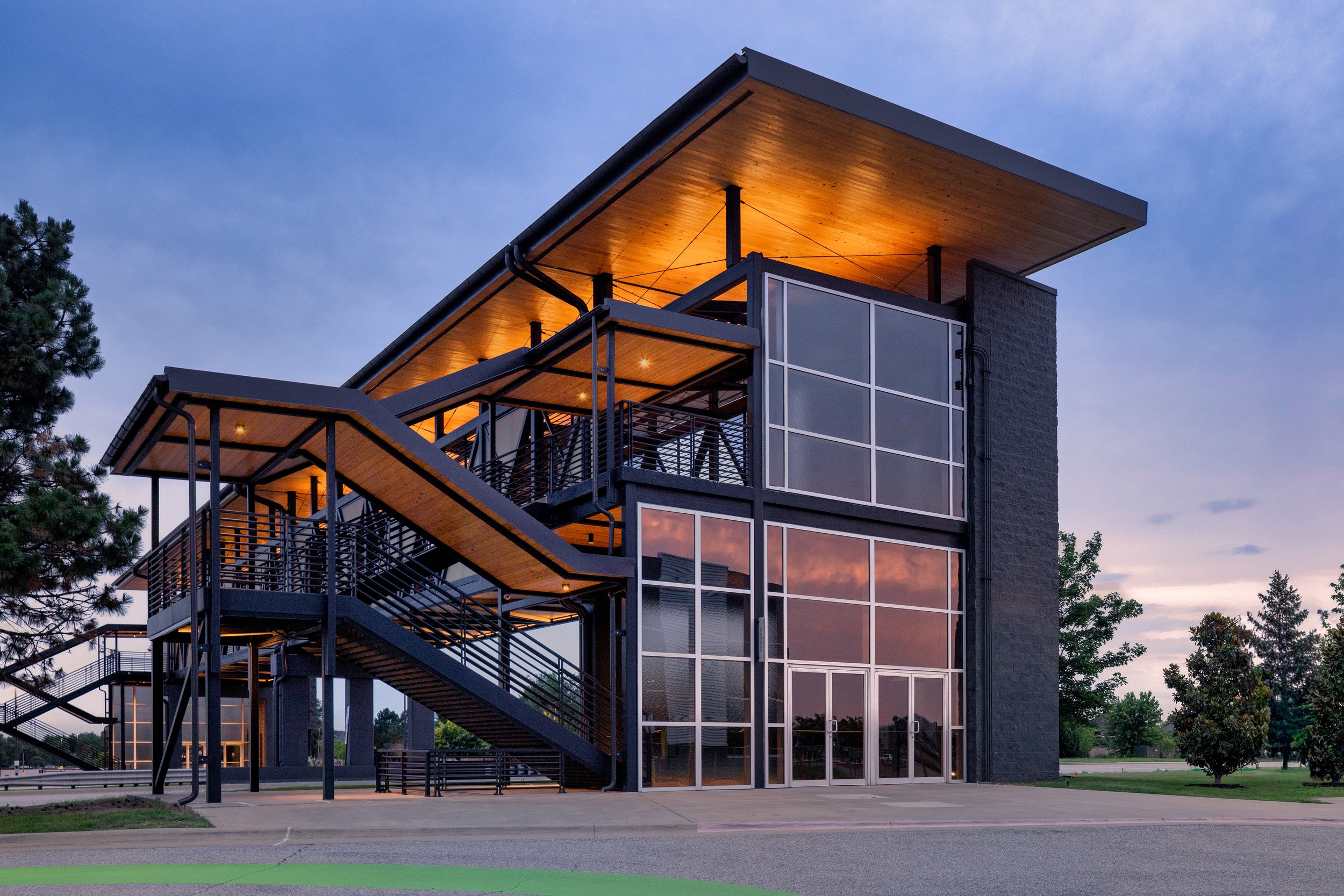
A new, raised roof extends beyond the bridge enclosure to provide protection from rain, snow and summer sun. Raised above the newly-enclosed walkway, it allows daylight and natural ventilation to enter the bridge, creating a more open and comfortable pedestrian experience.
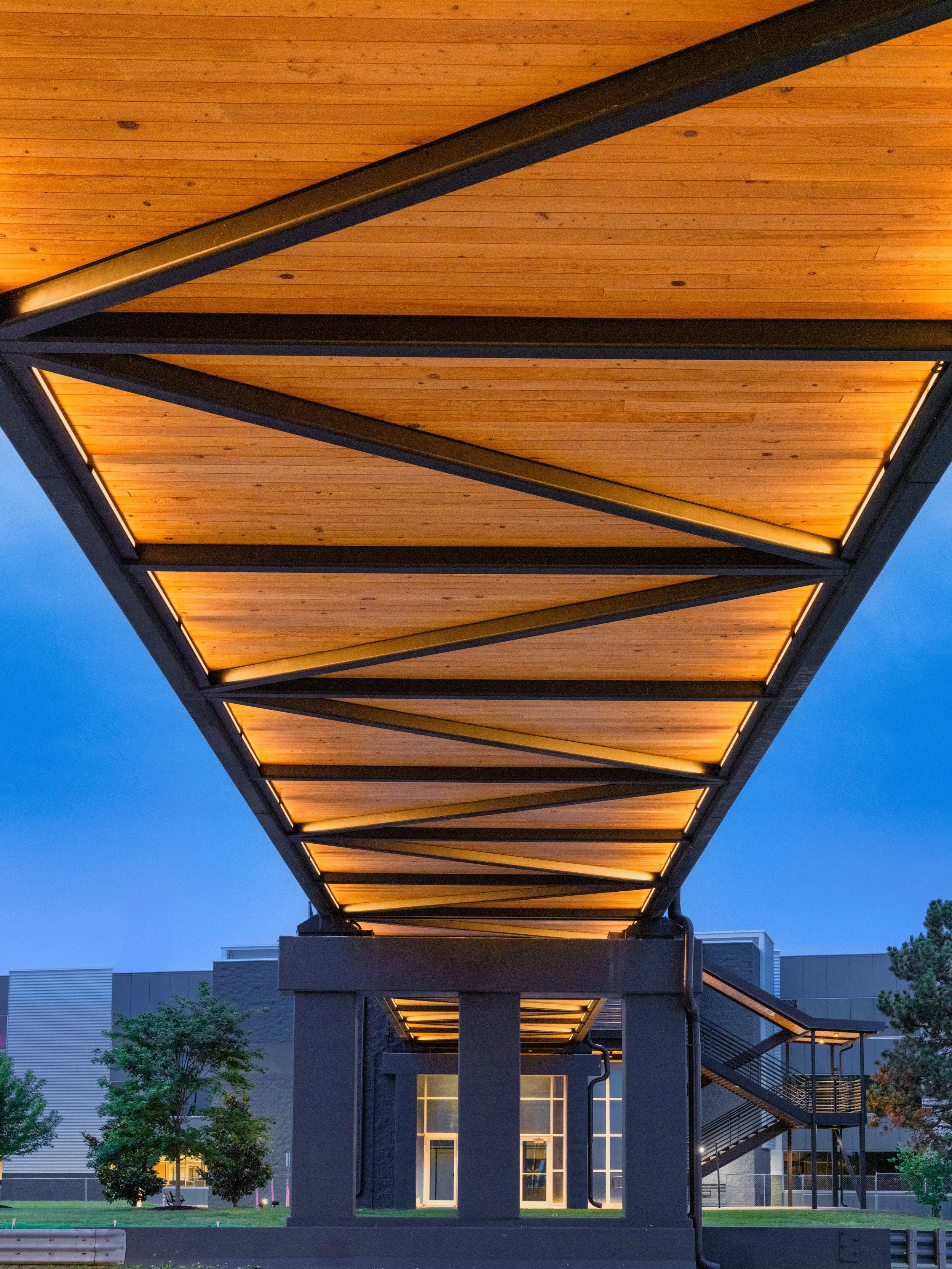
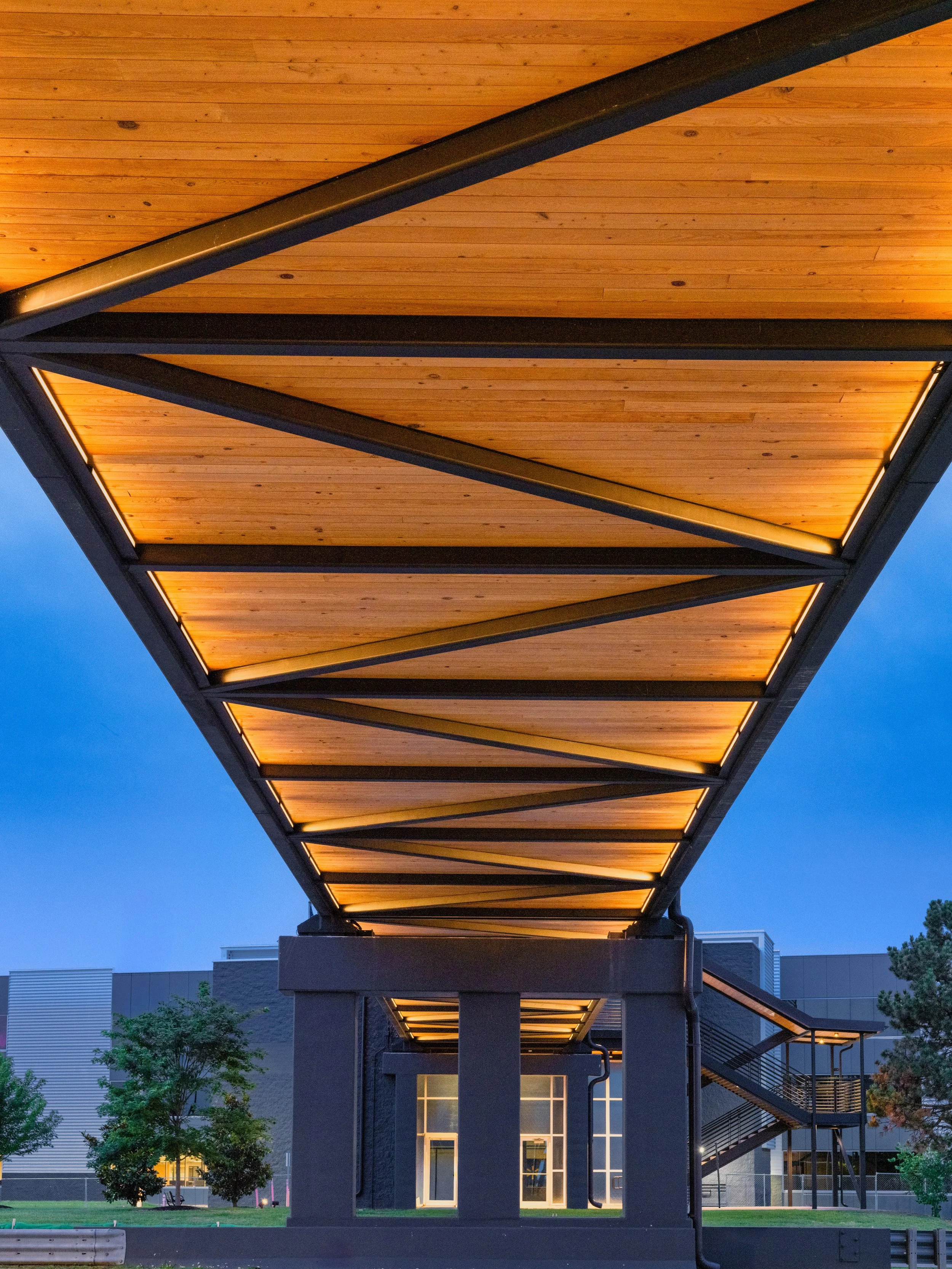
New glowing lighting and timber cladding adds warmth, softening the industrial character of the original bridge for passers-by.
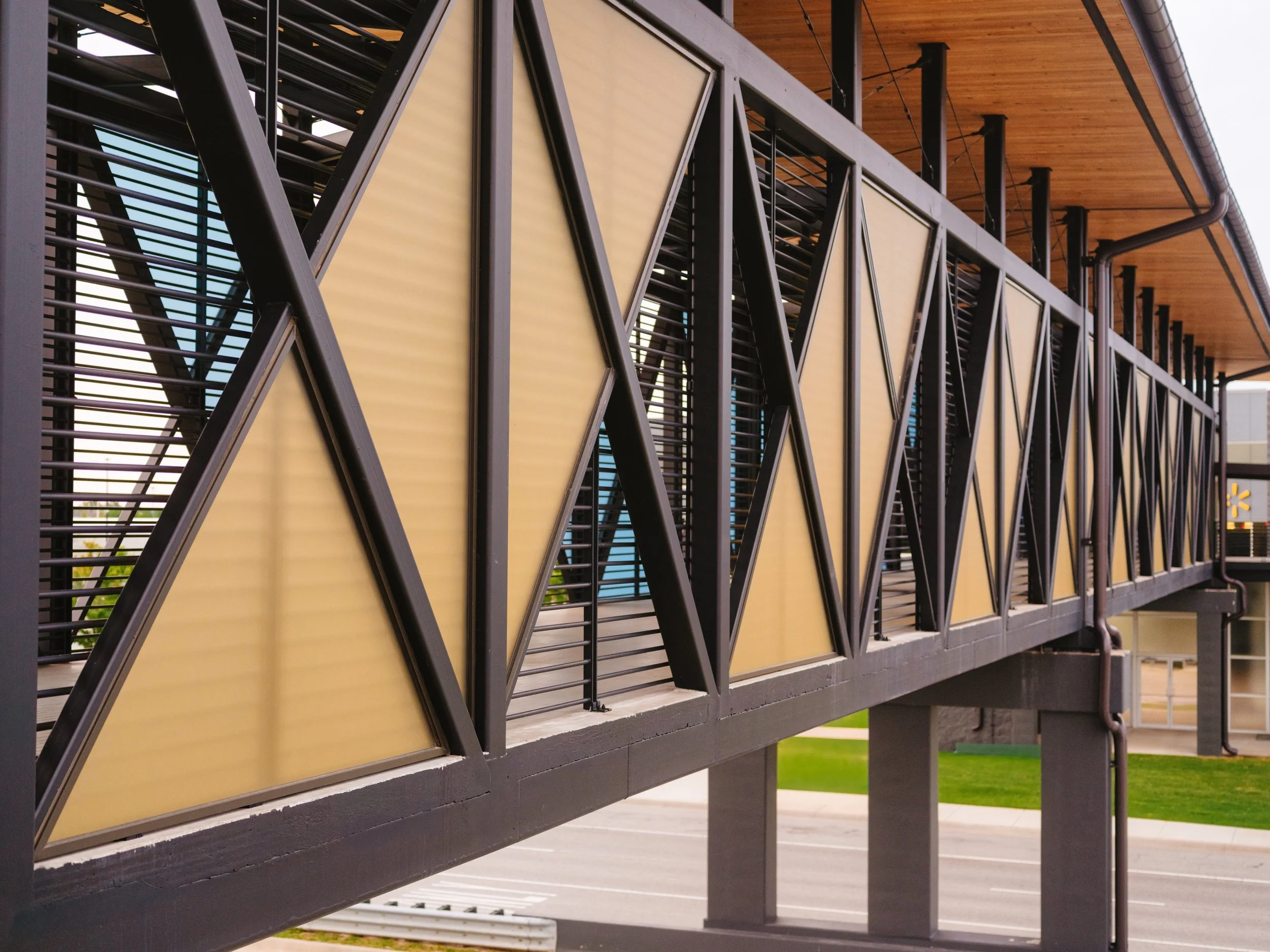
Existing structural steel and concrete was retained, painted and repurposed, with new glazing and detailing establishing a distinct architectural identity.
Light, material and identity
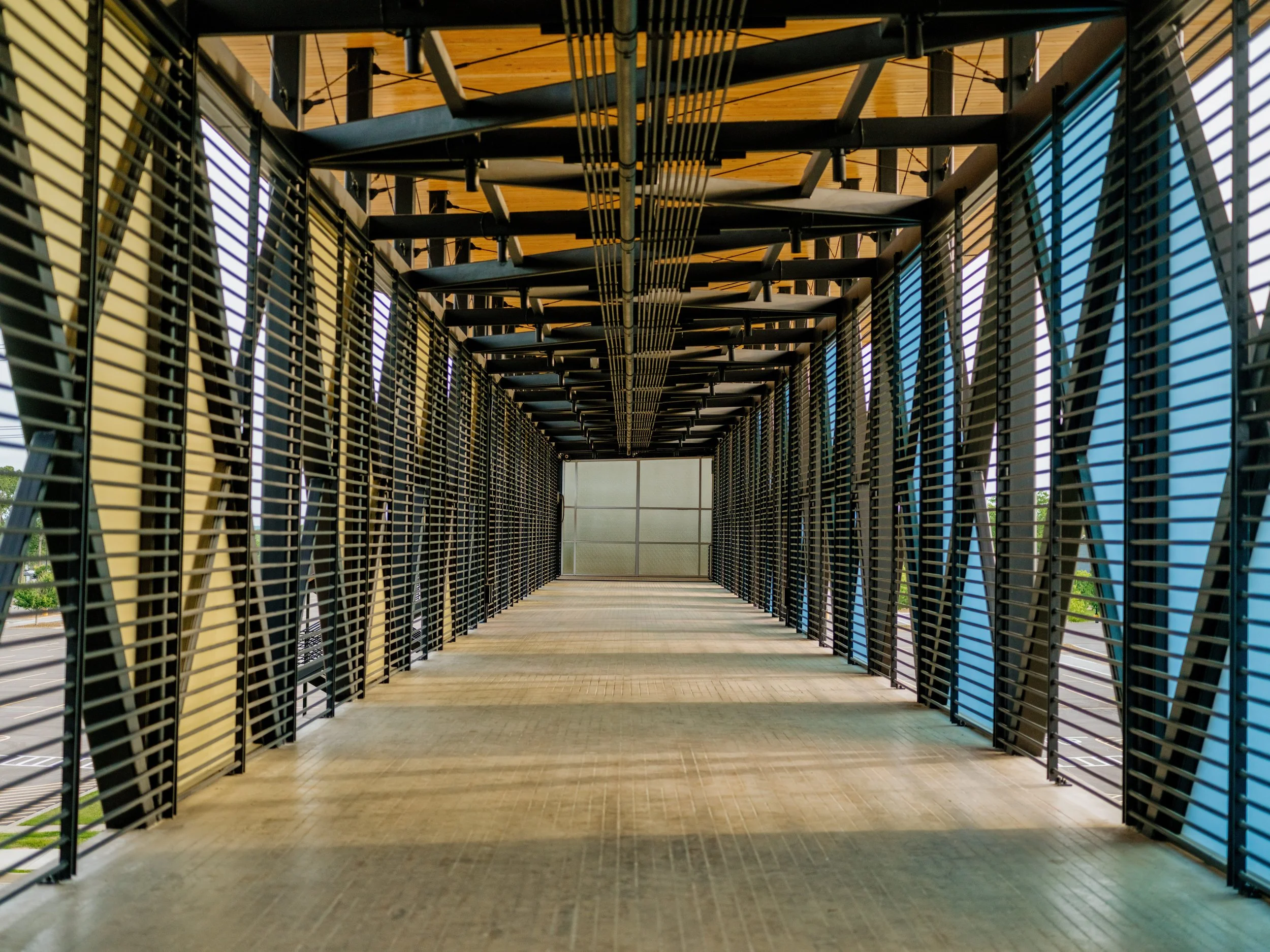
The architectural language is intentionally restrained. Timber softens the experience of crossing, introducing warmth and texture to an environment that had previously felt industrial and utilitarian. Coloured glass establishes a direct relationship with the client's identity while remaining dynamic throughout the day.
As daylight changes, coloured reflections move across the bridge interior, producing shifting blue tones during the day and warmer reds and yellows toward the evening. The changing quality of light gives the bridge a character that evolves over time, creating a daily experience that extends beyond movement alone.
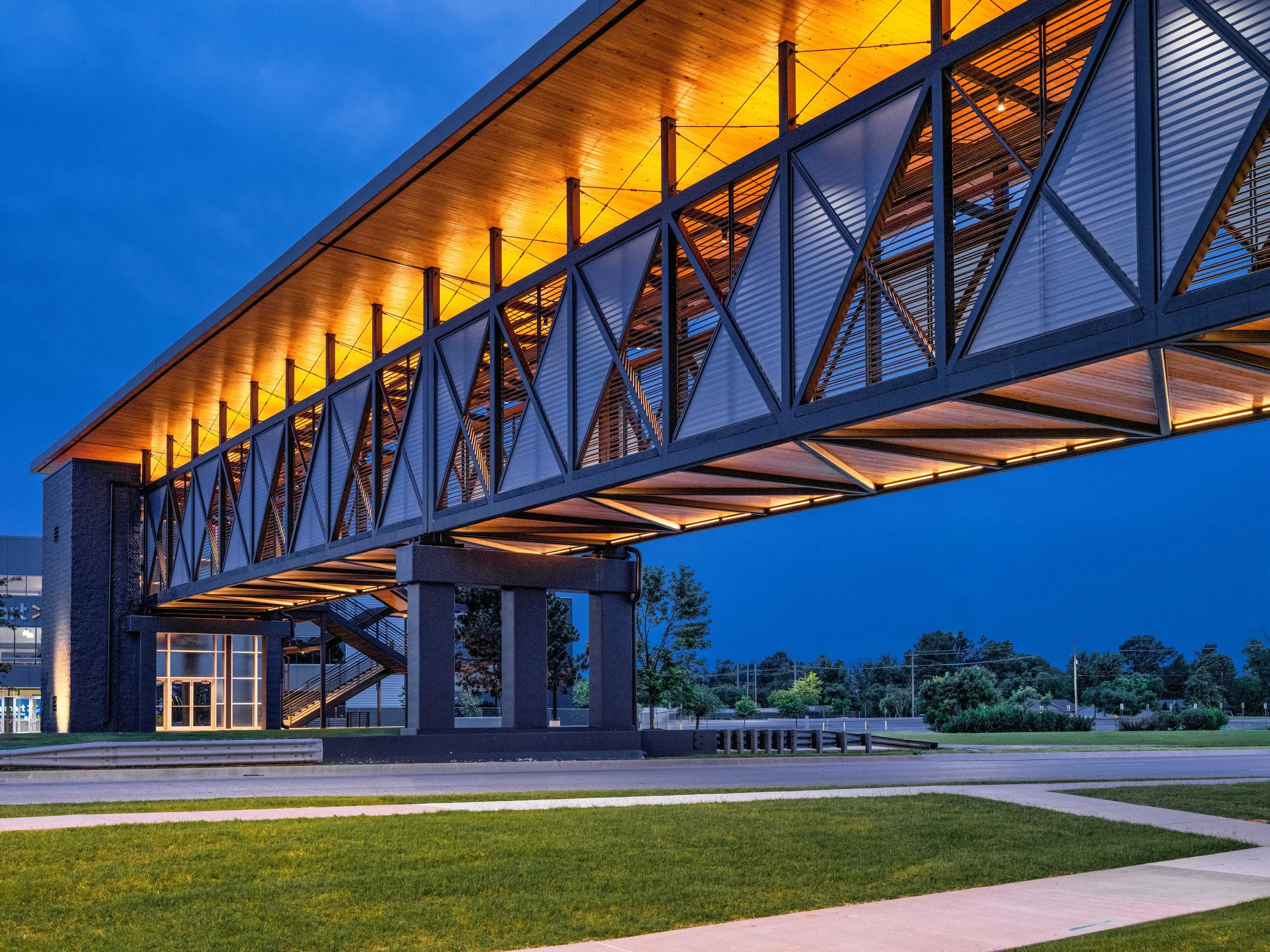
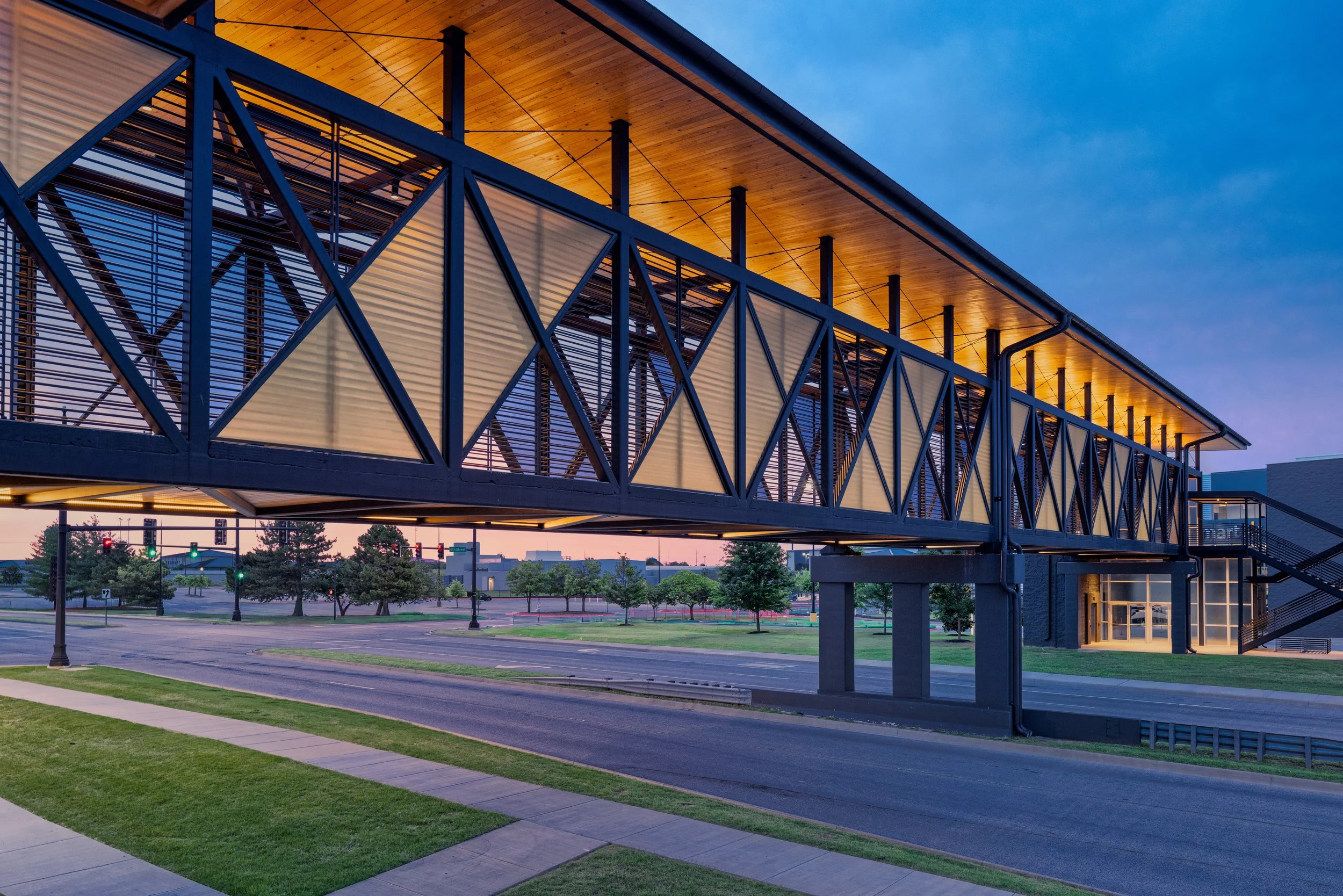
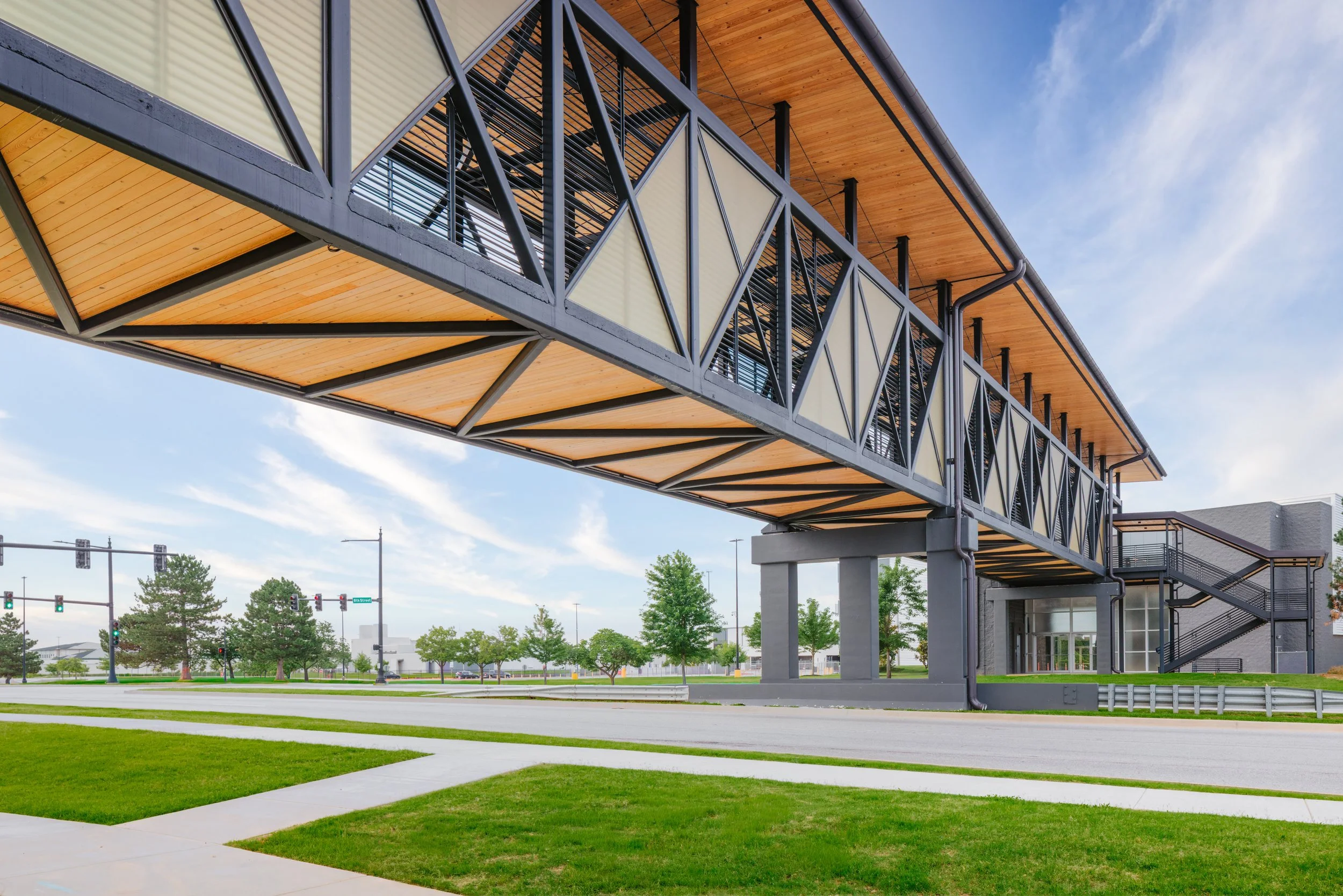
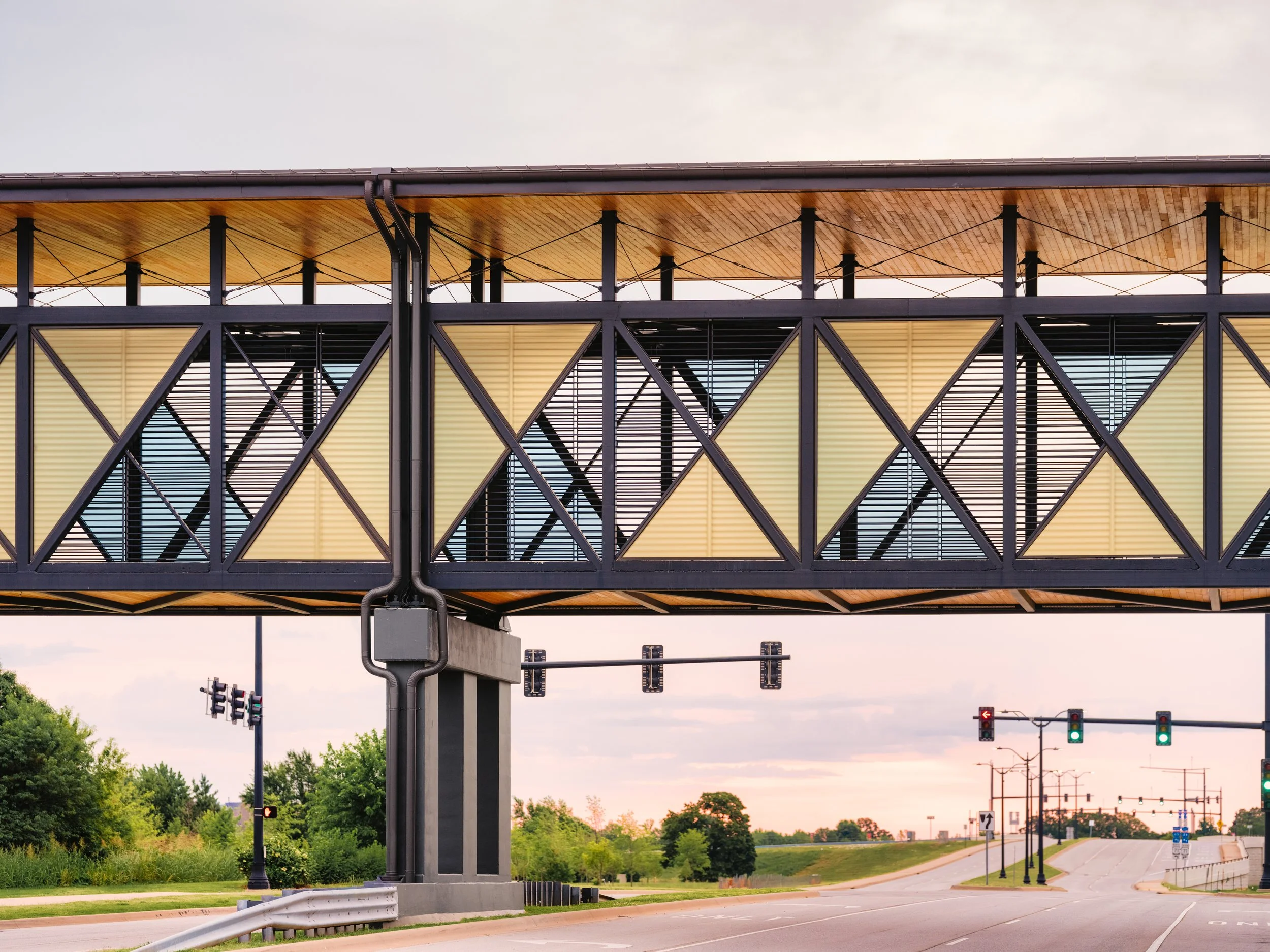
Colored glazing derived from the client's brand introduces changing qualities of light throughout the day, giving the bridge a shifting visual character.
Designing for people & everyday use
The project combines architectural expression with practical performance. A new roof protects the bridge and stairs from rain, snow and ice, while radiant heating integrated within the bridge deck and stair treads improves safety during winter conditions by preventing ice accumulation.
These interventions acknowledge that infrastructure is experienced every day, often in challenging weather, and that comfort, safety and durability are fundamental components of good architectural design.
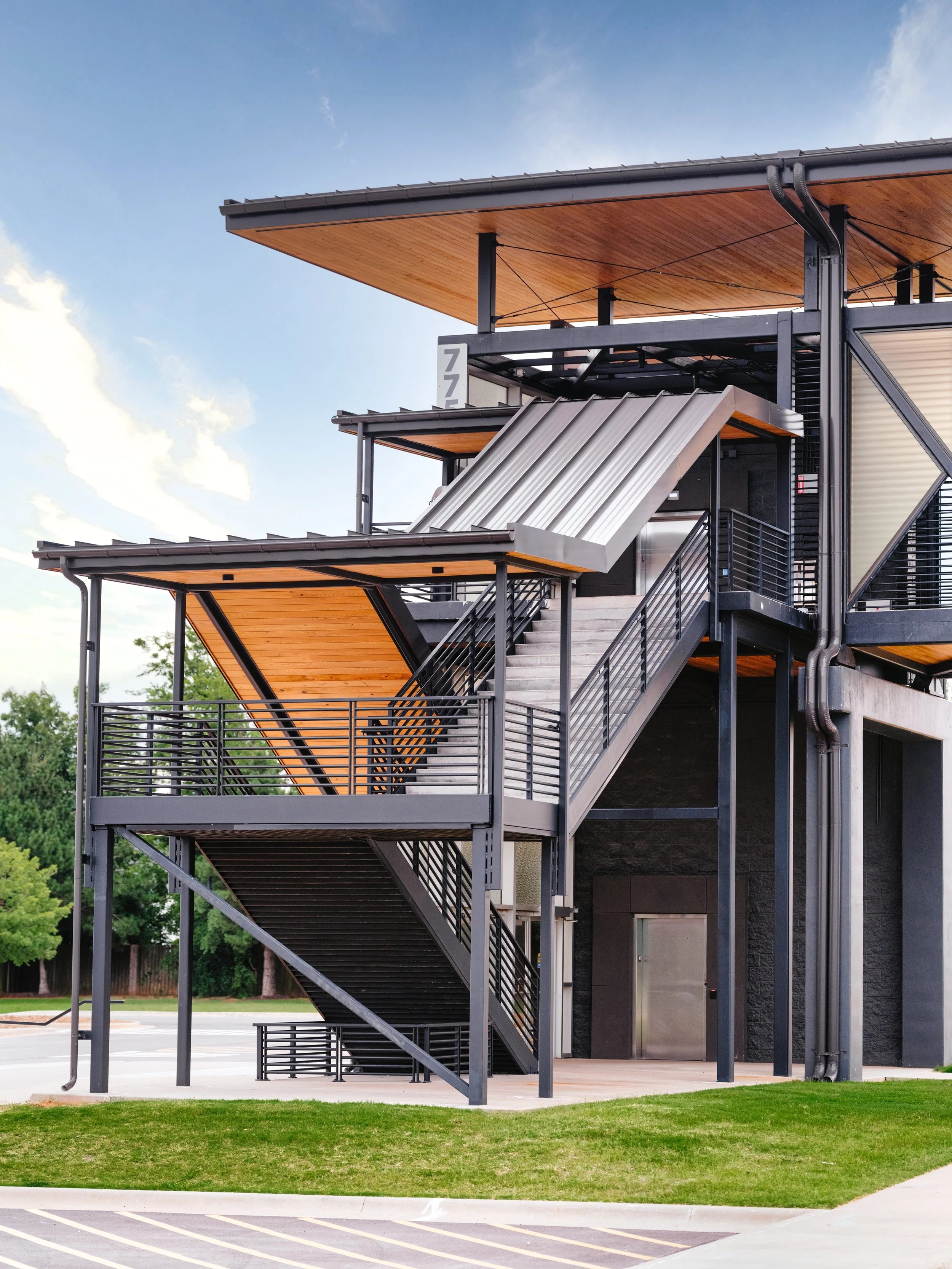
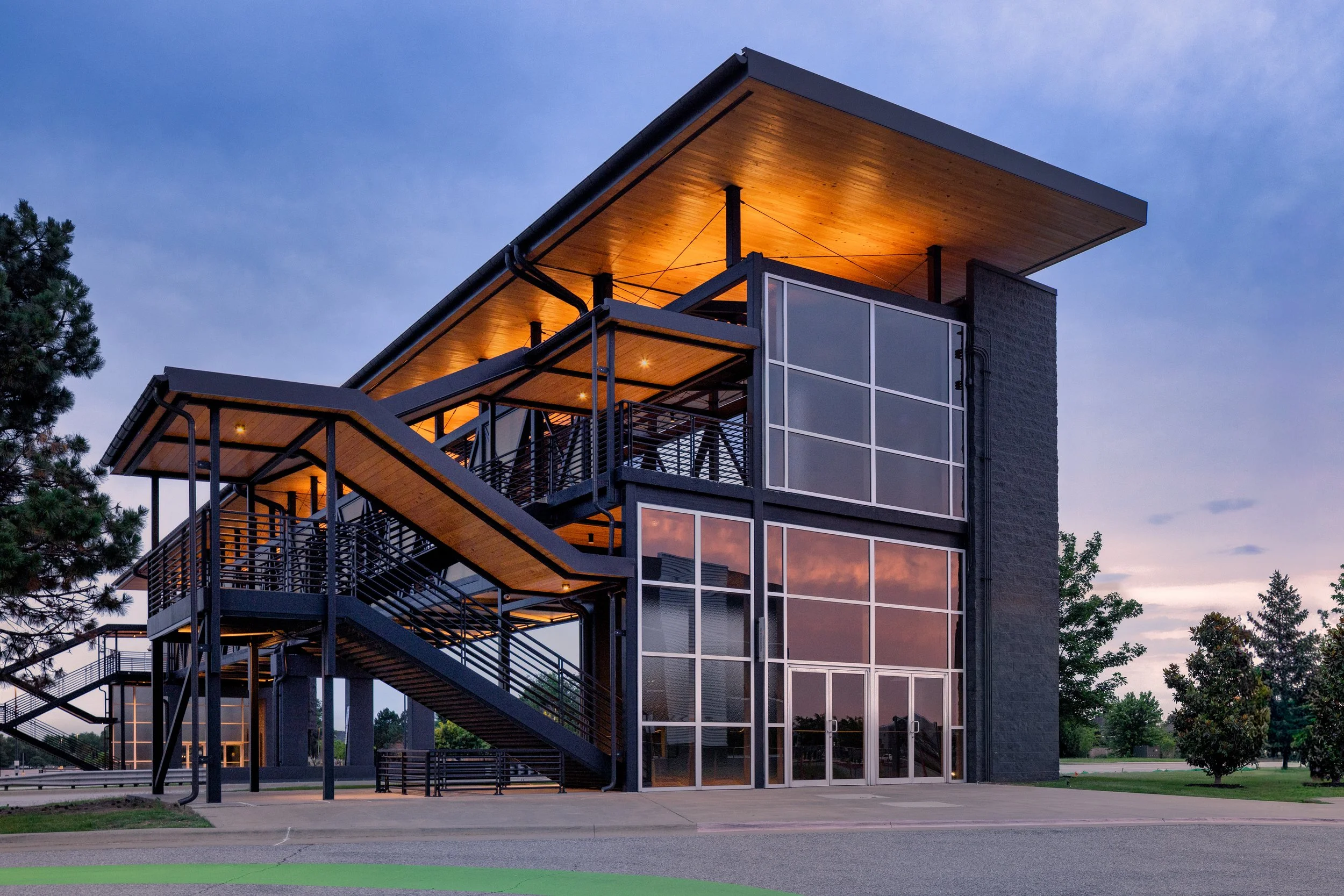
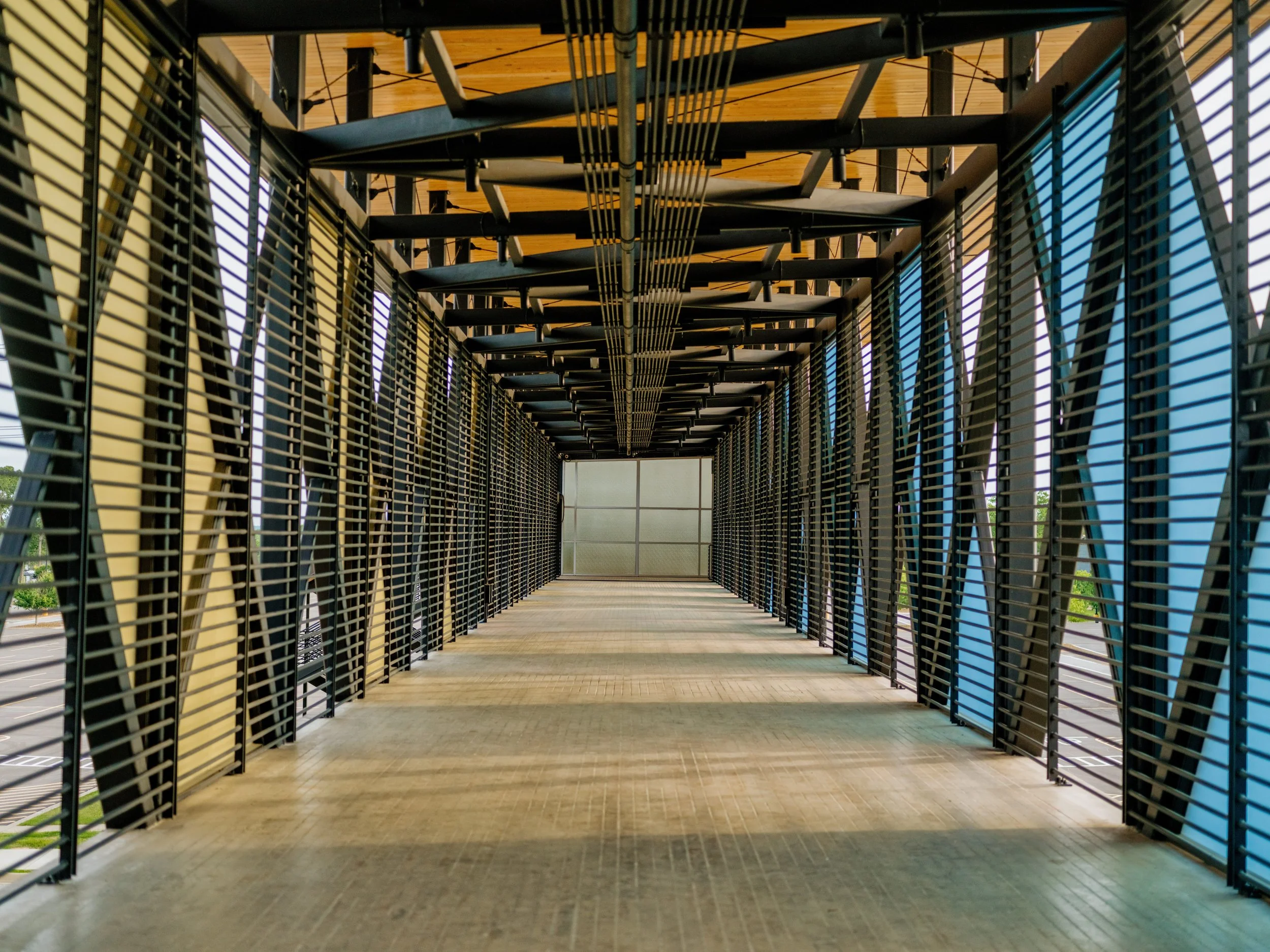
New roof structures protect the stairs and bridge from rain, snow and ice, improving comfort and year-round usability. Radiant heating integrated within the bridge deck improves winter safety, while colored glazing introduces changing washes of light across the interior throughout the day.