WSECU
The most prominent street frontage could have been the office lobby.
WSECU chose to use it differently.
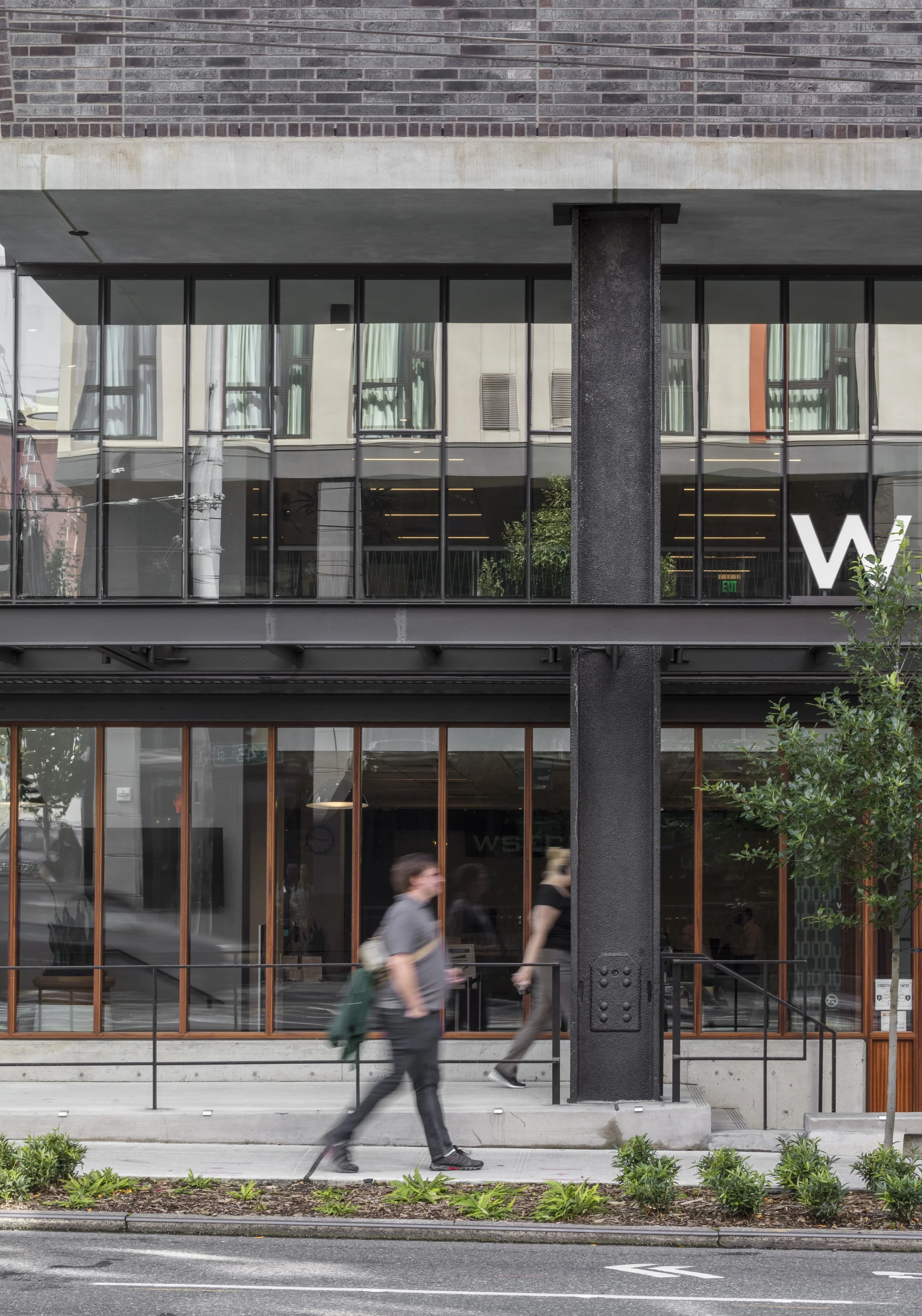
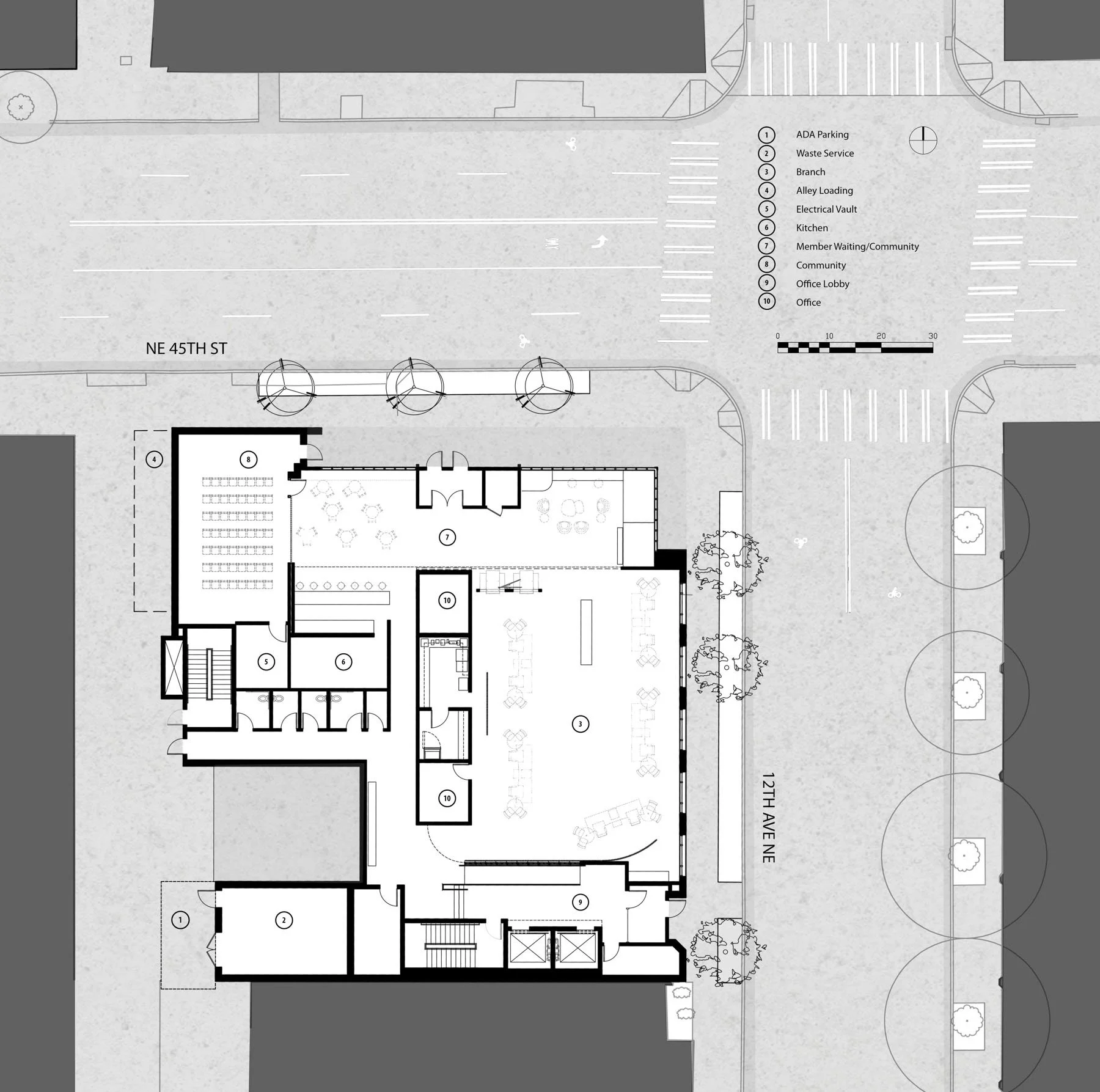
Along NE 45th Street, a branch, café, and community room put everyday activity against the sidewalk. The office entrance moves around the corner to 12th Avenue. Parking and loading disappear into the alley.
It is a small shift in the plan with a much larger consequence. One of the busiest edges of the building belongs to people who have somewhere to go, something to pick up, someone to meet, or no reason to enter the offices above.
Seattle, WA
67,000 SF
Mixed Use / Office
Award Winning Commercial & Urban Design
Concept
Most office buildings want their main entrance on the main street. Here, that would have used some of the most visible ground floor space for a route to the elevators.
WSECU was willing to put something else there.
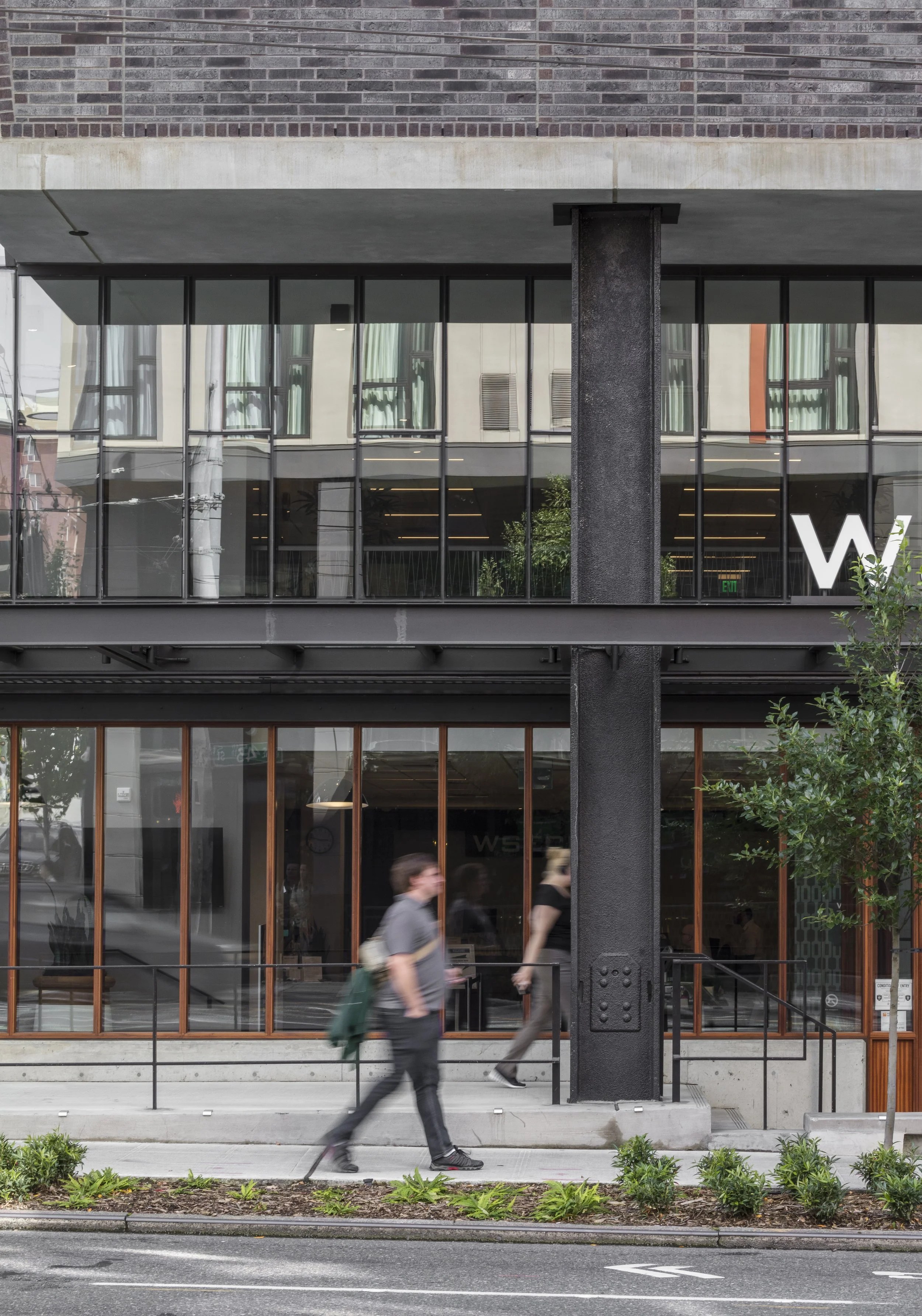
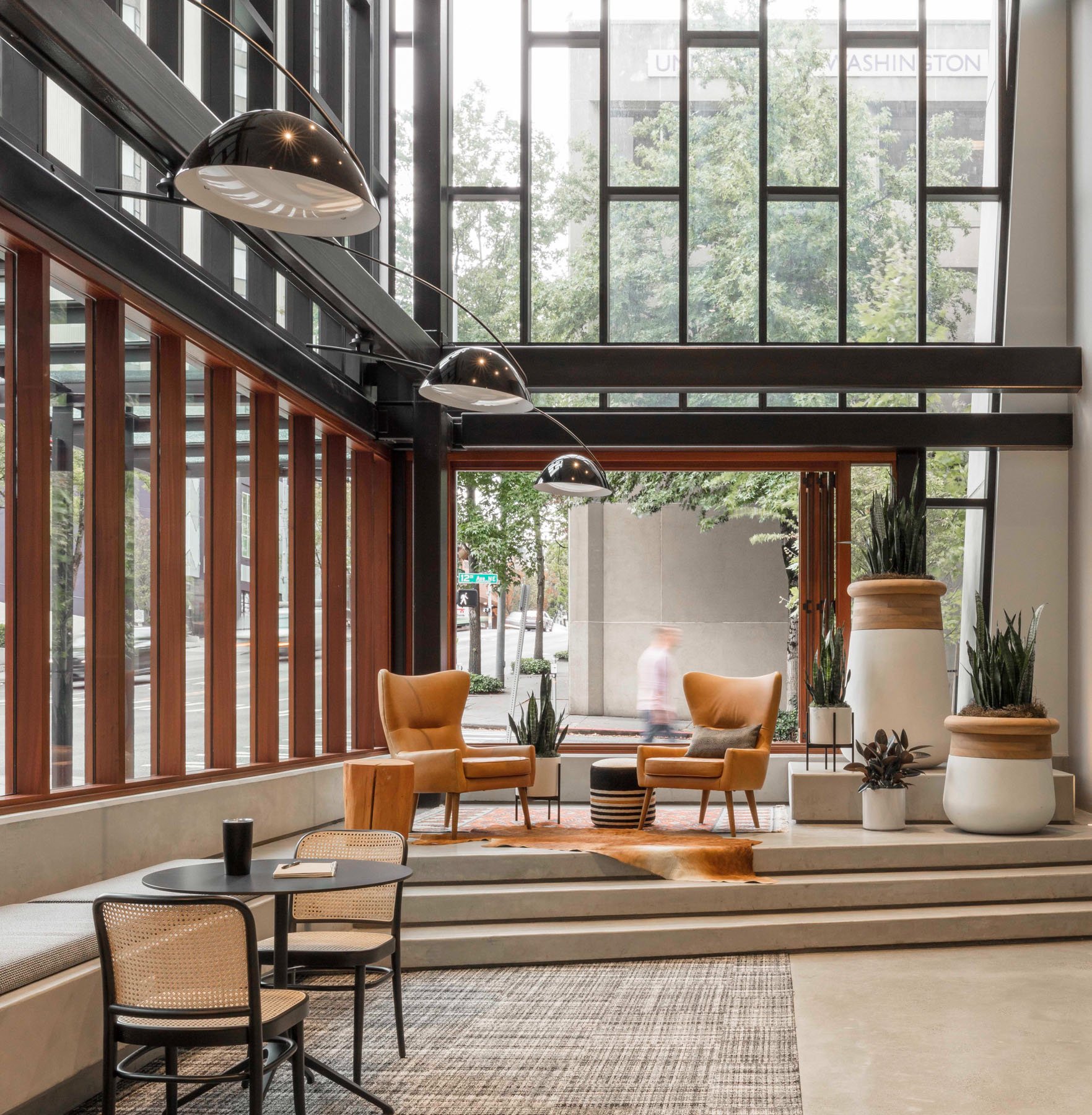
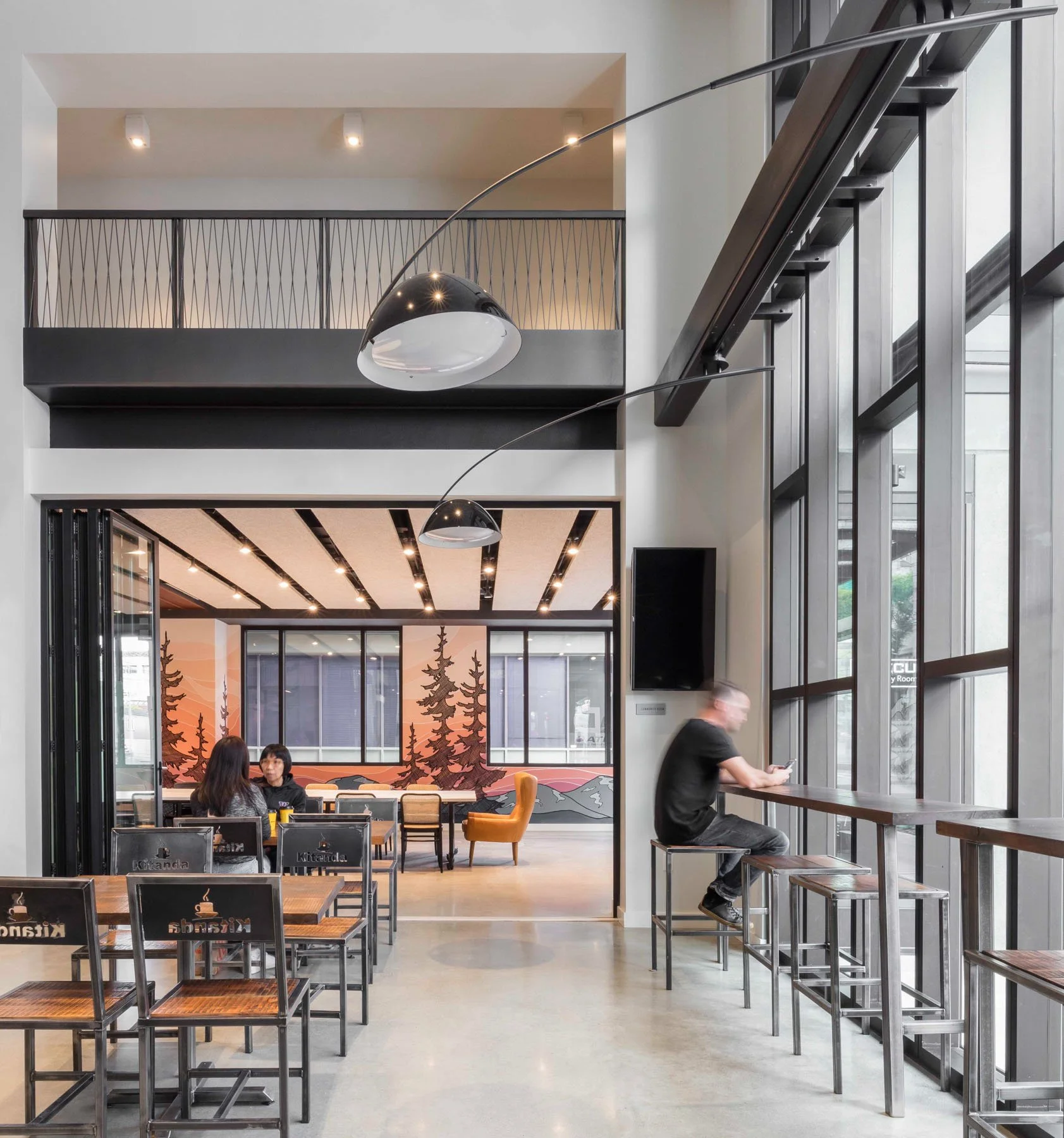
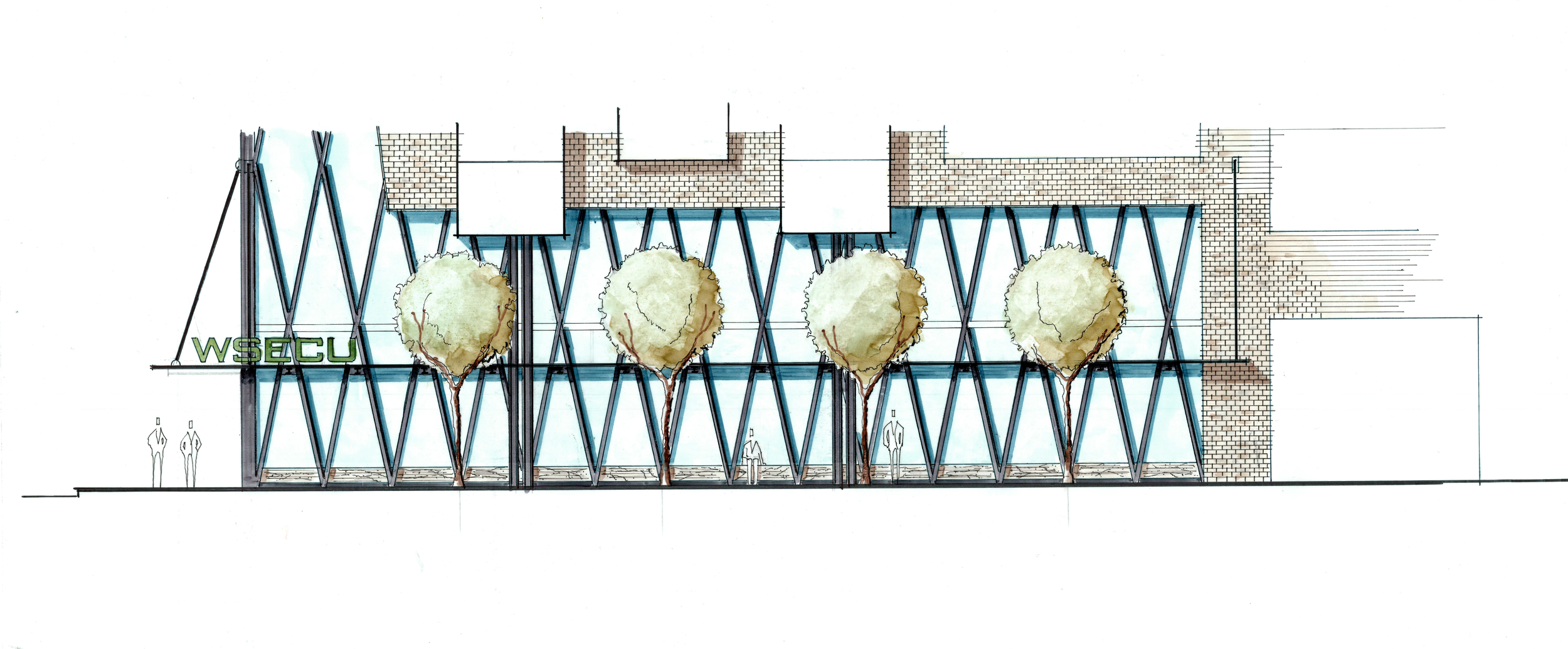
The office entrance moved to 12th Avenue. Along 45th, the building opens to the credit union branch, café, and a room that neighborhood groups can use for meetings and events. A two story glass frontage makes that activity visible from the sidewalk.
The decision came out of conversations about what was missing nearby. One answer was surprisingly ordinary: a place for people to meet.
The building's relationship with the neighborhood starts there.
“When it comes to commercial buildings like this, it is important to consider development in its specific context. We wanted to create an environment that was an 18-hour experience; it is imperative to create vitality at the ground plane. WSECU also saw that vision.
”

Along NE 45th Street, WSECU gives its most visible frontage to the credit union, retail, and community space rather than an office lobby, keeping the ground floor useful to the University District beyond the working day.
Completing the urban block
Along 45th Street, the ground floor pulls back behind glass. The branch and café share this edge with a meeting room that can operate independently or become part of the larger ground floor.
The room came from a specific need. There were not enough places nearby where groups could simply meet. So WSECU made one part of the project.
It remains a free, reservable community space today, with seating for 36 people.
The office lobby is around the corner. The room people asked for is on the main street.
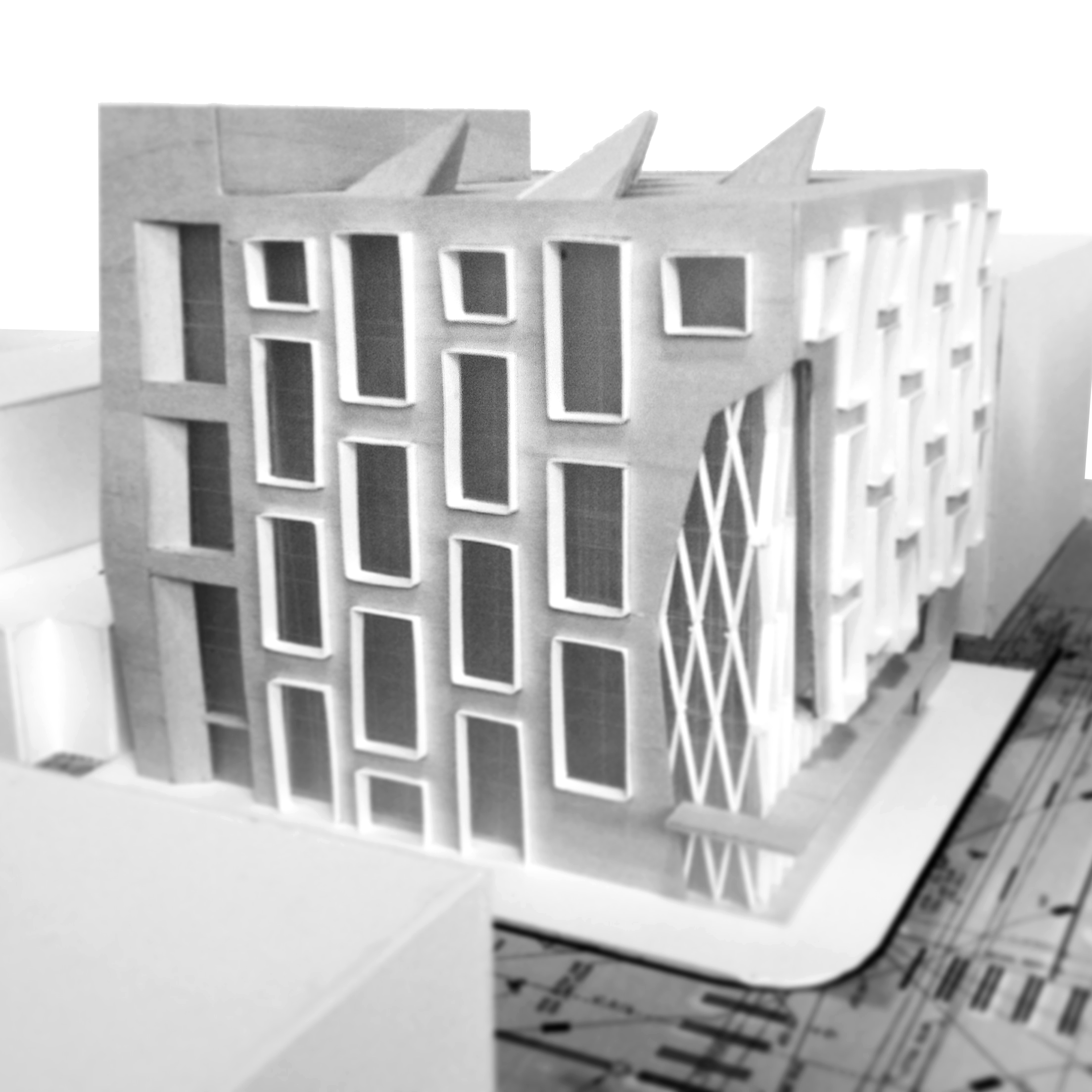
An early model for WSECU tests the scale and rhythm of the brick façade, including the deep window openings and taller areas of glass that would give the building a distinct presence on its compact University District site.

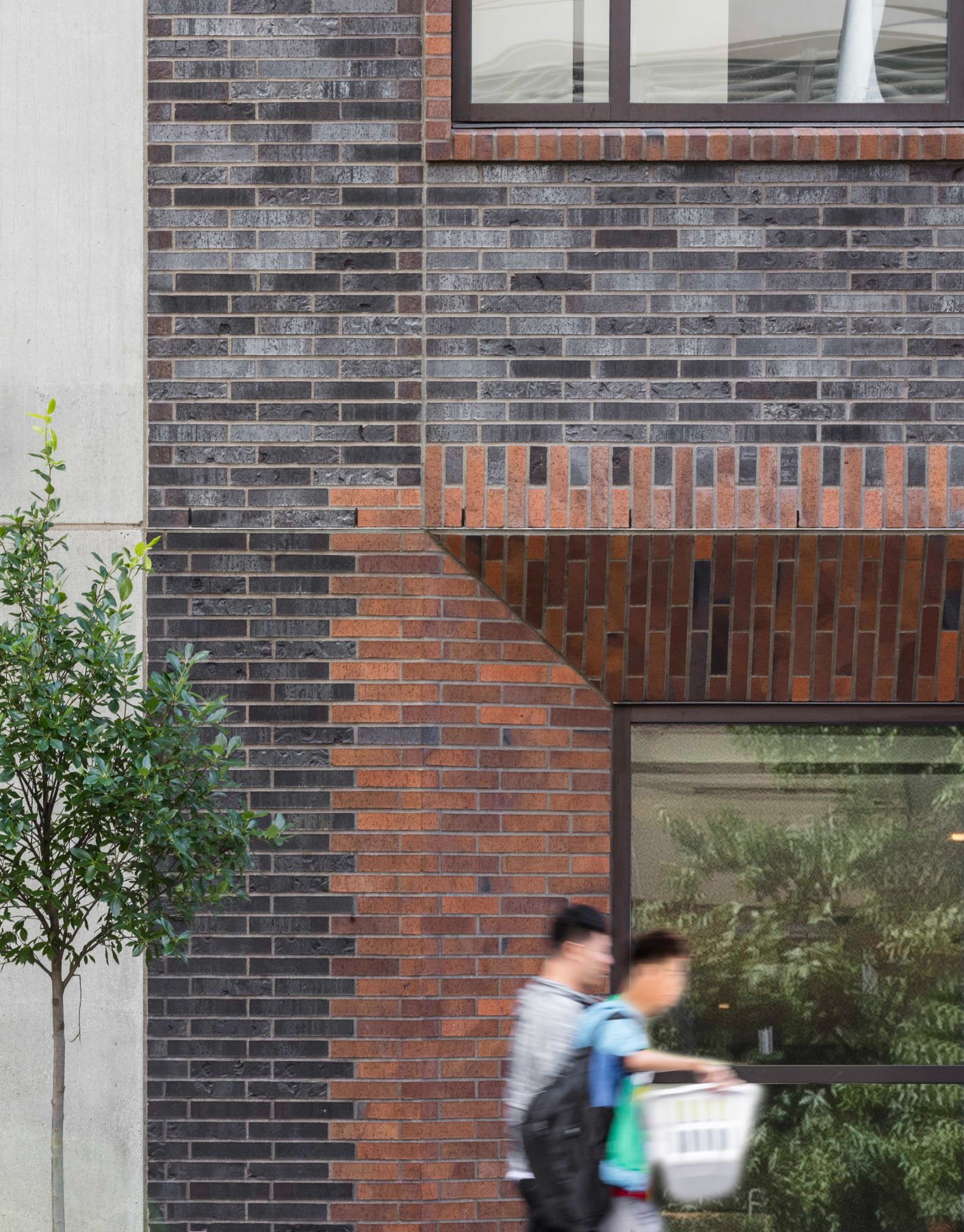
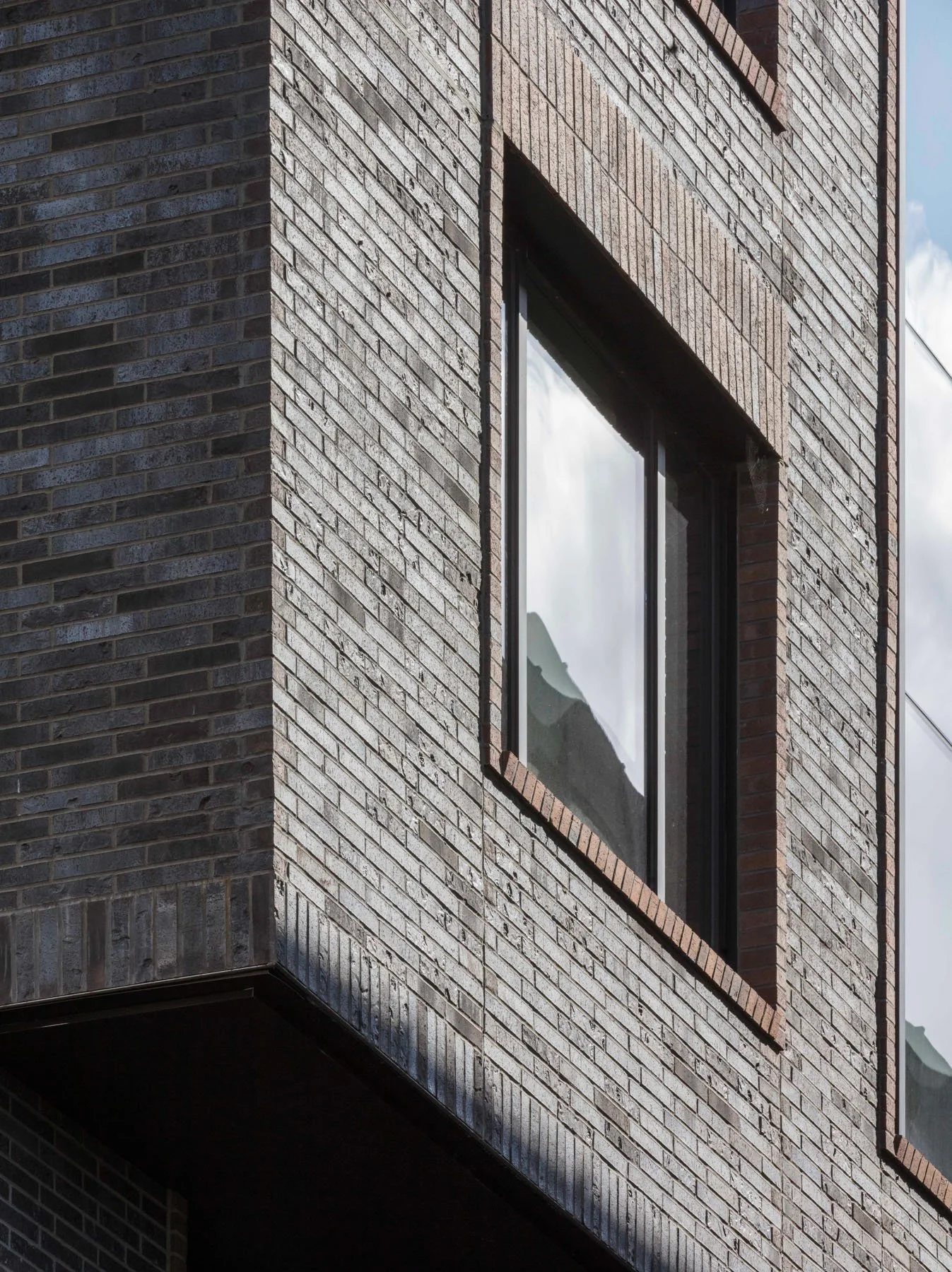
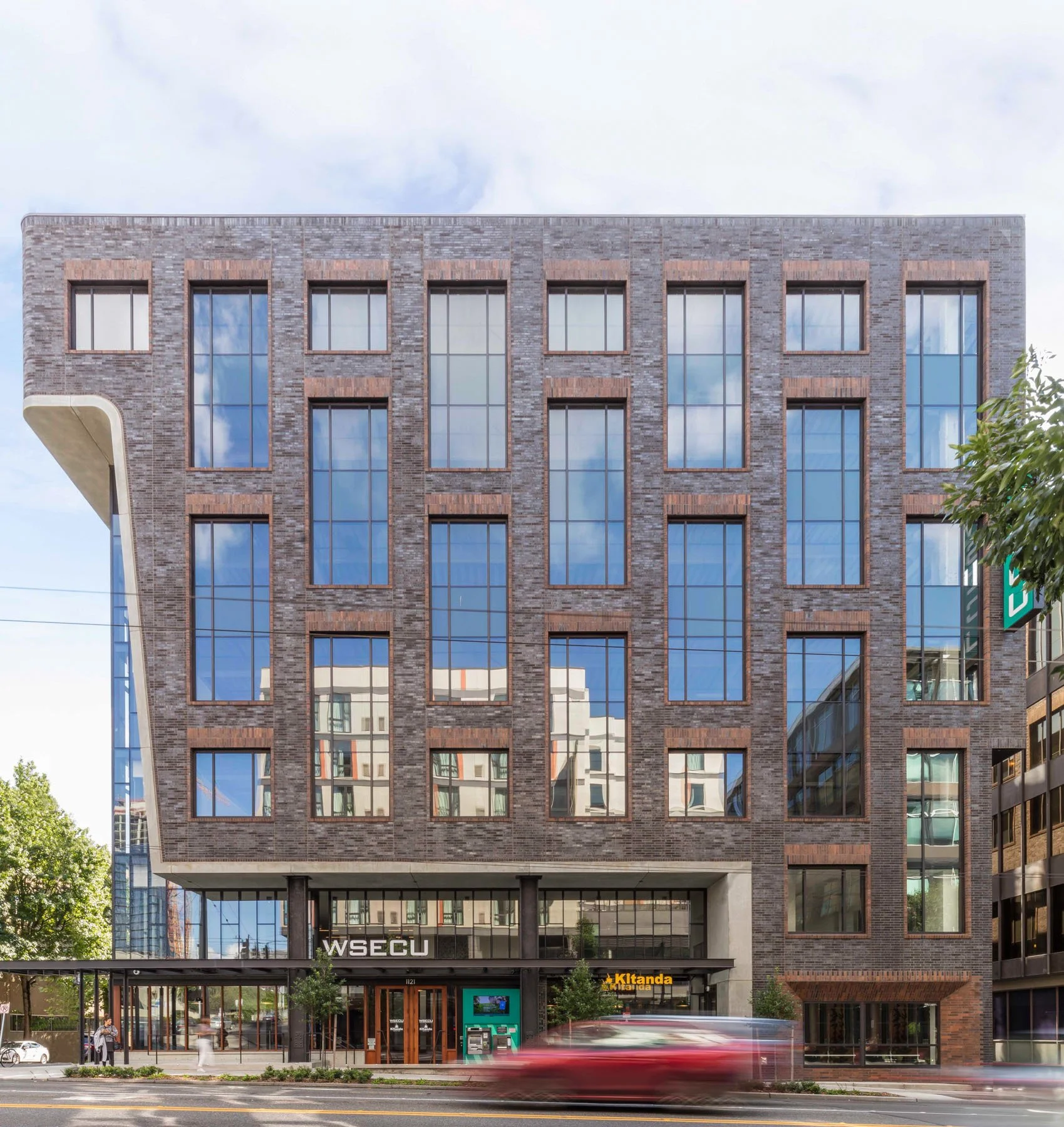
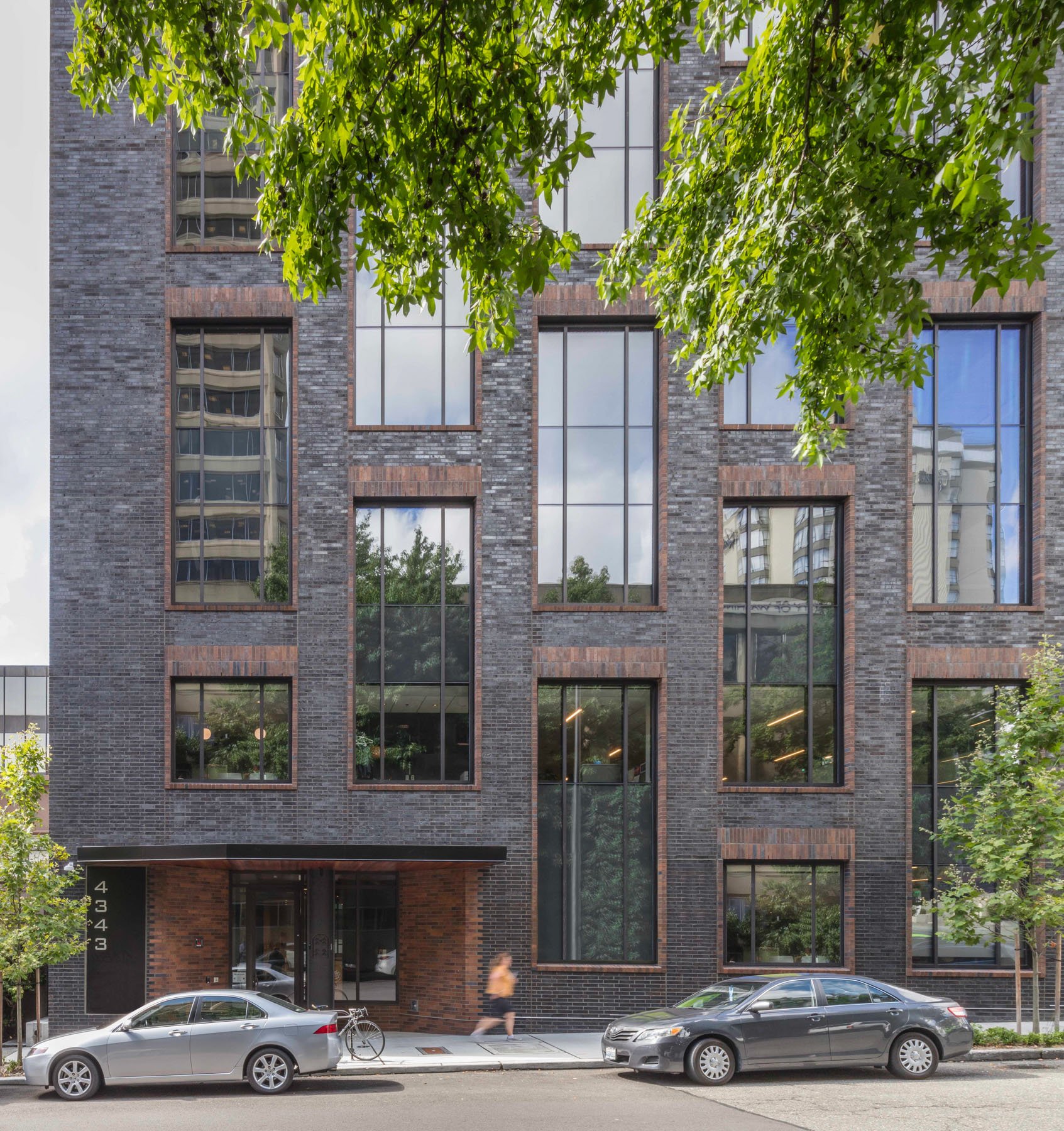
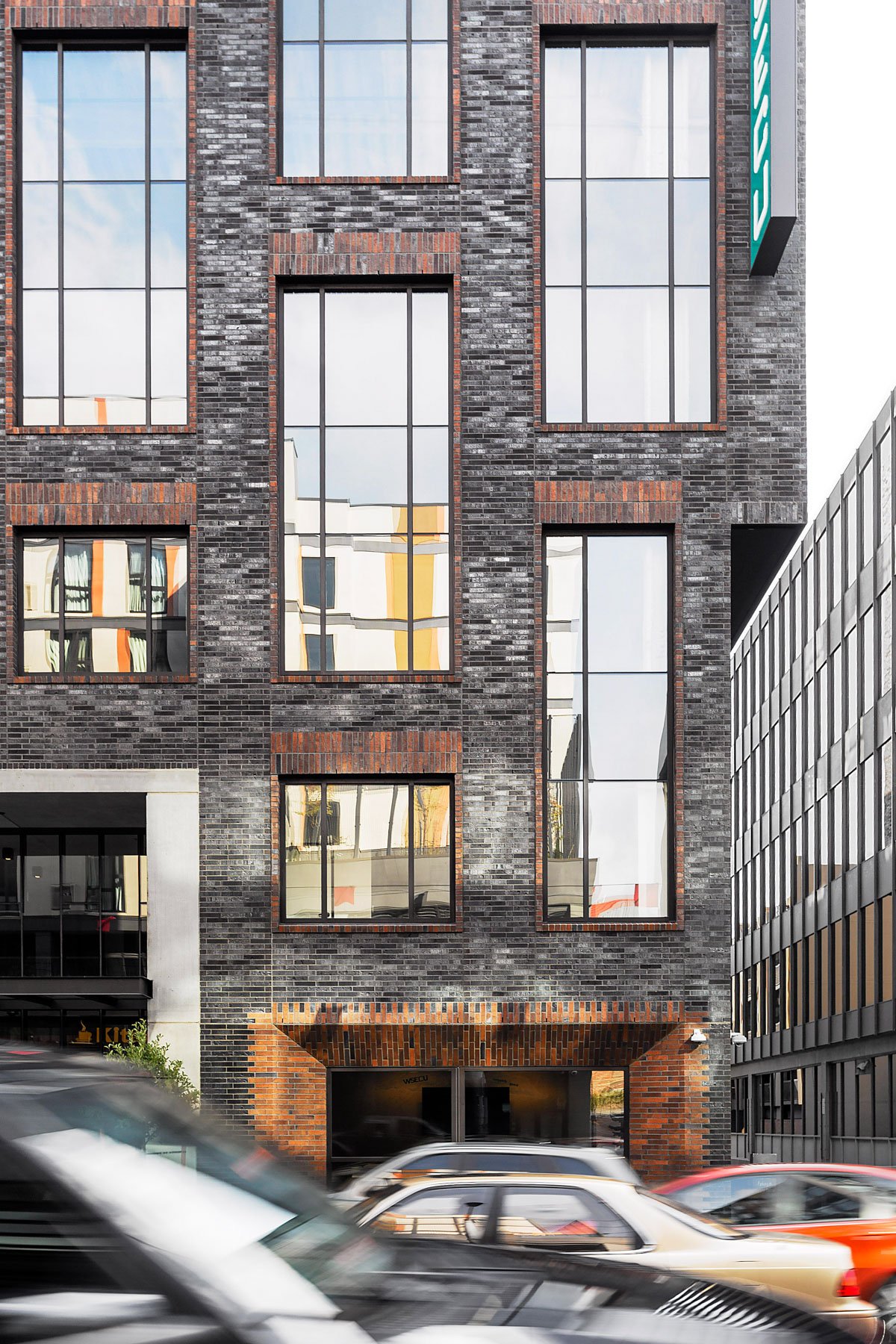
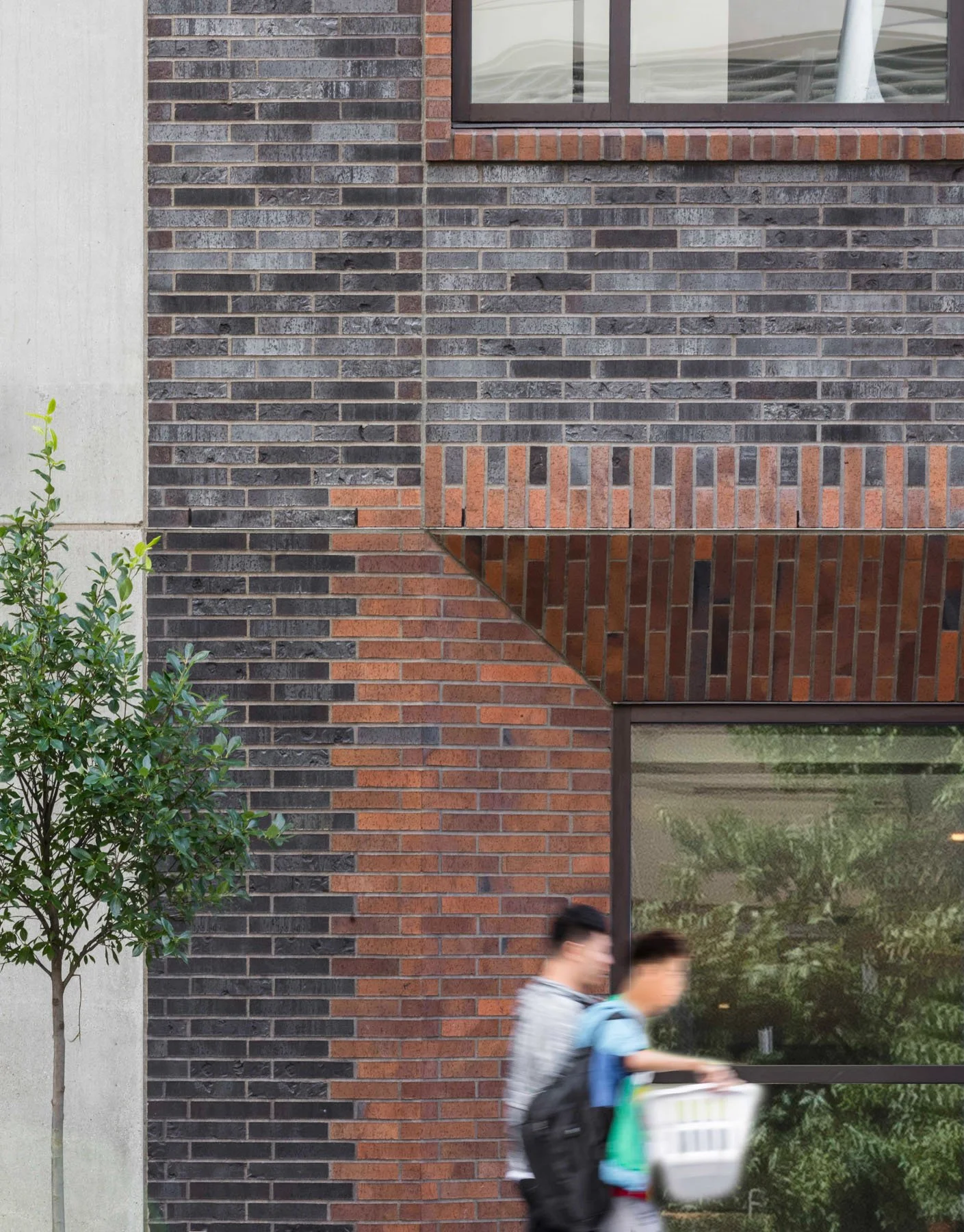
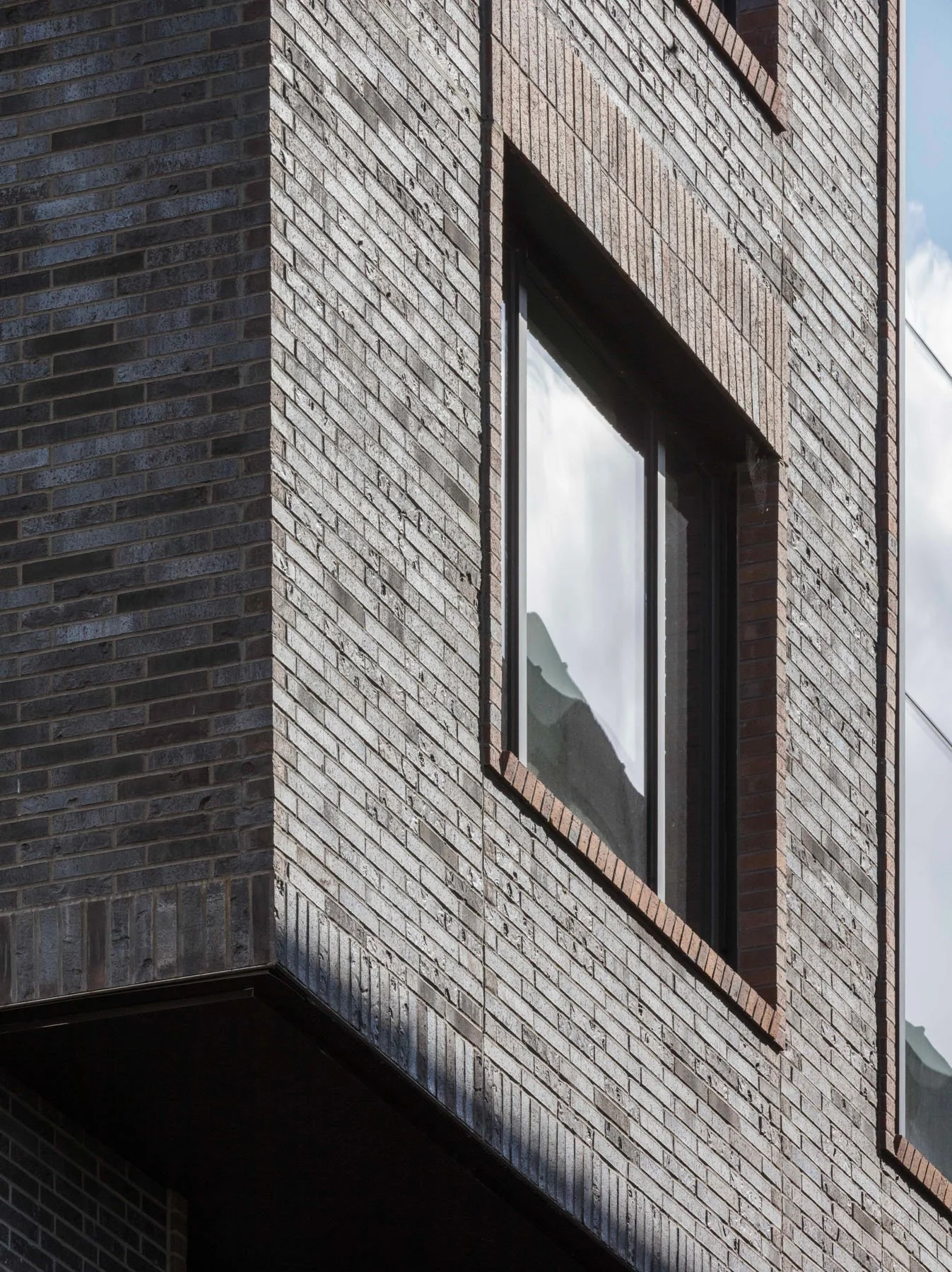
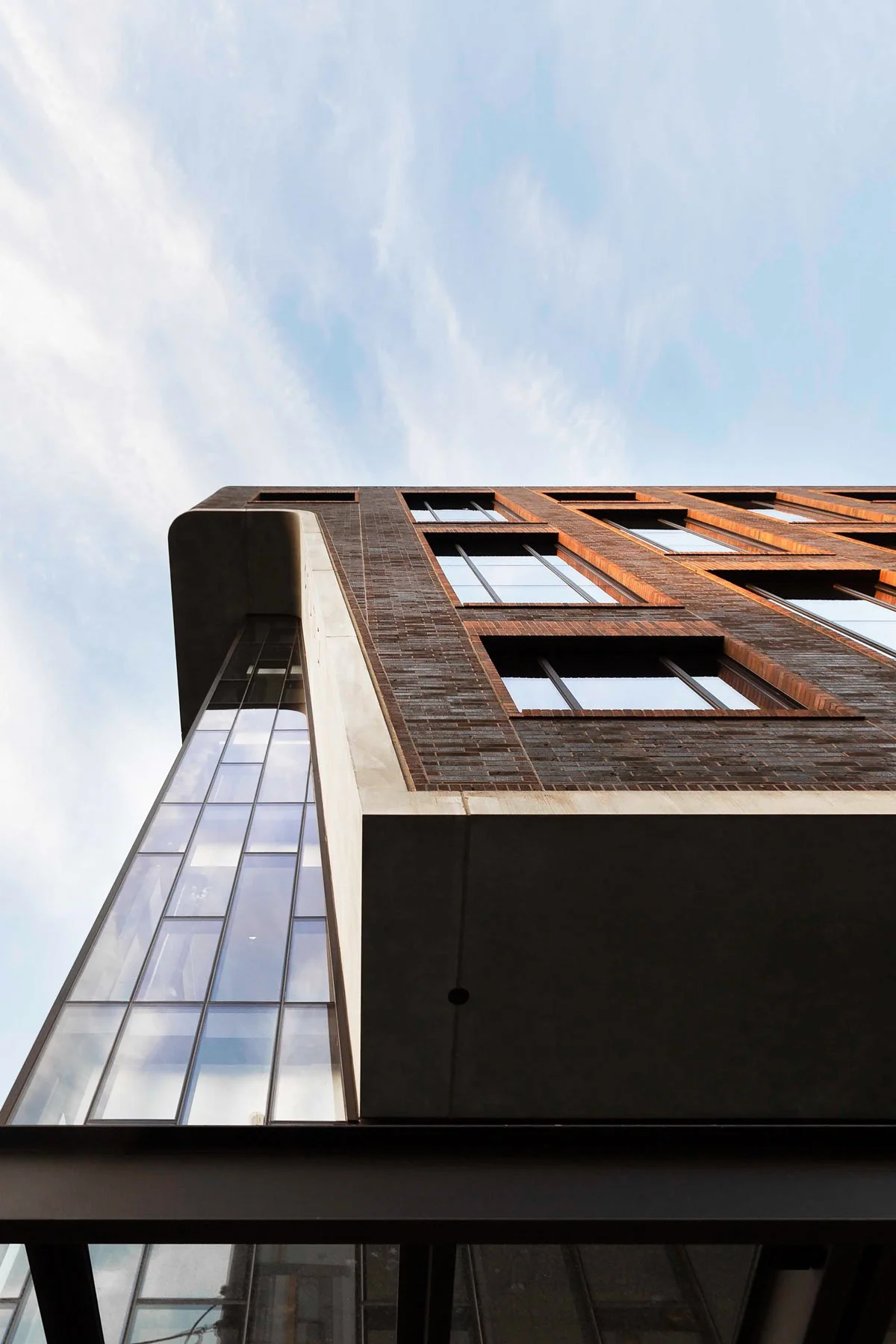
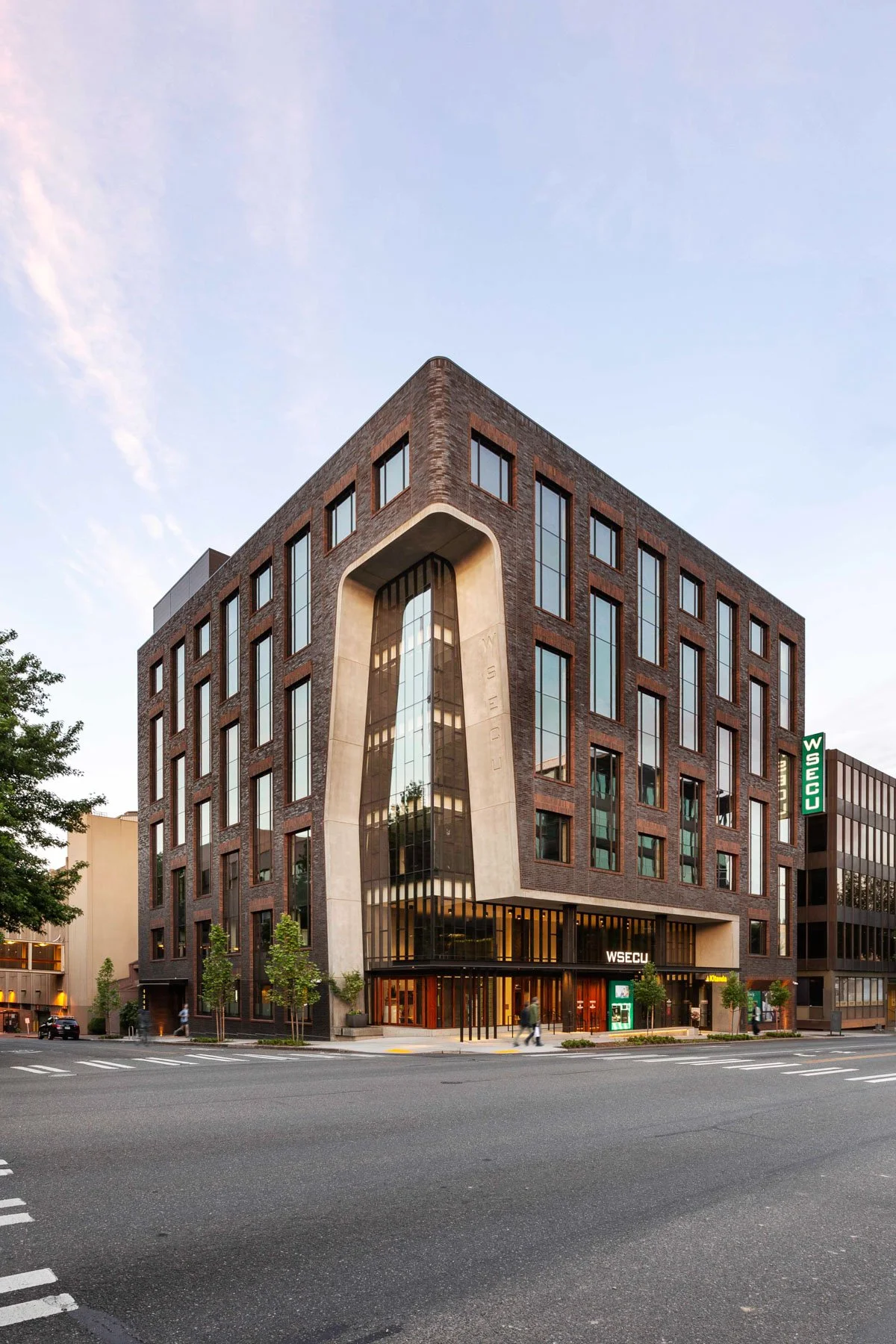
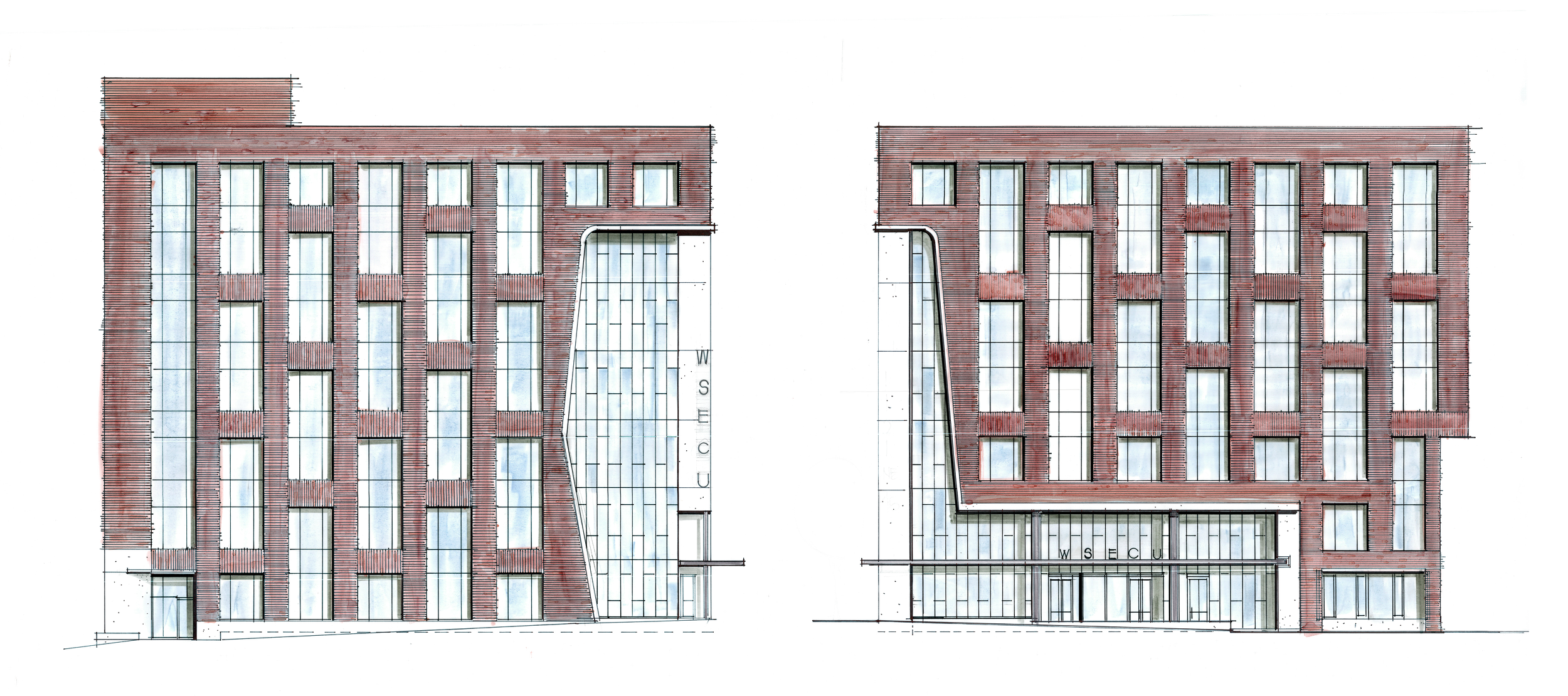
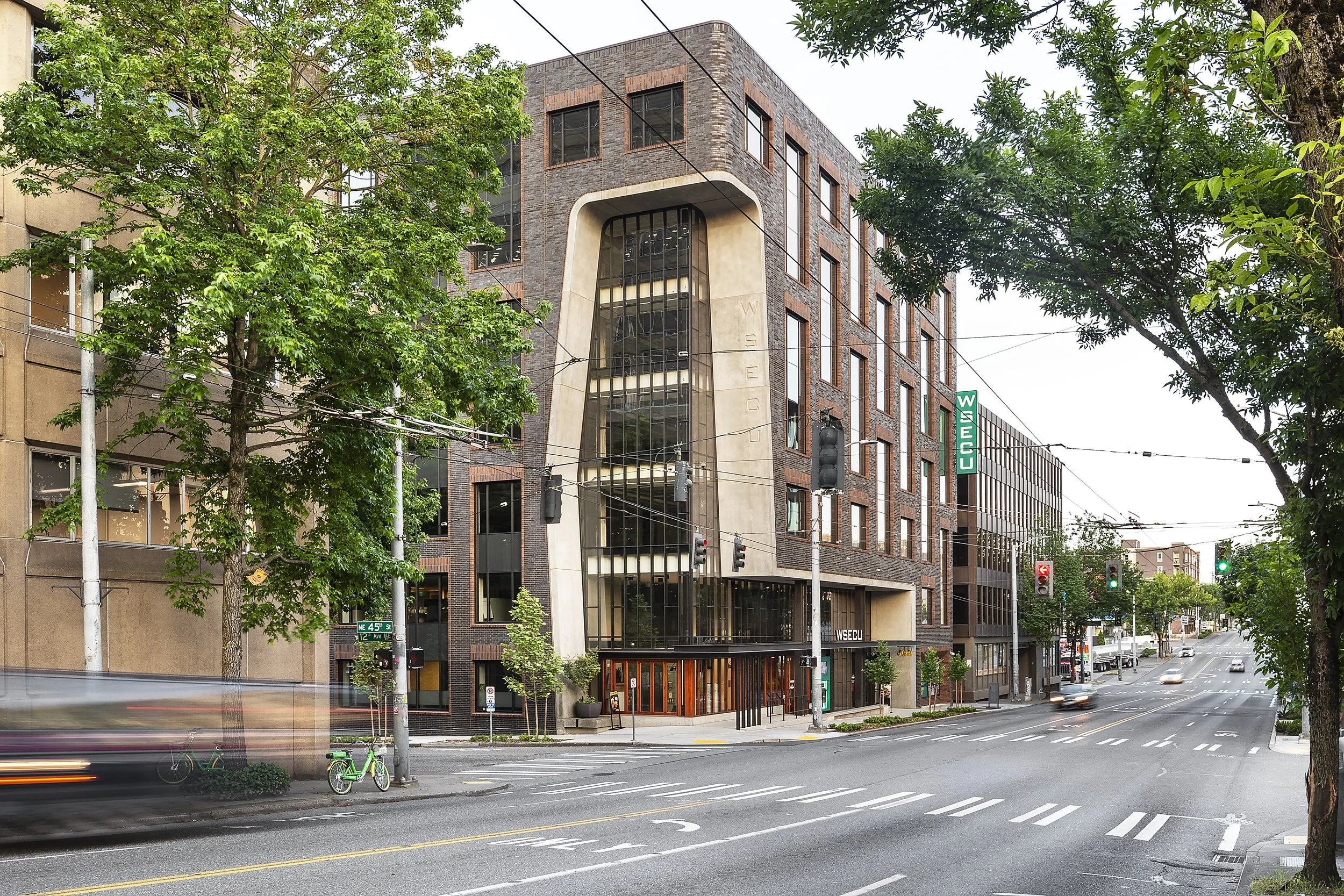
Dark clinker brick and contrasting window surrounds connect WSECU to the masonry buildings of the University District, while windows of different proportions break the façade down to the scale of the street.
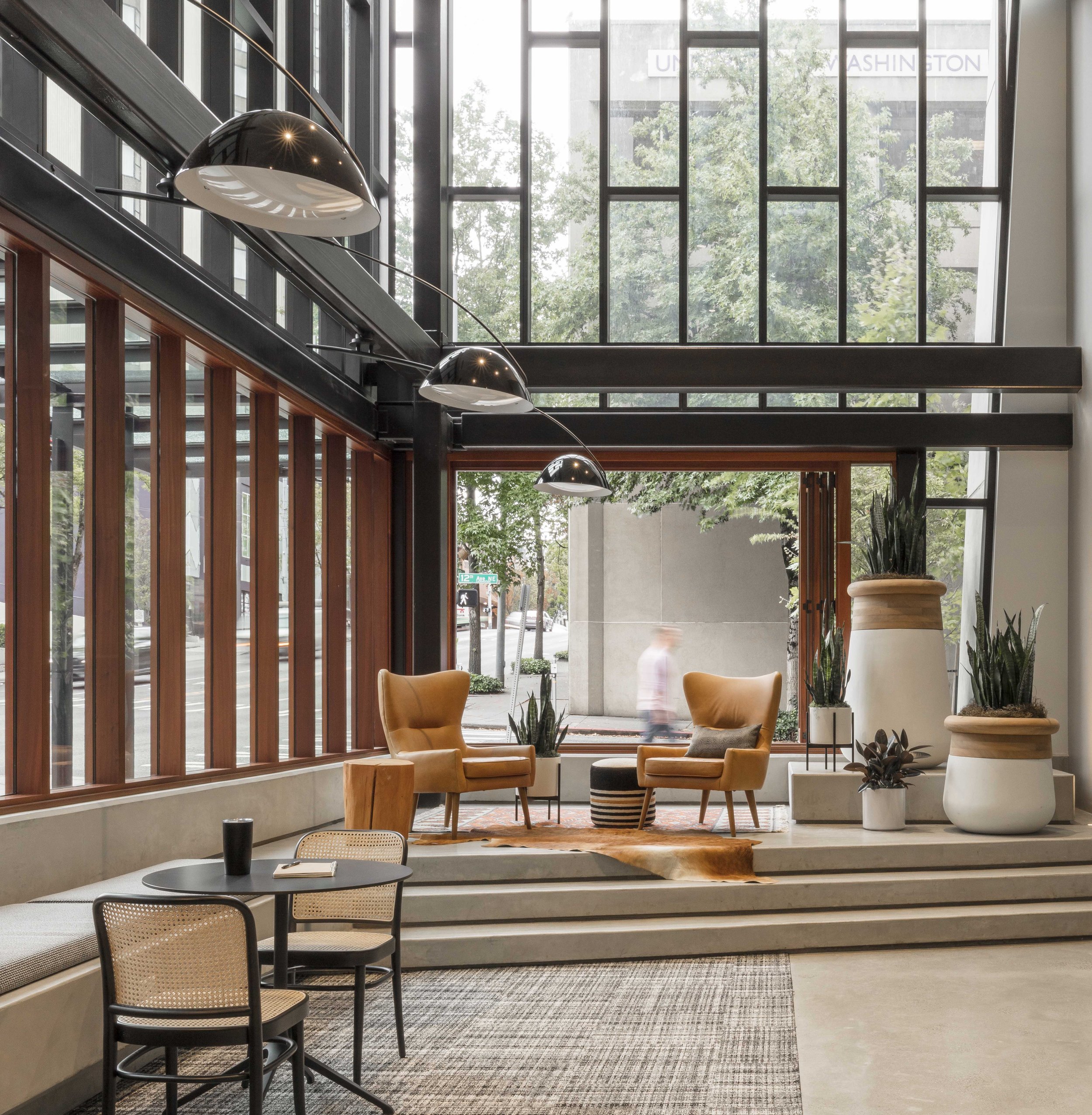
The ground plane extends the public realm inward, transforming the corner into a shared space between city and workplace.
Creating room on a small site
The site did not leave much room to spare.
The building core was pushed toward the south property line, where future development was most likely to limit daylight. That opened the office floors toward 45th Street and 12th Avenue, giving tenants larger contiguous floor plates and better access to windows.
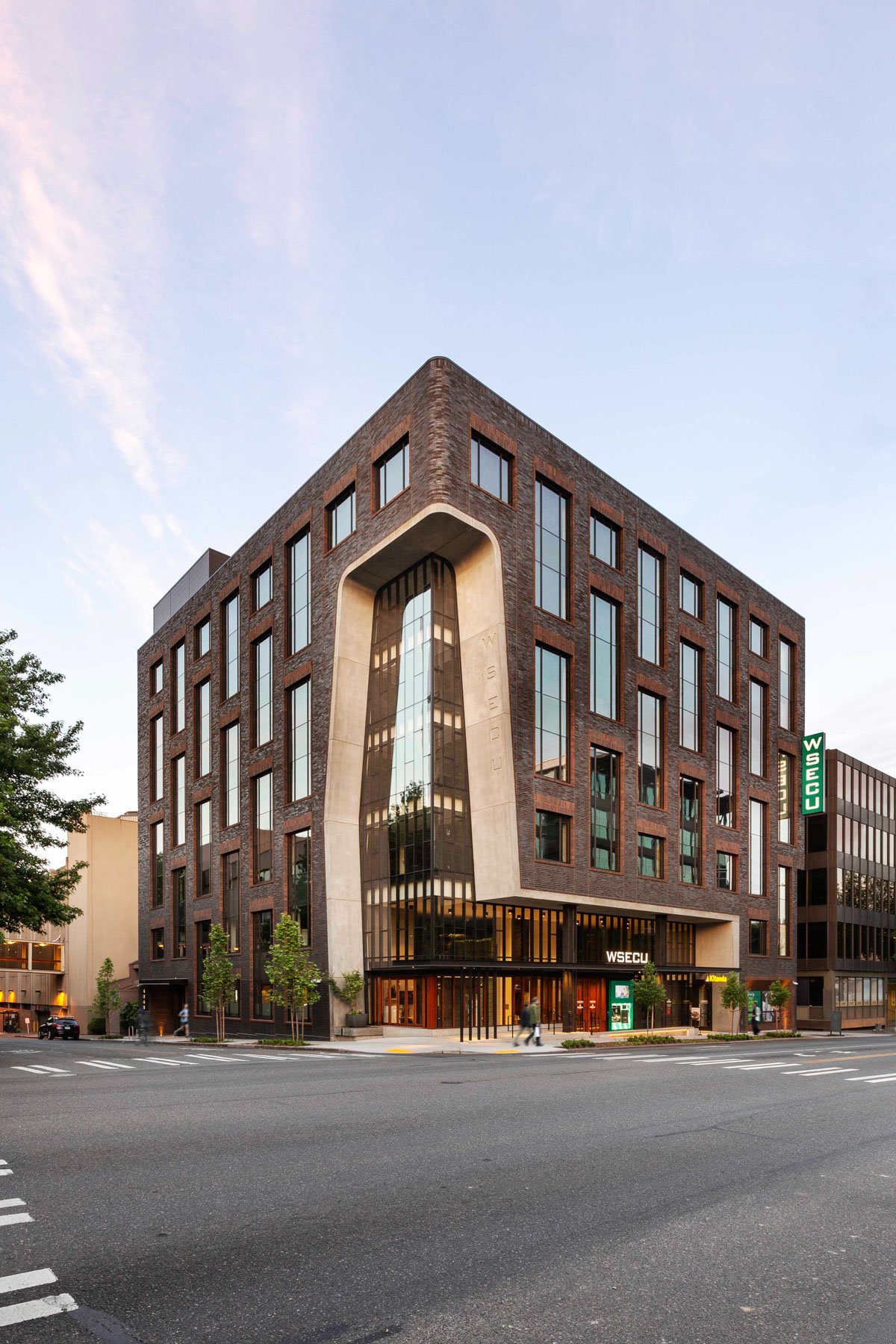
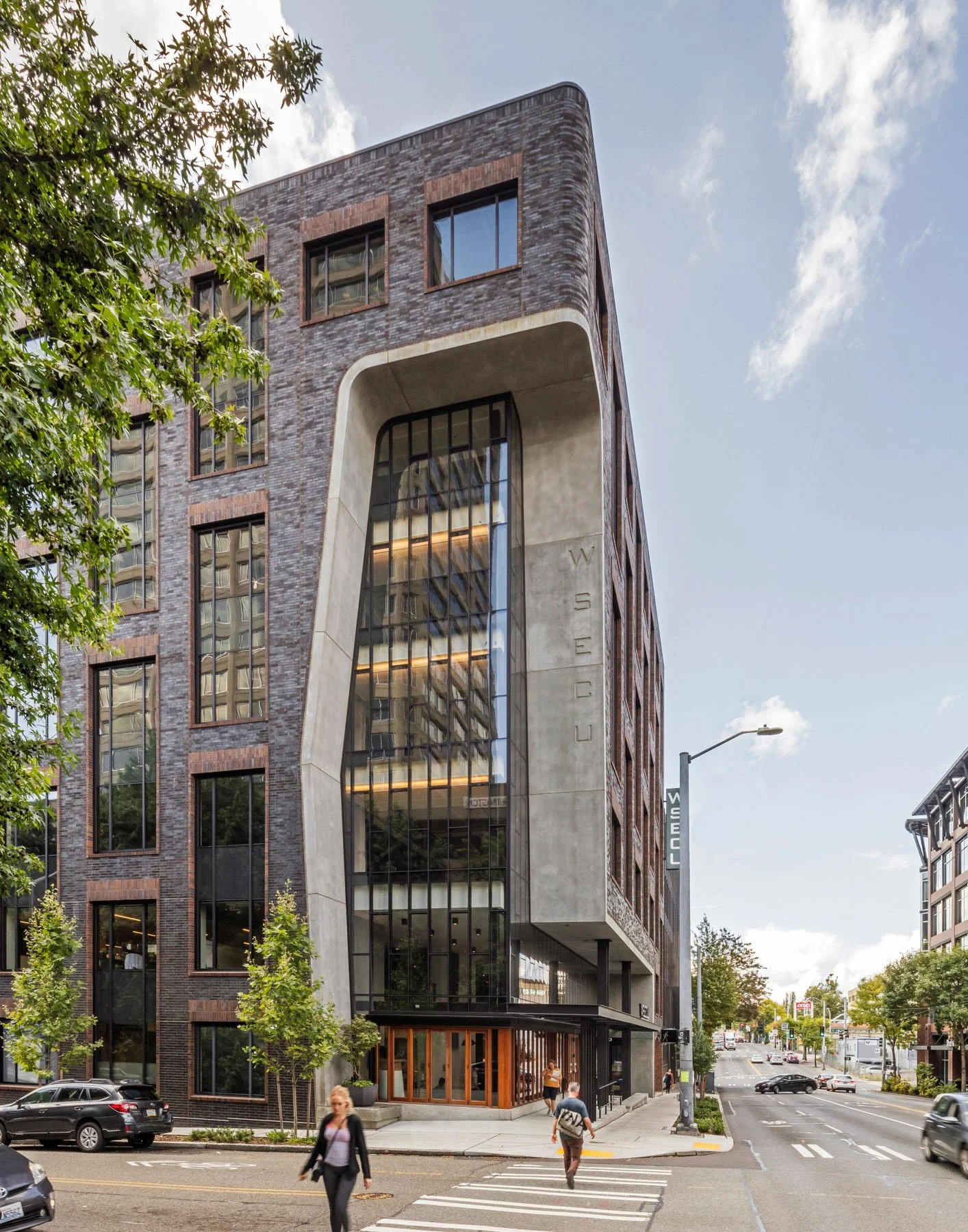
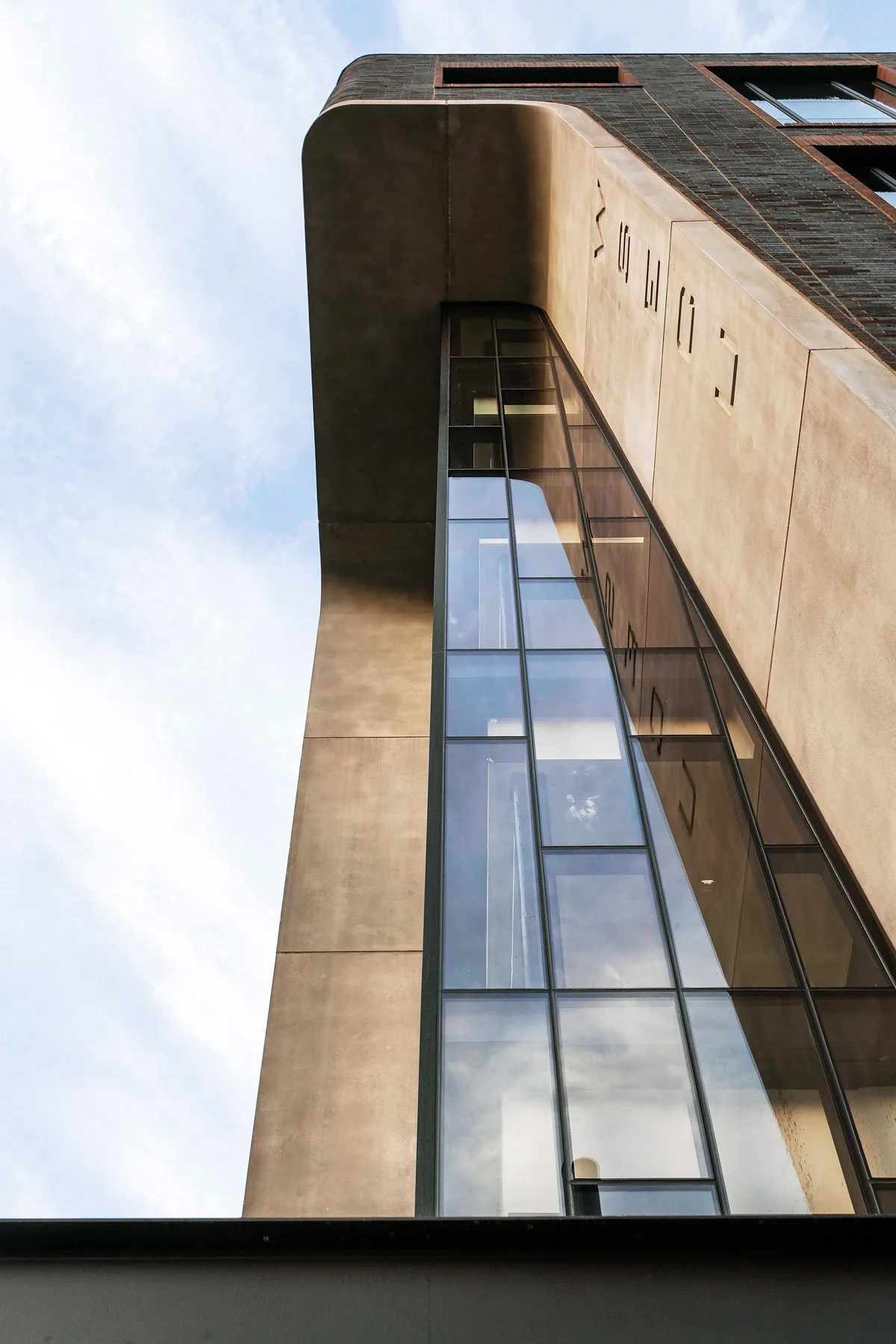
At the corner, the masonry volume opens into a tall glass recess. Other cuts create terraces, bring daylight farther inside, and break down the building as it meets the street.
Each move has more than one job. On a site this tight, it needed to.
Brick, glass,
mahogany
The University District already has plenty of brick.
WSECU uses it without trying to disappear into its surroundings. Dark masonry gives the building its weight, while deep window punctures imply heavy mass with lighter surfaces within. At the northwest corner, six stories of glass cut into that mass and mark the intersection.
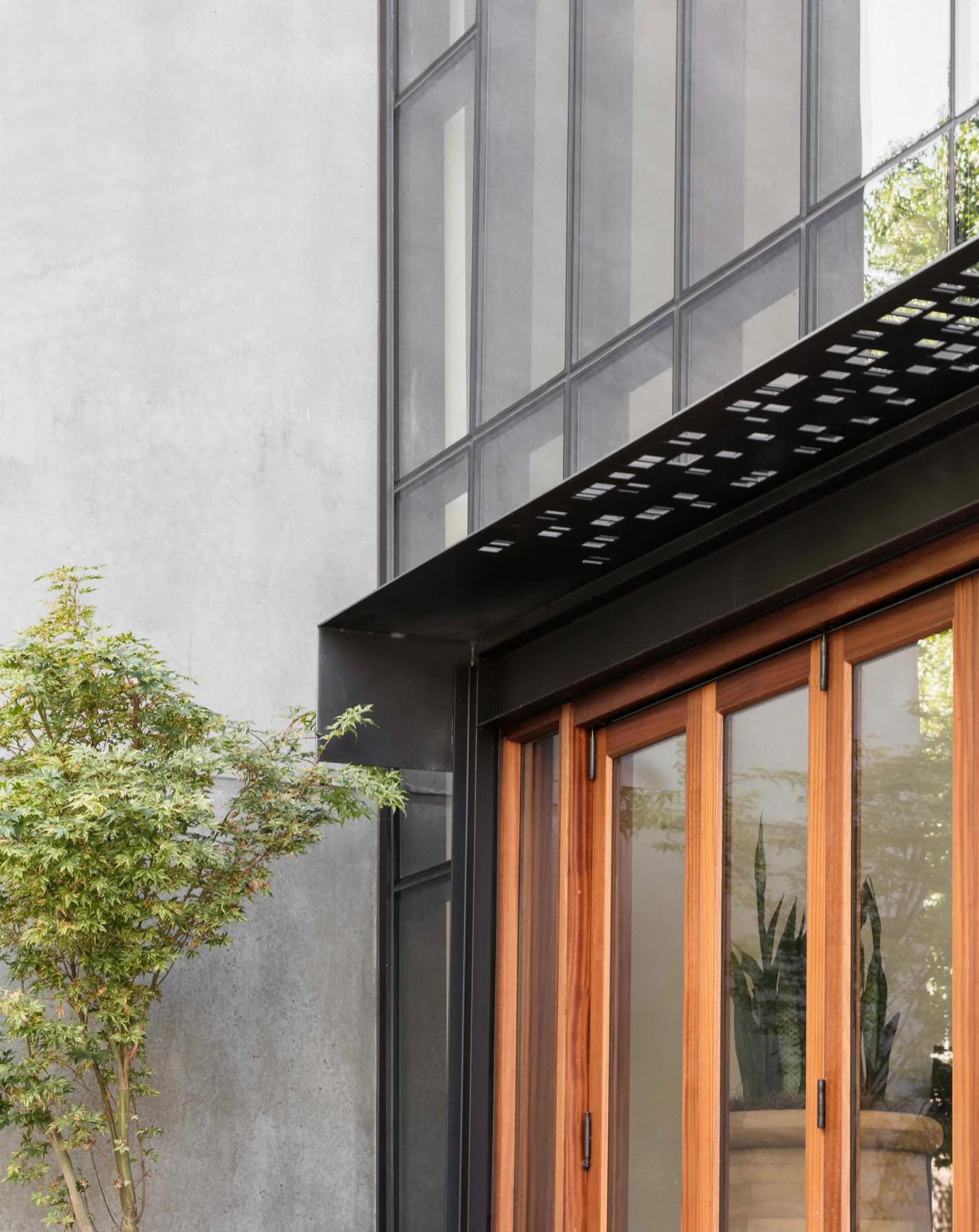
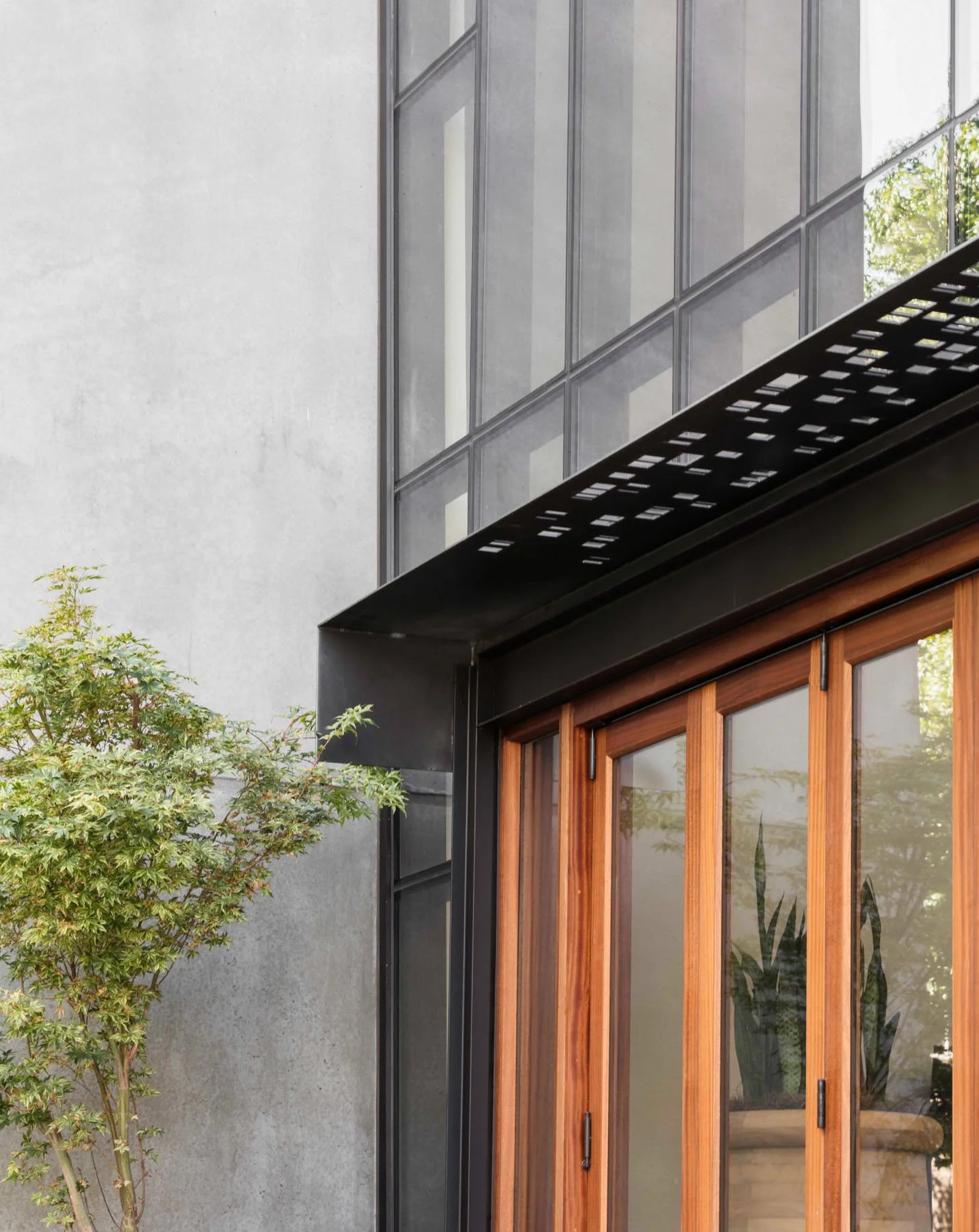
Closer to the sidewalk, the materials change scale. Mahogany brings warmth to the storefront along 45th. Glass exposes the activity inside. The beveled brick opening gives the community room its own presence on the street.
The building belongs to a familiar material landscape, but it has its own address within it.
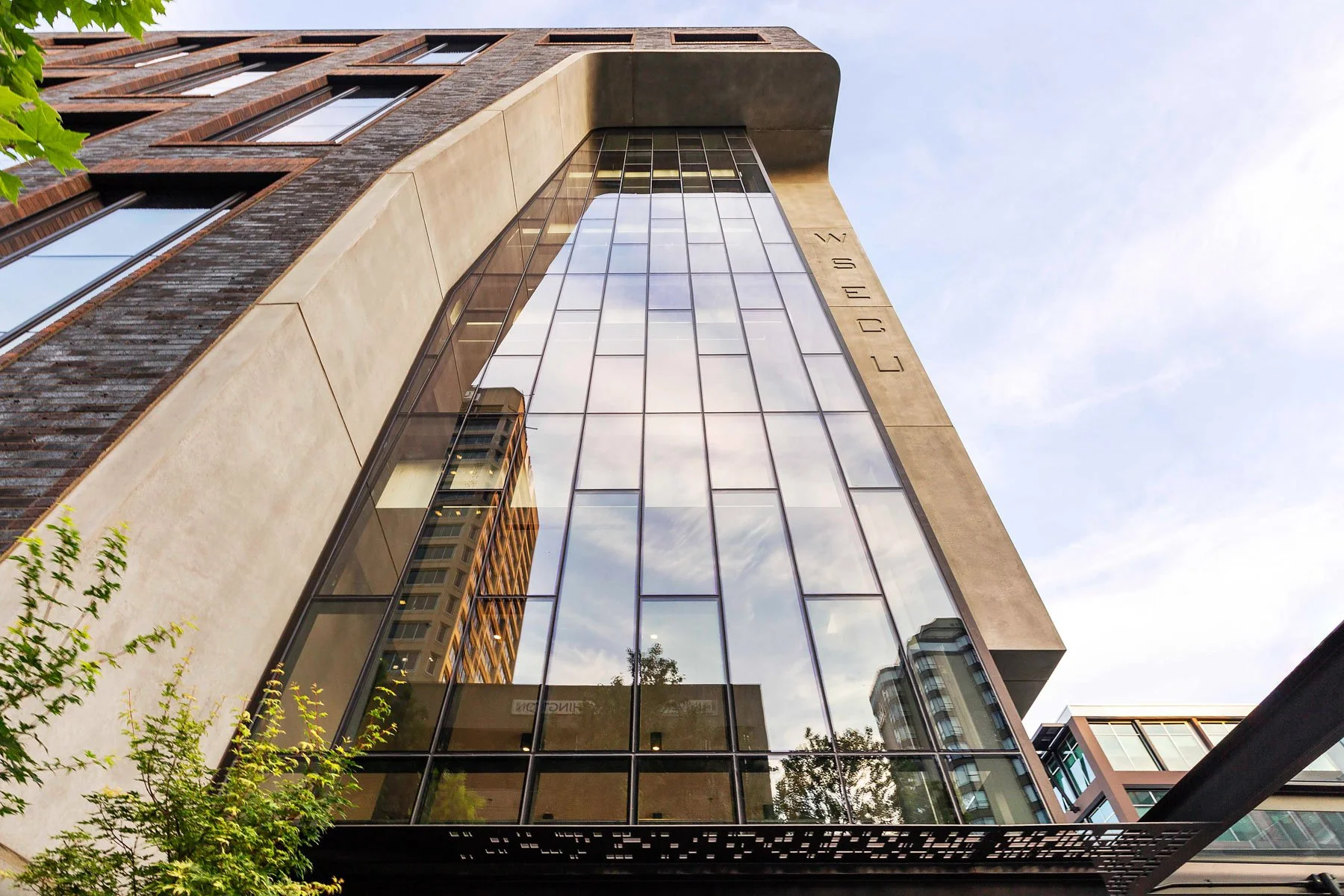
At the corner, a six story glass façade is carved from the heavier brick building to form WSECU’s lantern, making the credit union visible at one of the University District’s busiest intersections.