
SkB Architects Selected to Design Paul Allen’s ‘Upstream’ Music Festival
Conceived by Microsoft cofounder Paul Allen, Upstream Music Fest + Summit brought hundreds of artists and thousands of people to Seattle’s Pioneer Square for an ambitious three day celebration of music and culture.
SkB Architects was deeply involved in shaping the festival, master planning an experience that unfolded across more than 25 stages and venues throughout the historic neighborhood. Streets, alleys, buildings, public spaces, temporary architecture, installations, graphics, and audience movement were considered as a connected urban experience, supported by the complex logistics required to make an event of this scale possible. Upstream became an exploration of the city itself as a medium for design, temporarily transforming Pioneer Square through music, discovery, and collective experience.
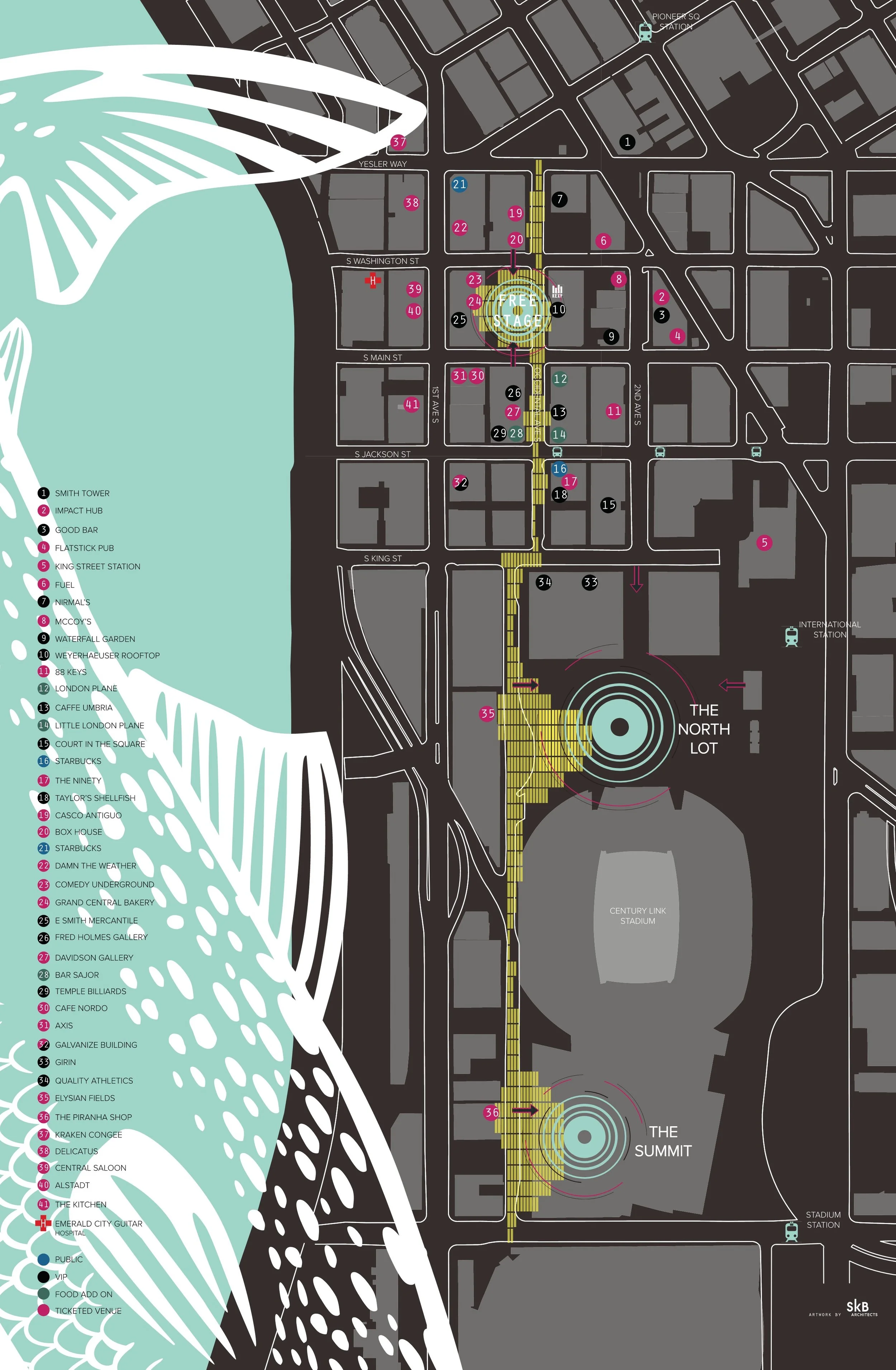
Festival Masterplan
The Festival
The City as a Venue
Upstream was conceived as a festival without a conventional boundary. SkB Architects developed a spatial framework that connected Pioneer Square’s streets, alleys, plazas, existing venues and temporary stages into a single cultural landscape—turning movement through the neighborhood into part of the experience. The masterplan linked The Fest and The Summit across the district, with performances and gathering spaces embedded throughout the existing city.
Location
Pioneer Square, Seattle
Venue
25+ Venues & Stages
Organizer & Primary Benefactor
Paul Allen
Duration
3-Day Annual Festival
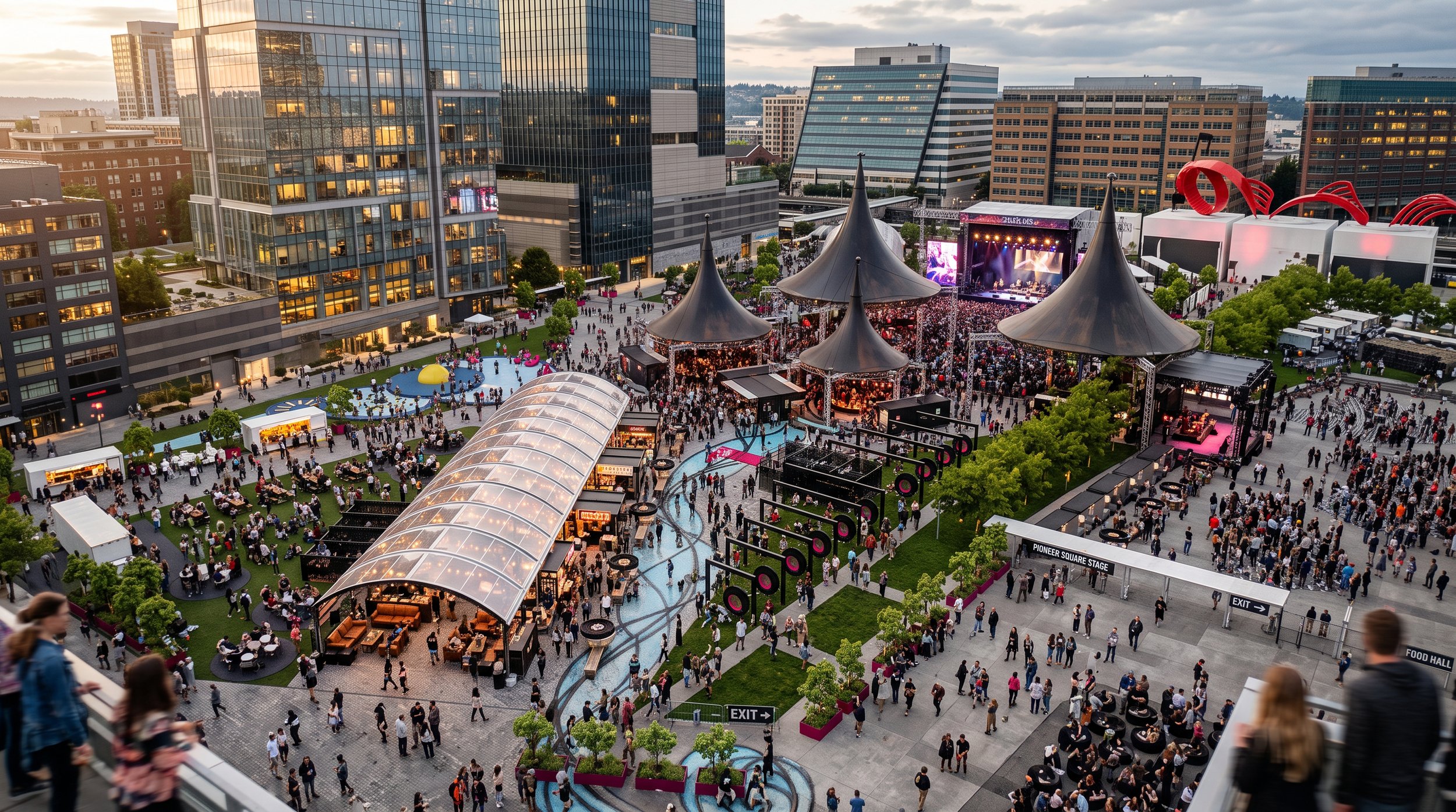
SkB Architects concept rendering: A festival conceived at the scale of the city, with architecture coordinating venues, circulation, gathering, and public space into a connected urban experience.
ORCHESTRATING COMPLEXITY
Behind the apparent spontaneity of Upstream was an intensive exercise in planning. SkB Architects coordinated audience movement, venue relationships, temporary stages, public space, production requirements, access, and event infrastructure across an active historic district. The work brought architectural thinking to the logistical complexity of a festival involving 200+ artists and thousands of people.
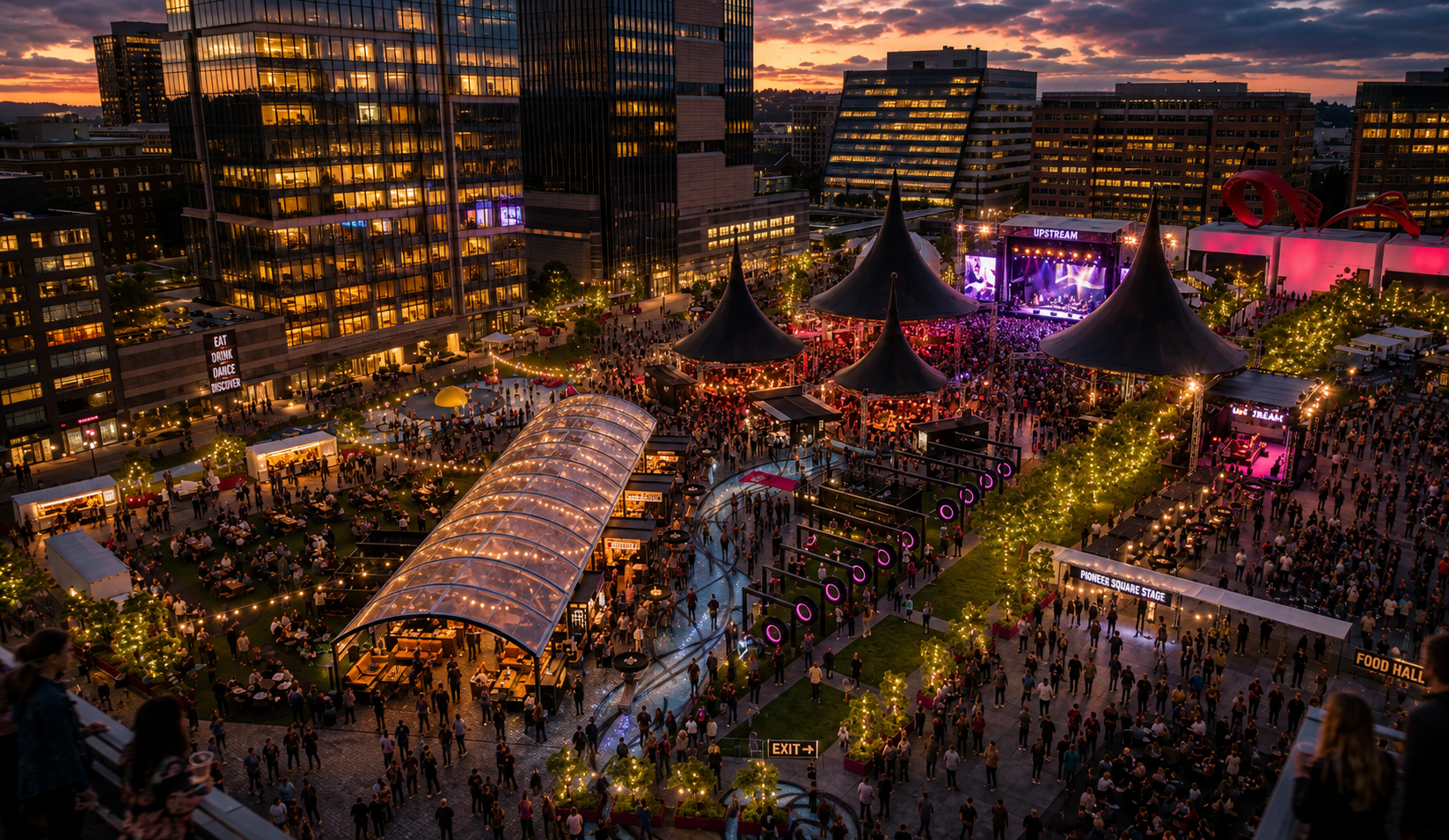
SkB Architects concept rendering: As day became night, the spatial framework supported a changing intensity of occupation—allowing the festival to transform without losing its legibility.
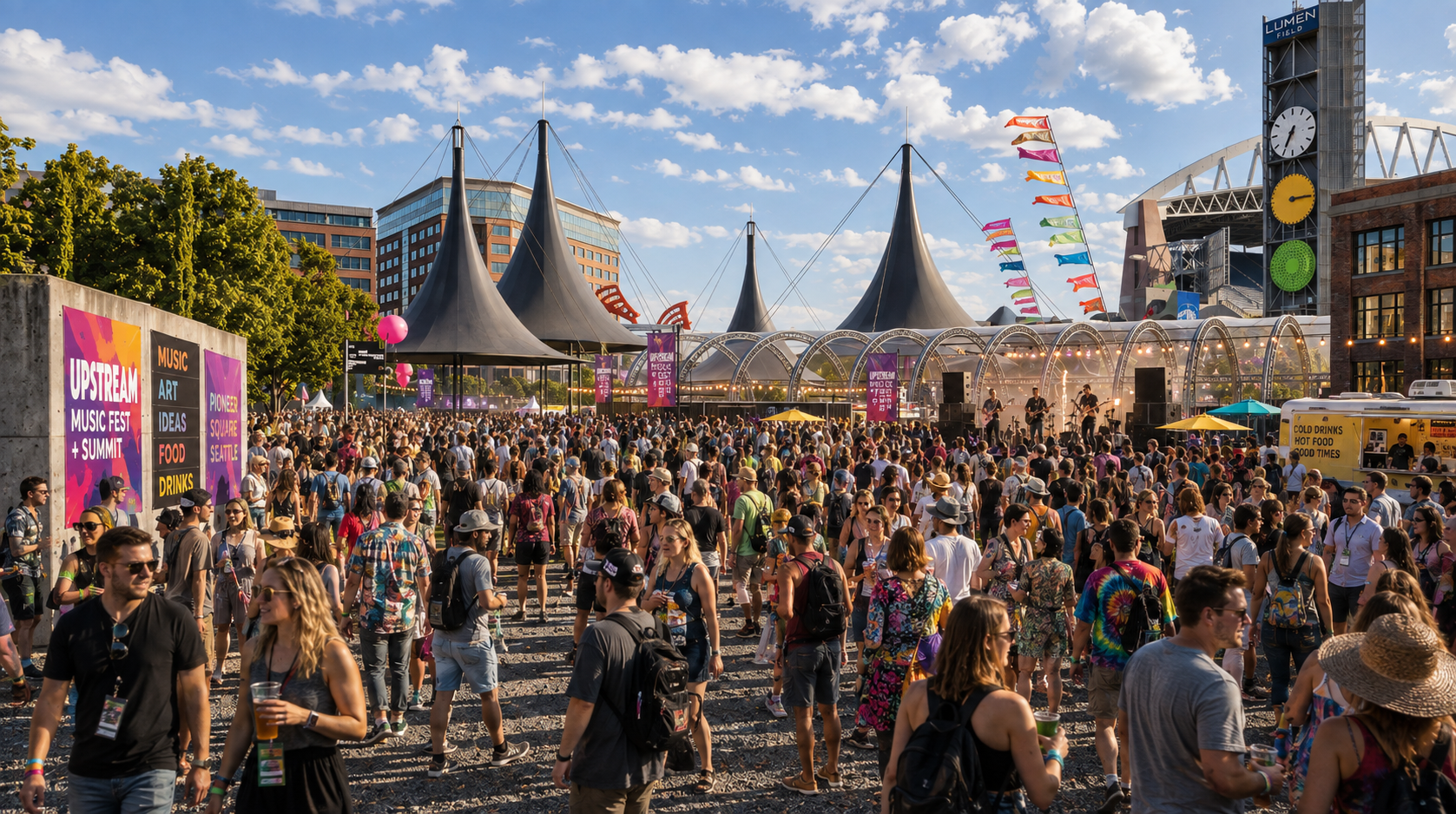
SkB Architects concept rendering: Temporary structures, stages, landscape, and wayfinding established a distinct festival environment within the existing fabric of Pioneer Square.
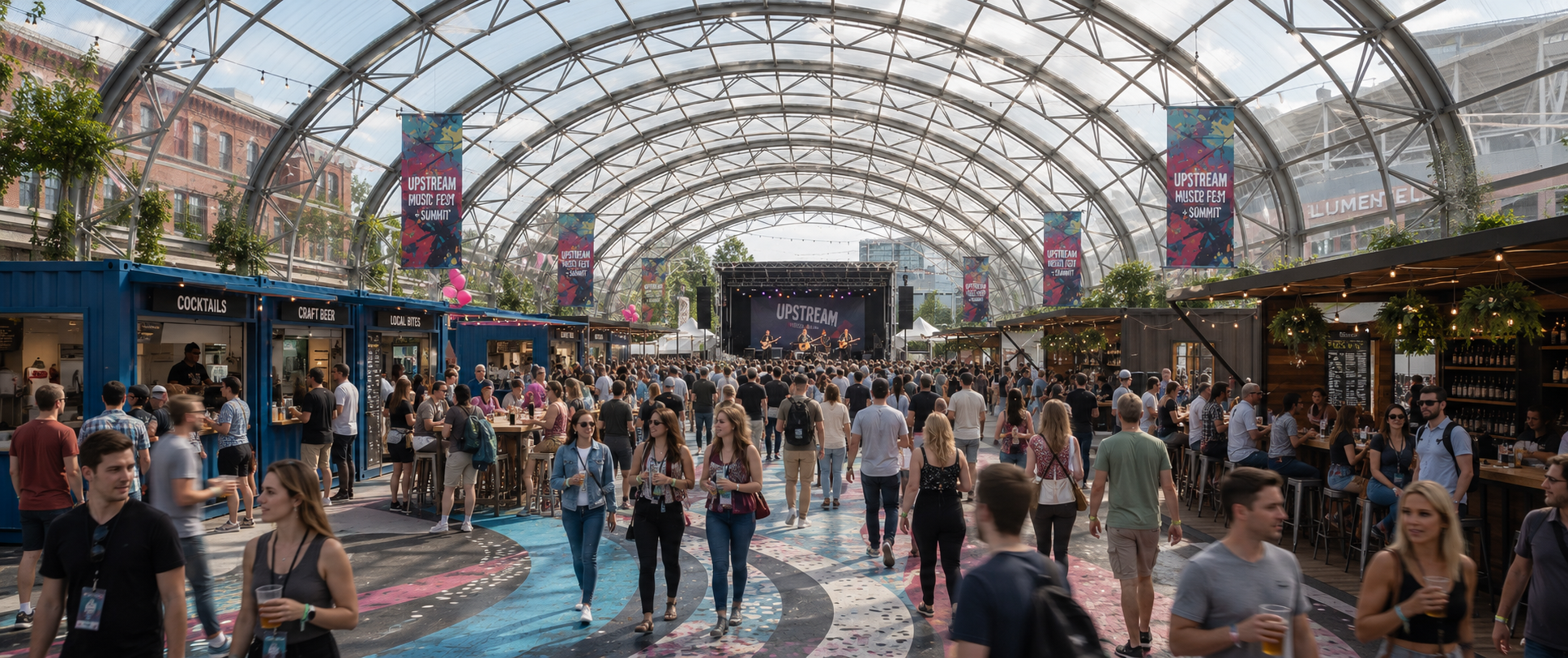
SkB Architects concept rendering: Circulation was treated as part of the experience, turning movement between performances into another form of collective occupation.
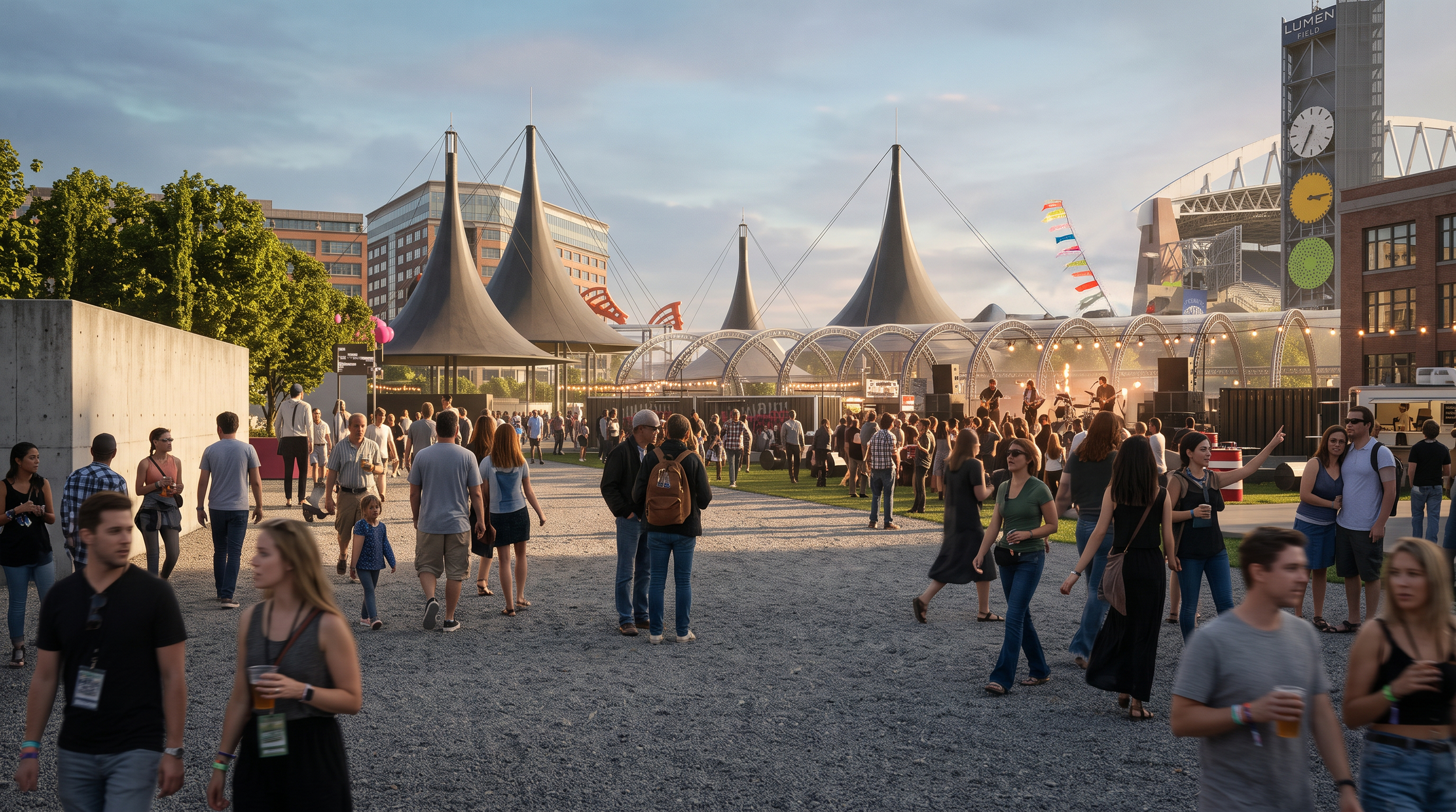
SkB Architects concept rendering: SkB Architects used temporary architecture to organize movement, program, and social space, giving coherence to the festival between individual performances.
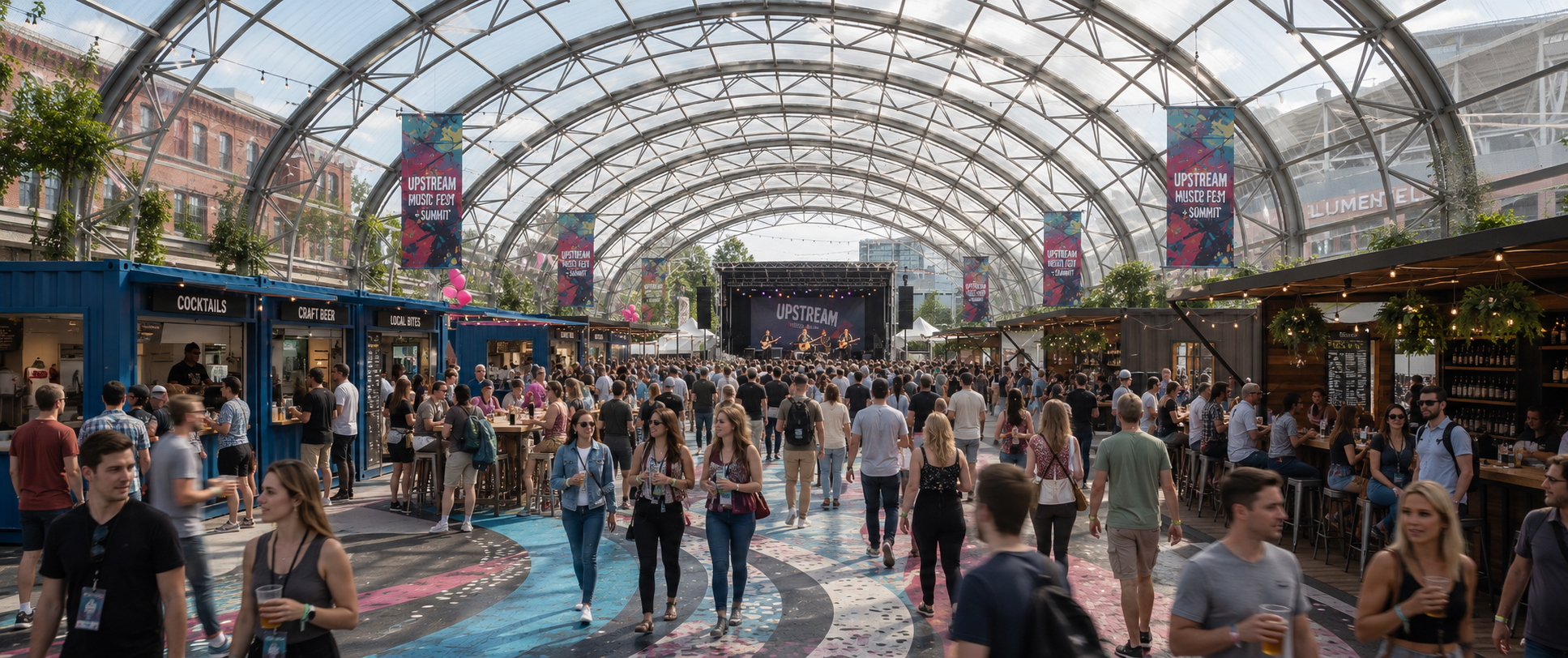
SkB Architects concept rendering: The festival operated simultaneously as performance venue and public realm, with spaces for music, food, conversation, and informal gathering woven together.
DESIGNING THE EXPERIENCE
Upstream was conceived as a “walkable mixtape”—an experience discovered by moving through Pioneer Square. SkB Architects helped shape the transitions between performance and public life: moments of intensity followed by places to gather, pause, eat, meet, and encounter something unexpected. Temporary interventions worked with the character of the neighborhood, allowing the festival to feel embedded in Seattle rather than imposed upon it.
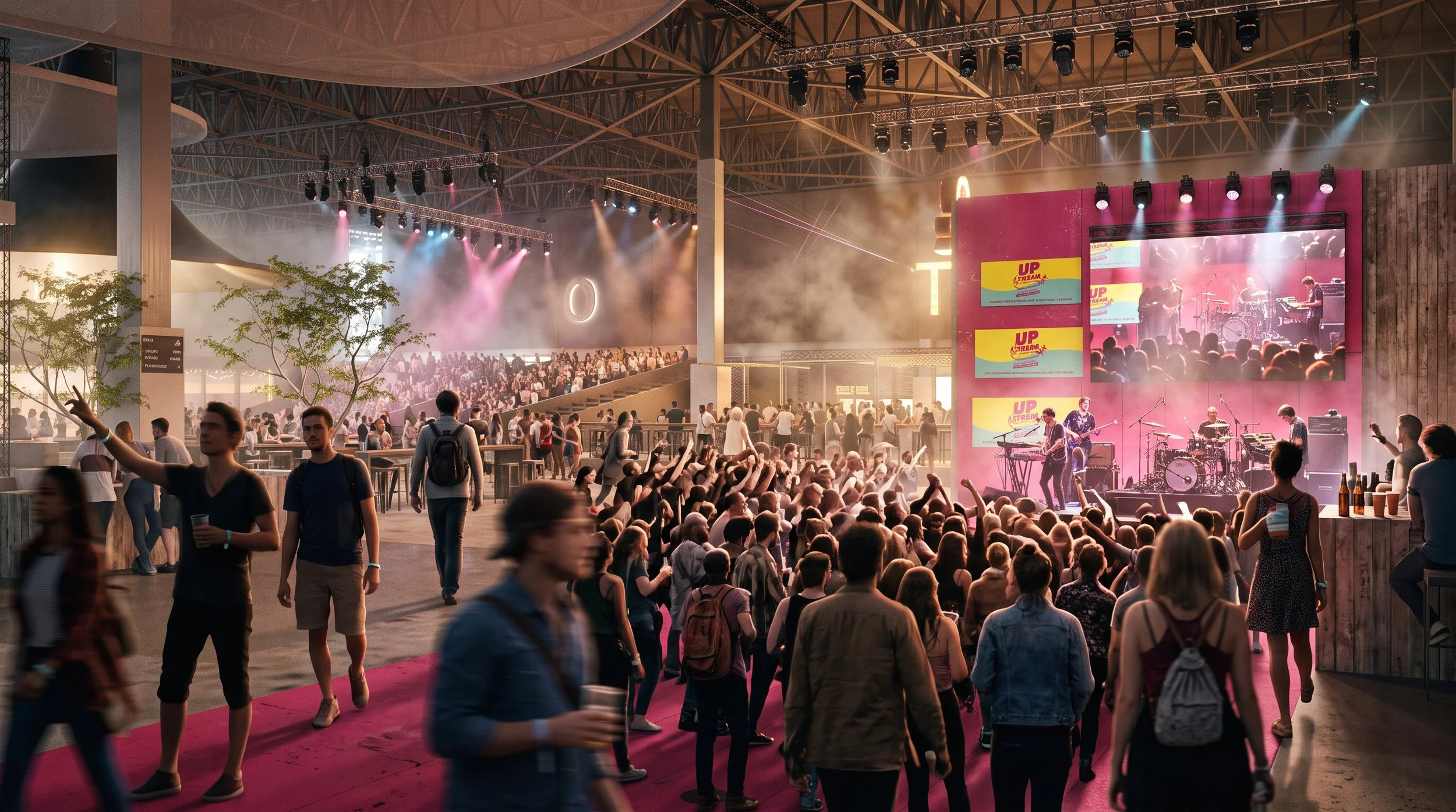
SkB Architects concept rendering: Architecture provided the framework for different scales of performance to coexist—from intimate encounters to dense collective events.
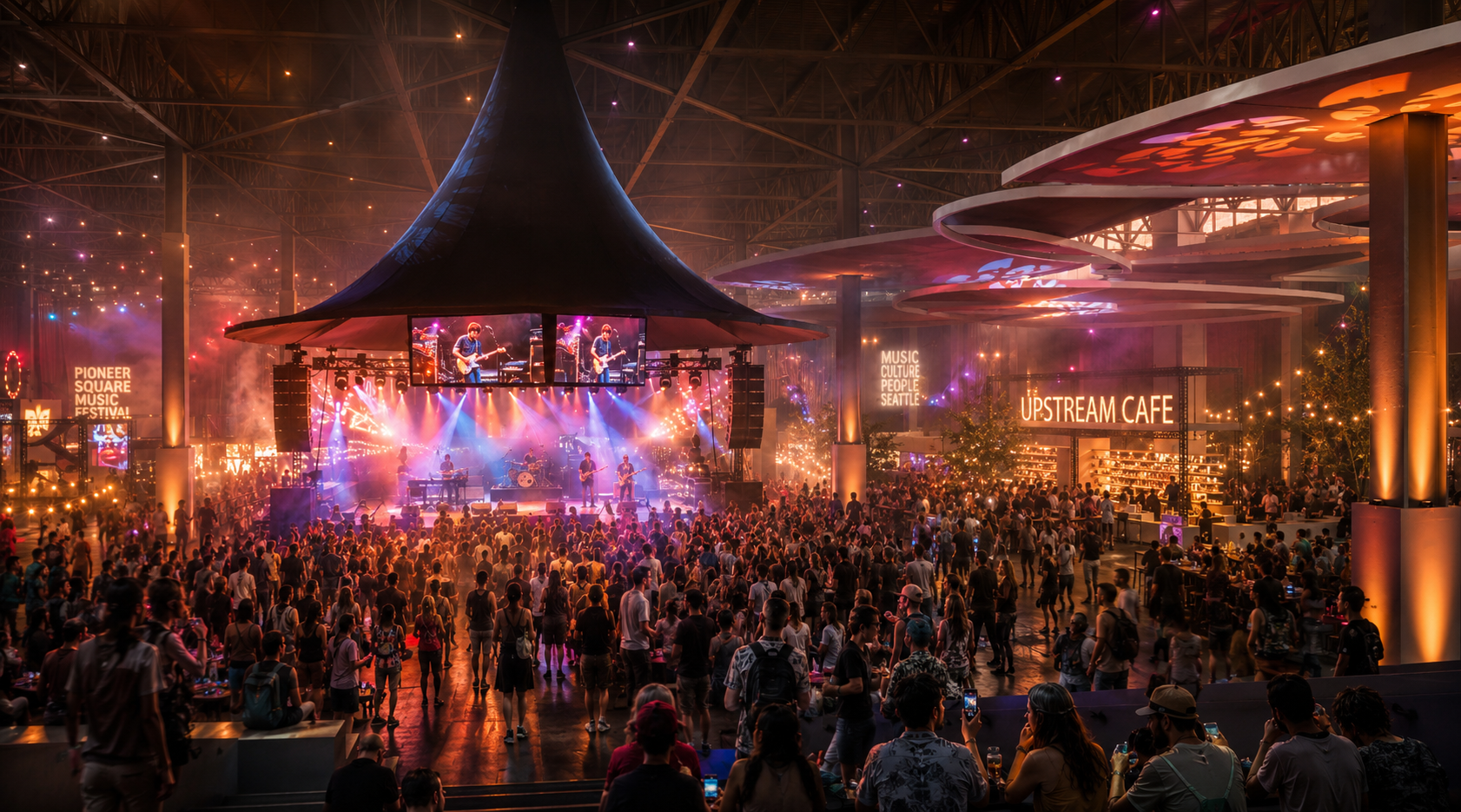
SkB Architects concept rendering: At its most concentrated, Upstream became a temporary piece of urbanism: architecture, infrastructure, music, and thousands of people operating as a single spatial system.
