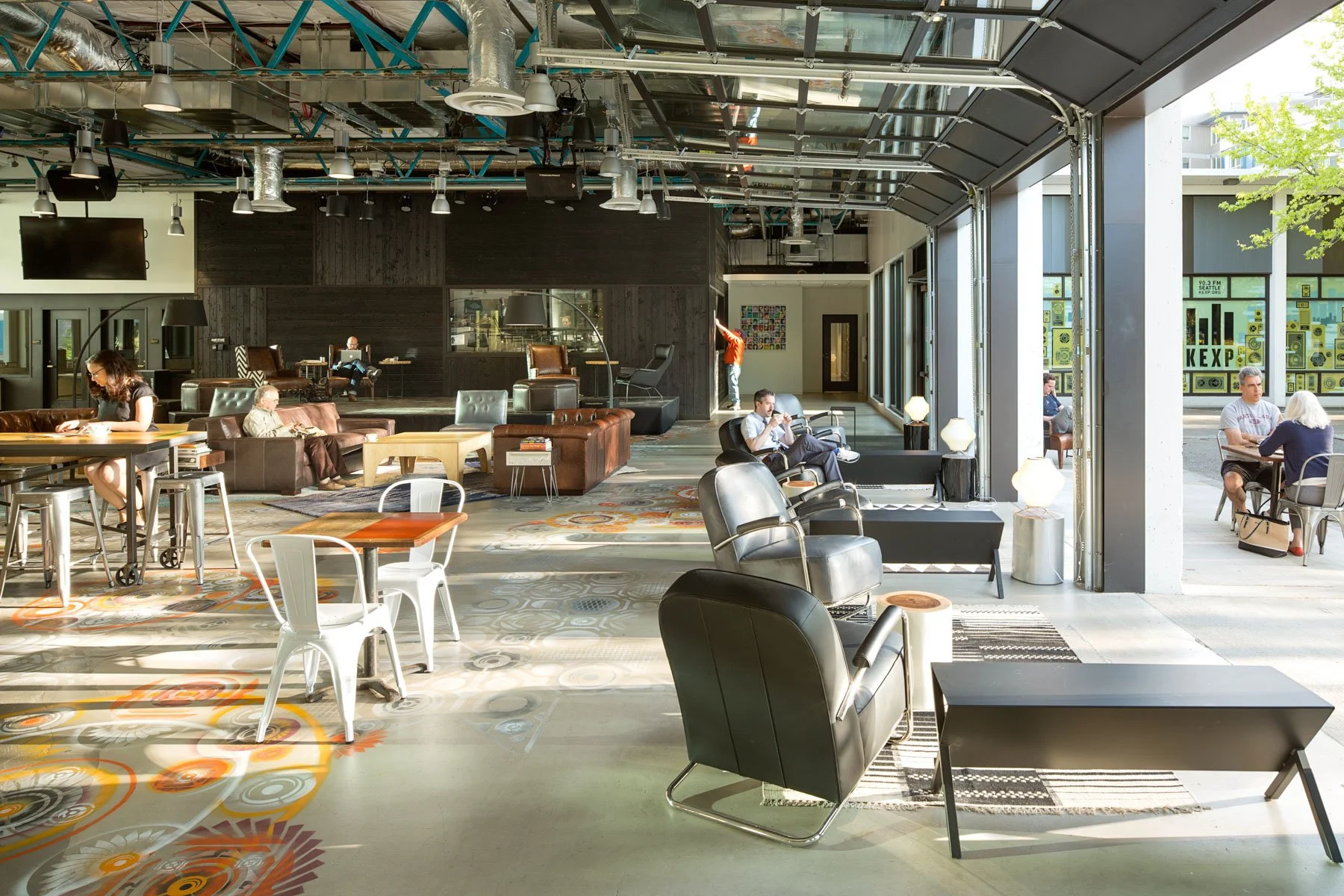
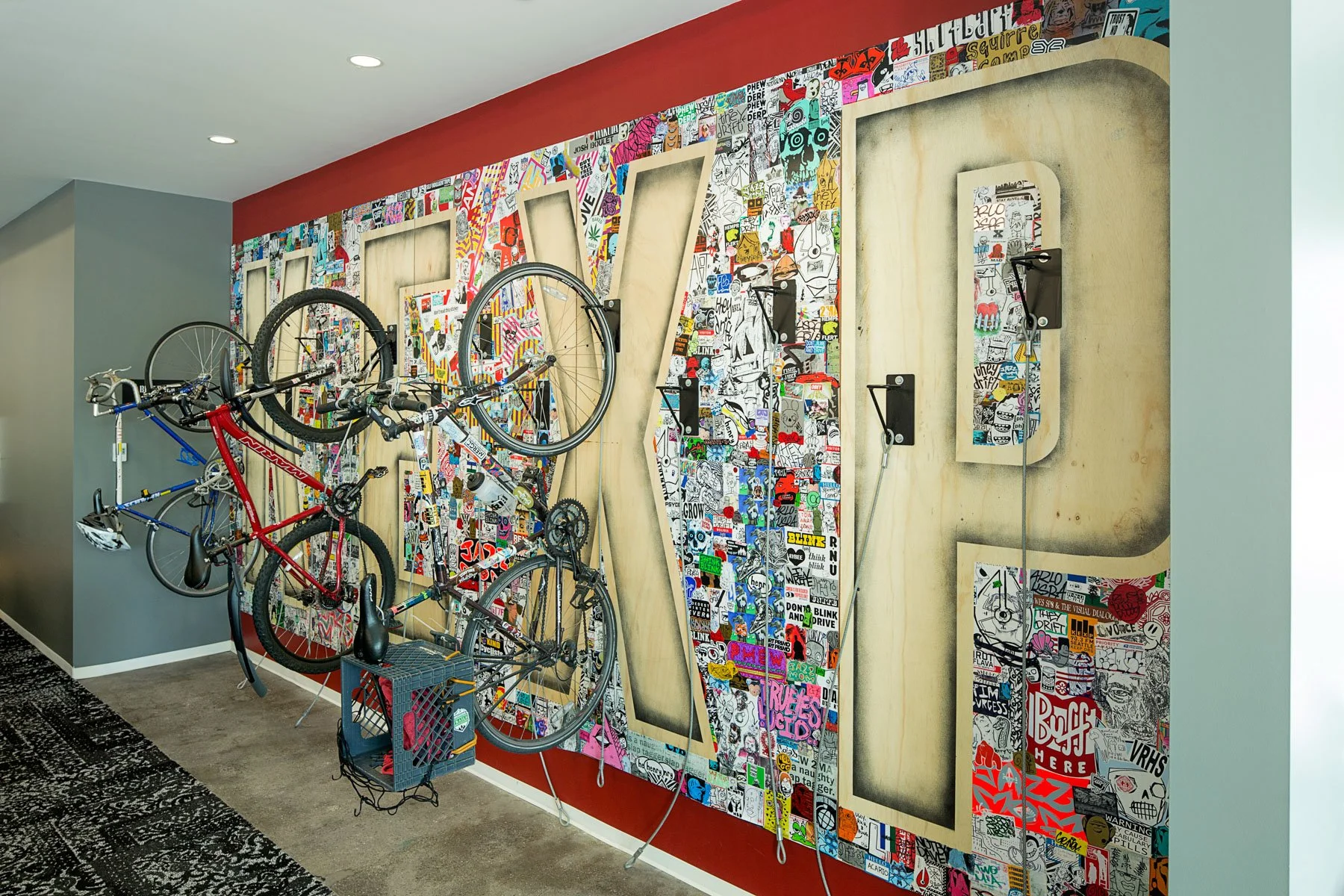
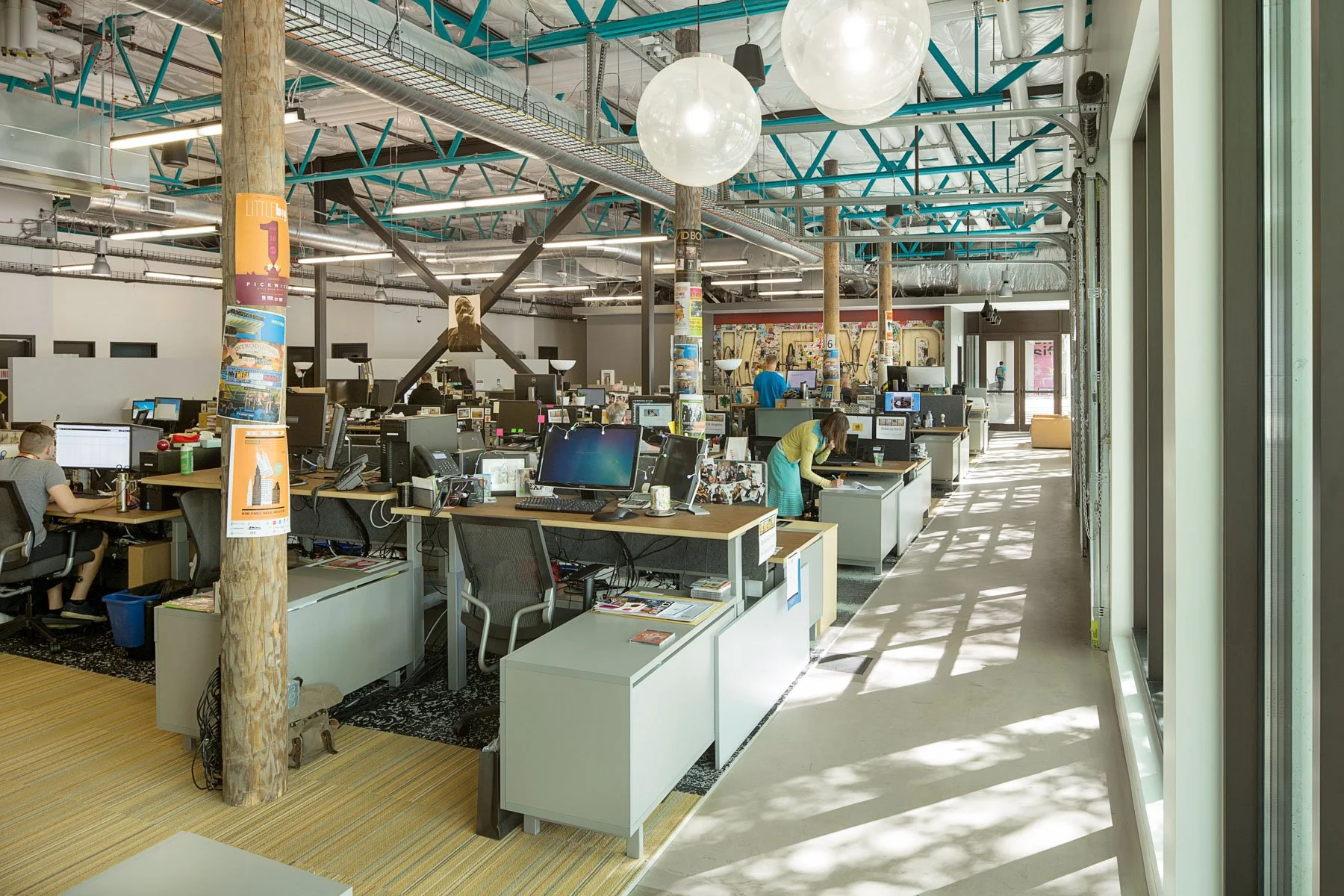
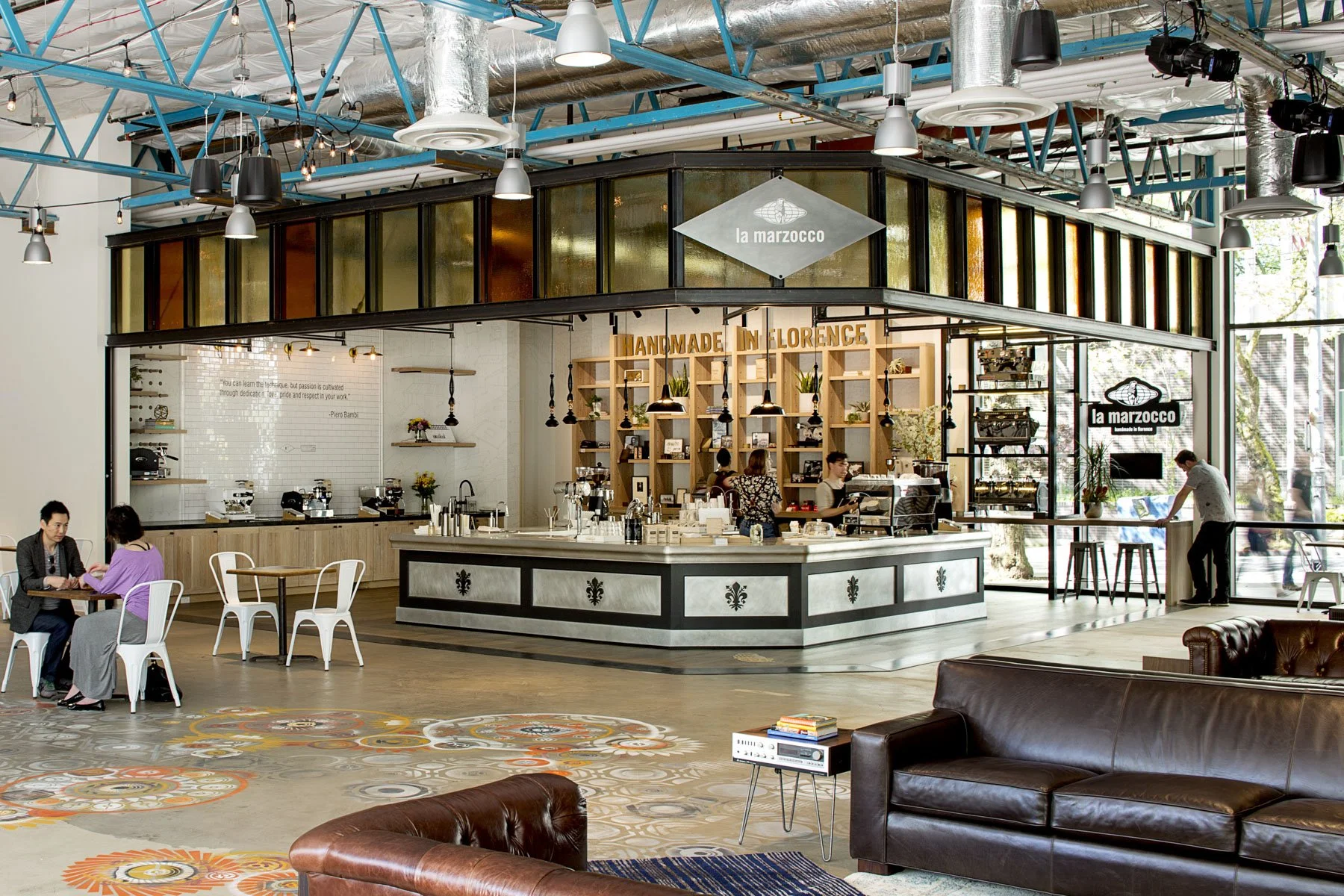
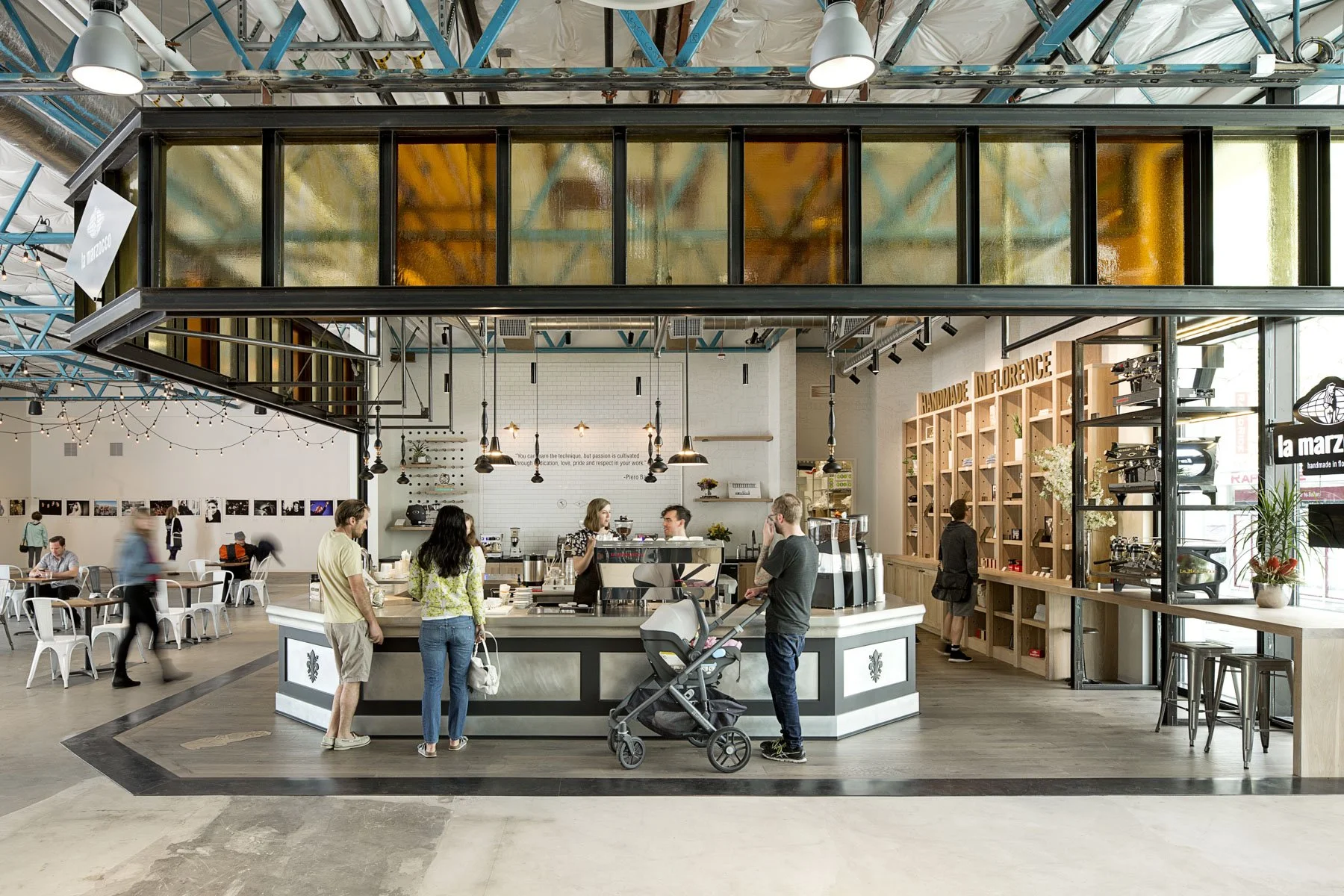
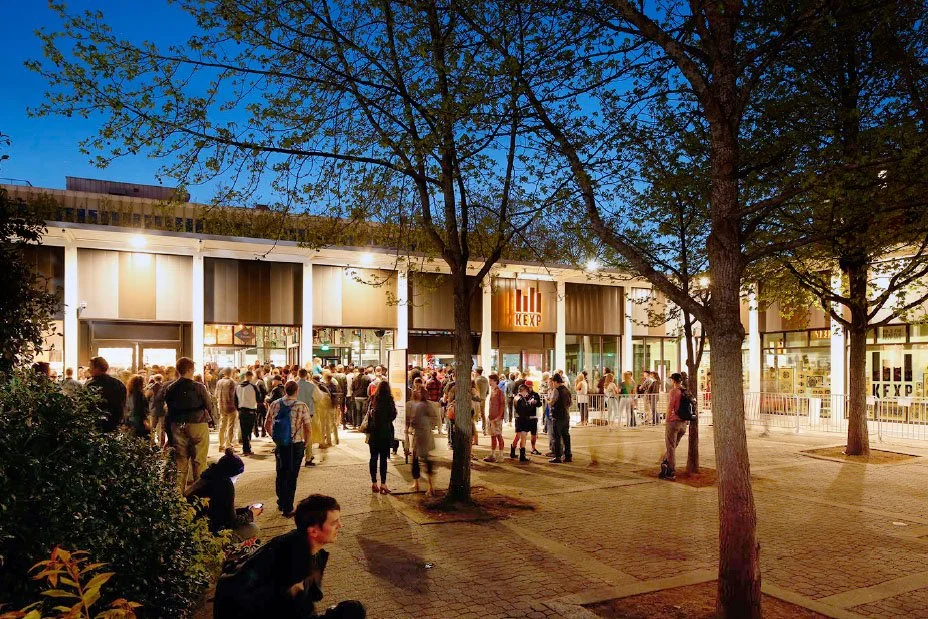
Inside a former World's Fair exhibition hall at Seattle Center, broadcasting, live performance, work, coffee, and public gathering occupy the same building. Visitors can hear a DJ on the radio and see that person working through the glass. A band can play a live session with an audience a few feet away. Someone else can come in for coffee and stay without attending anything at all.
KEXP still reaches people around the world. In Seattle, it also became somewhere you can go.
Seattle, WA
25,000 SF
Adaptive Reuse
Public & Cultural Institution
Concept
A radio station usually separates the people making the broadcast from the people listening to it.
KEXP wanted those worlds closer together.
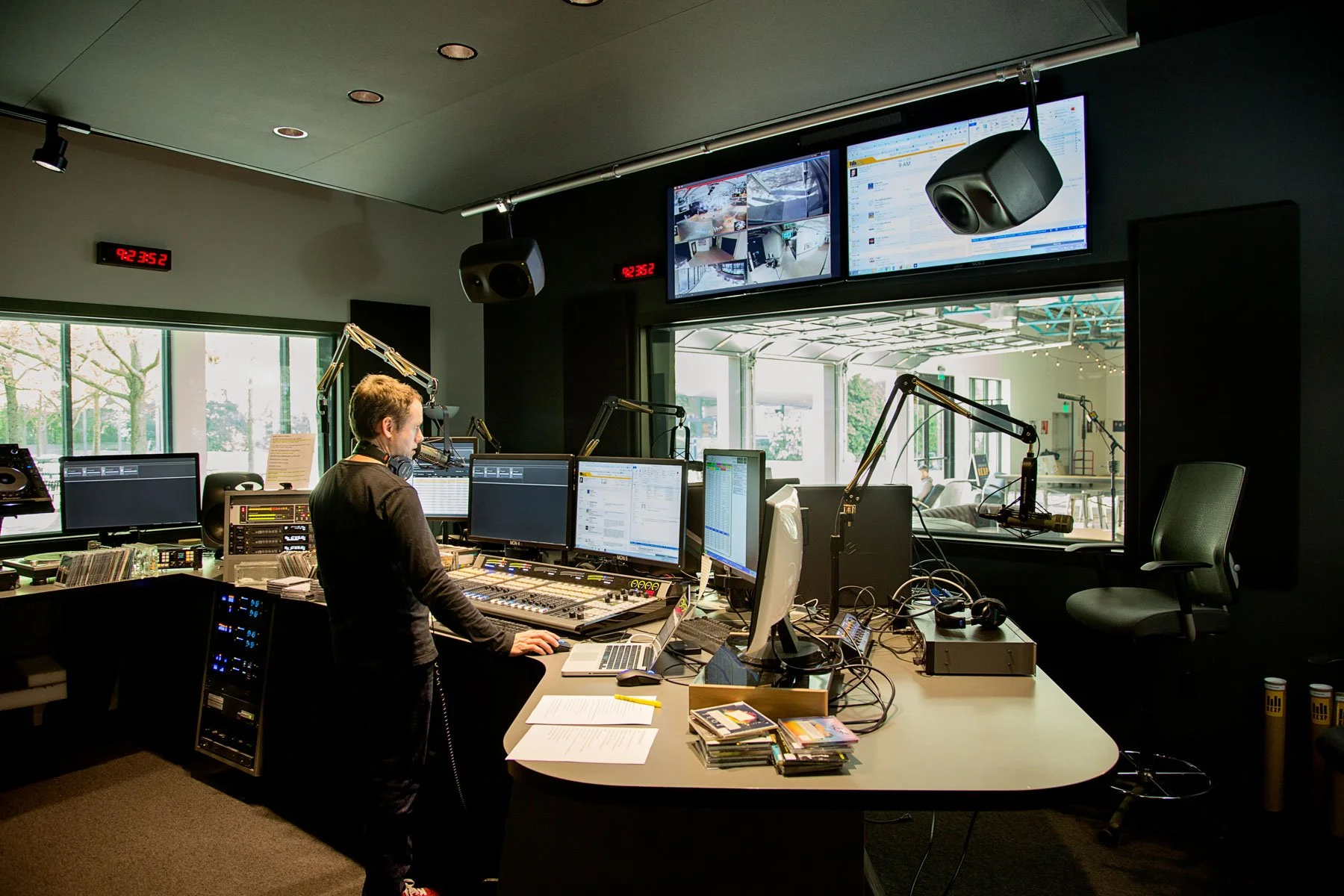
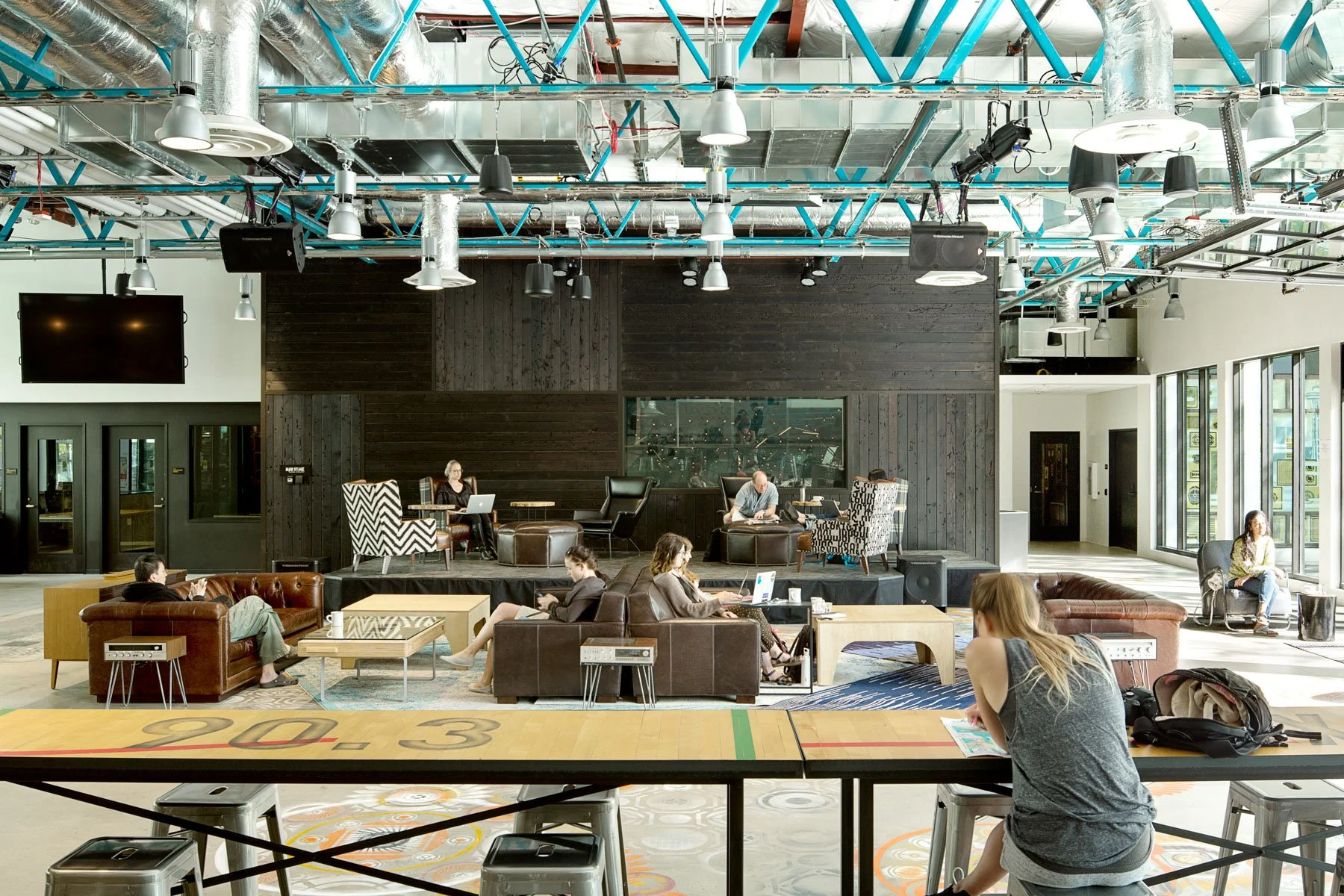
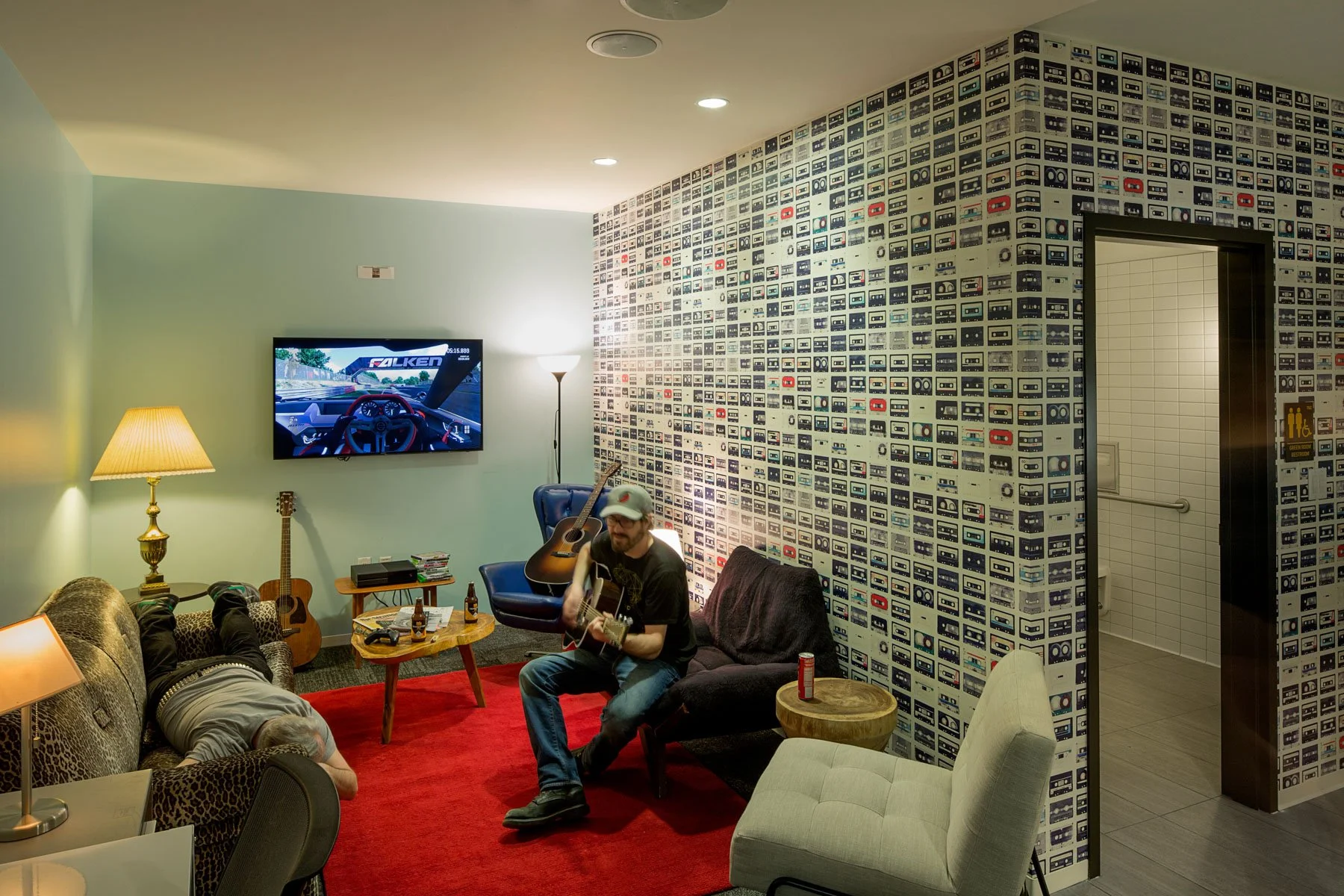
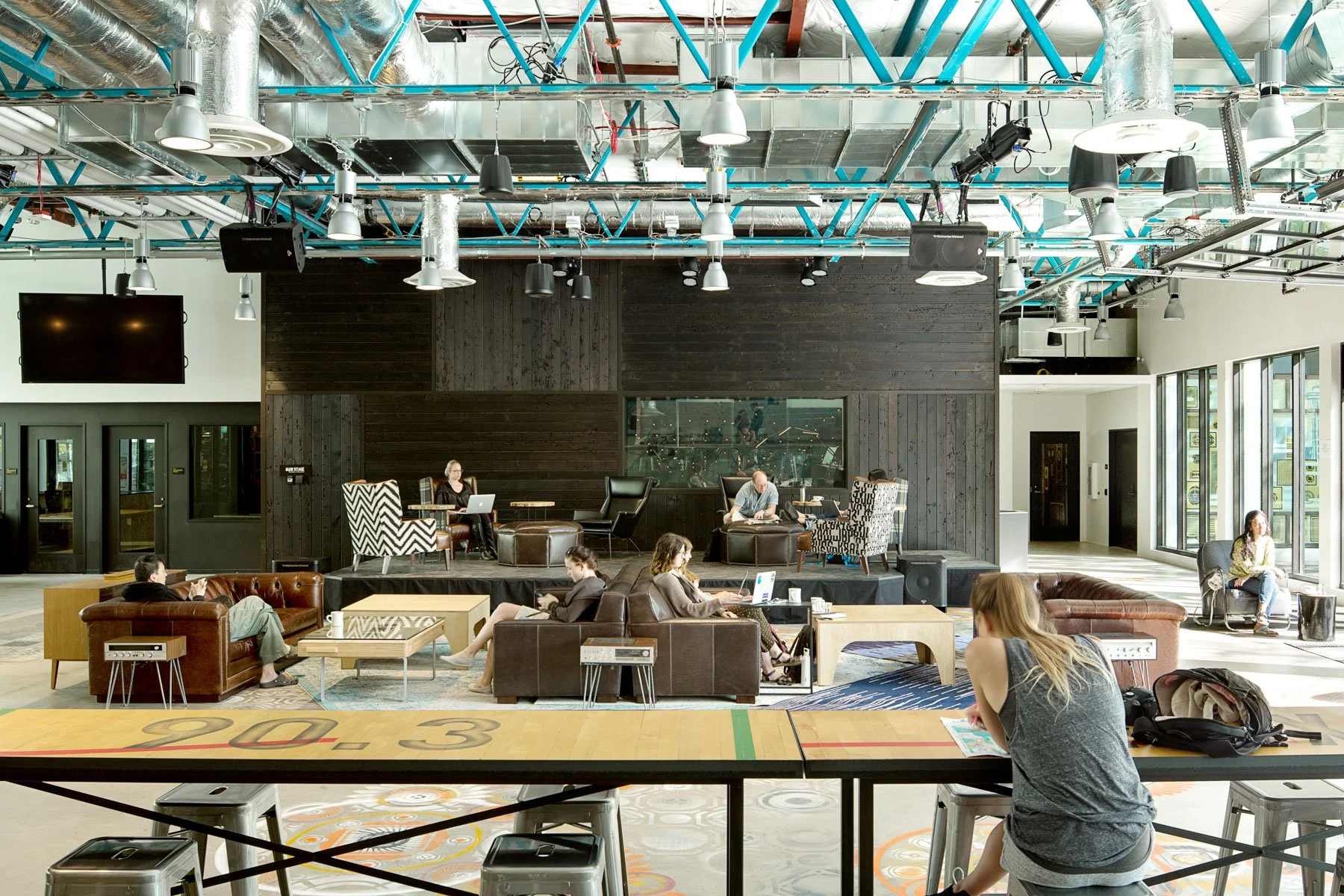
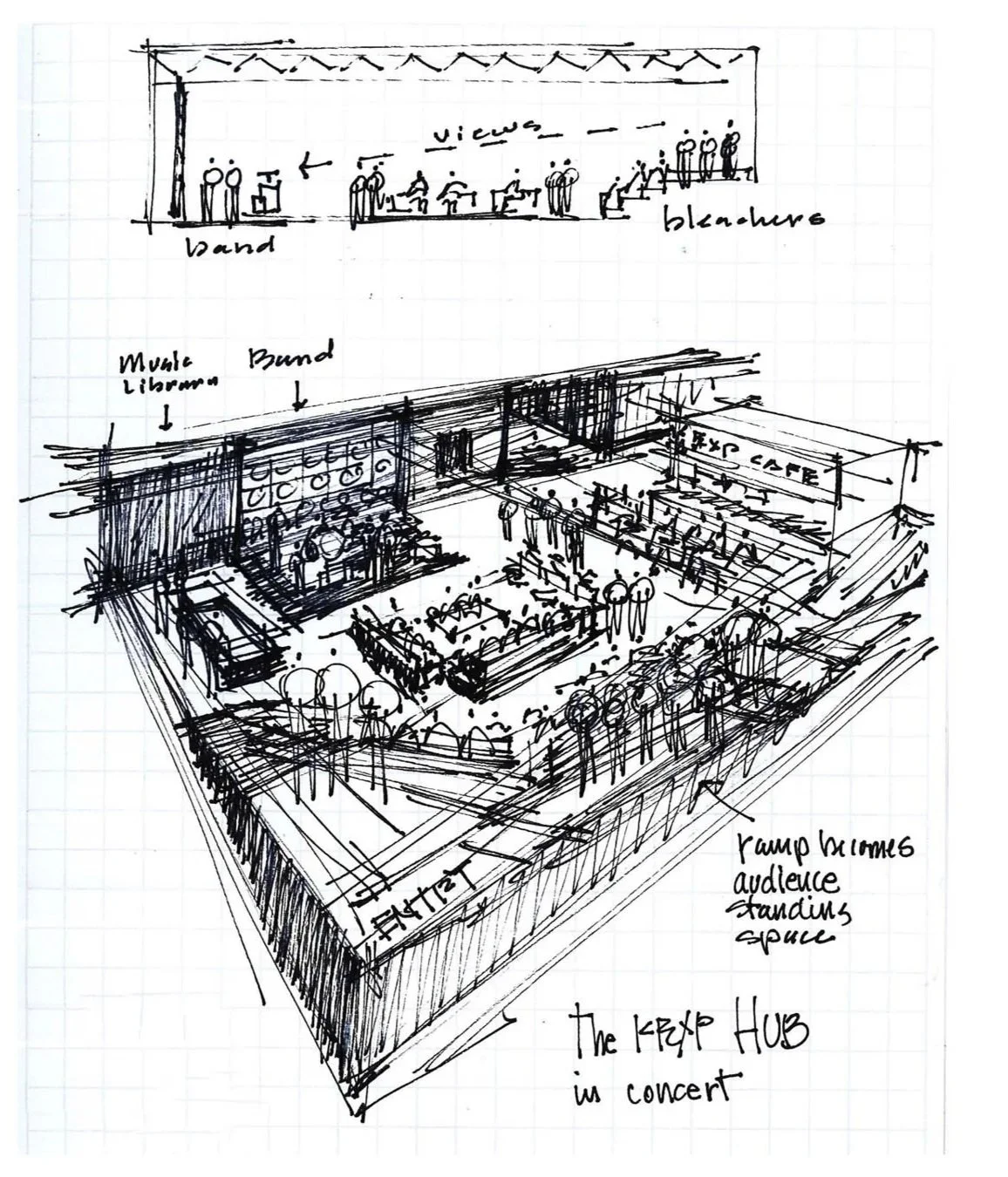
The plan puts the public Gathering Space at the center, with the DJ booth, Live Room, café, and other parts of the station visible from it. Glass allows people to watch a broadcast or recording session without interrupting the work. Musicians move between spaces designed for quick setup, performance, recording, and rest.
That arrangement changes the role of the audience. People can come for a performance, watch a DJ work, meet someone for coffee, browse records, or spend an afternoon listening.
The station is still broadcasting outward. The building lets people come the other way.
“KEXP connects people through music. Our goal as architects and designers was to see that connection translated and amplified through physical space.
”

Glazed public spaces and studios make the work of KEXP visible, extending the experience of music and broadcasting into the public realm.
Reclaiming a landmark
The Northwest Rooms were built for the 1962 World's Fair as a temporary exhibition hall. More than fifty years later, the landmark offered KEXP something difficult to find in a conventional office building: enough space to put broadcasting, performance, work, and an audience under one roof.
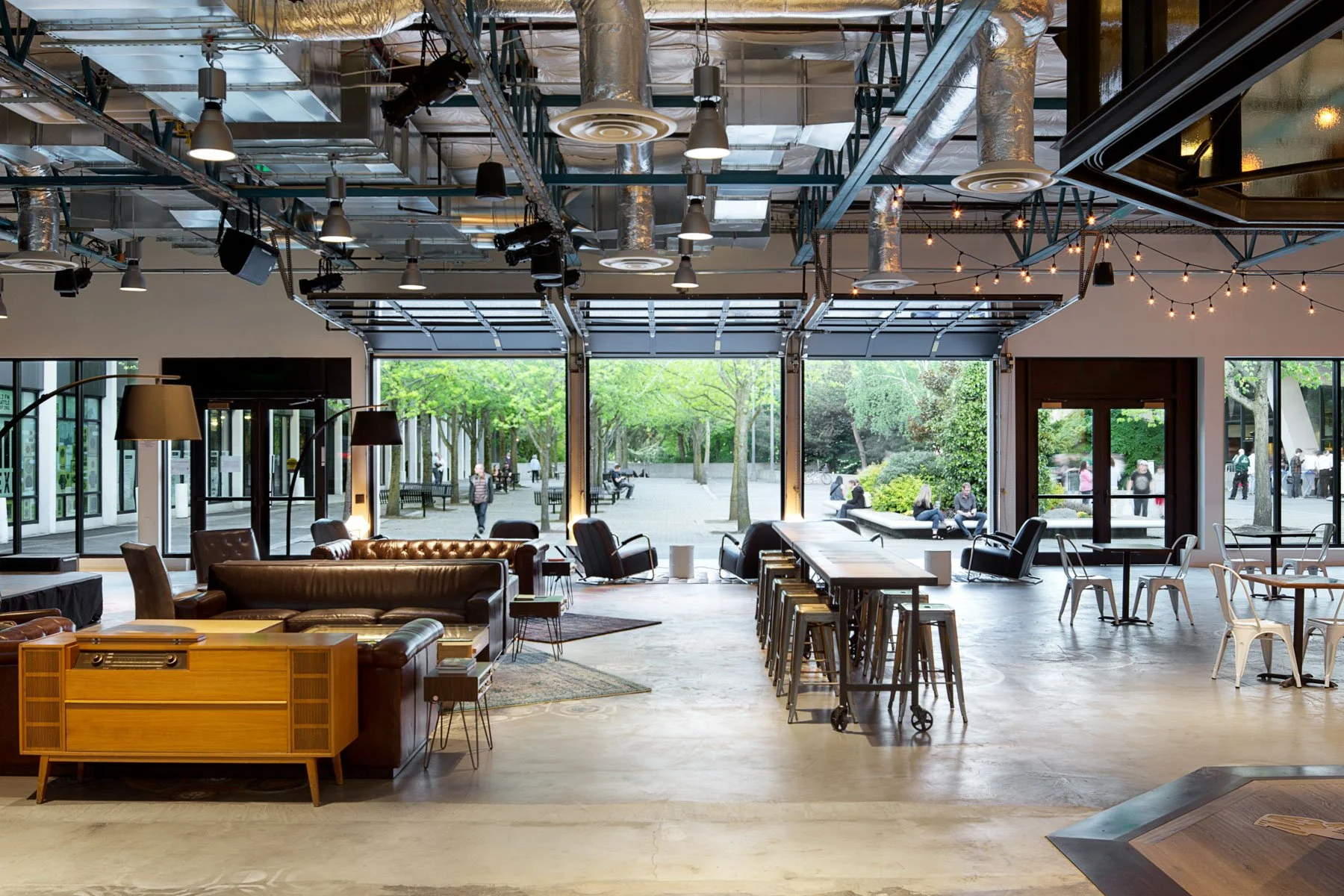
The existing structure remains part of the experience. Its large spans accommodate the Gathering Space and performance functions, while the new work is inserted within the old exhibition hall.
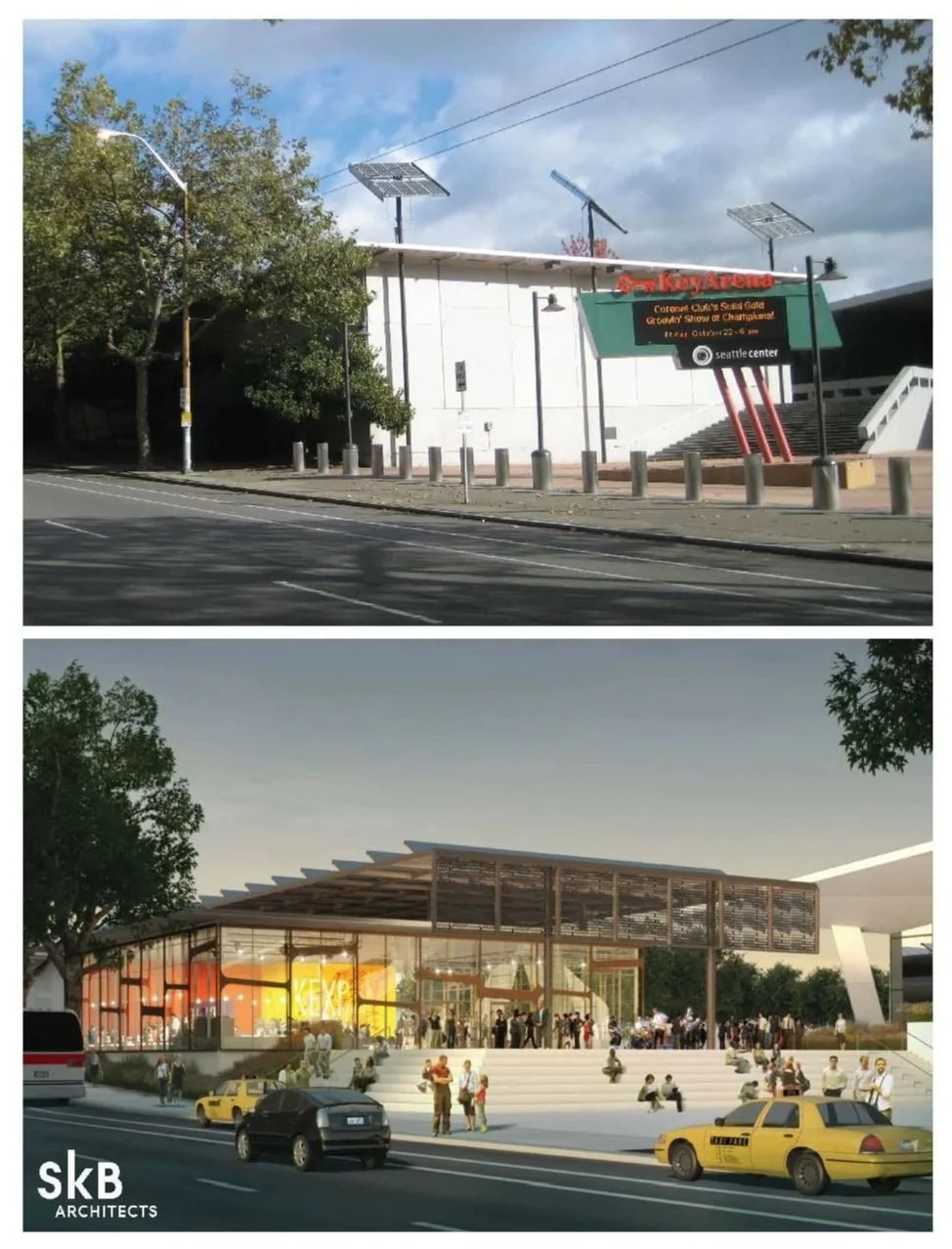
Early design concept illustrating the building's transformation into KEXP Headquarters.
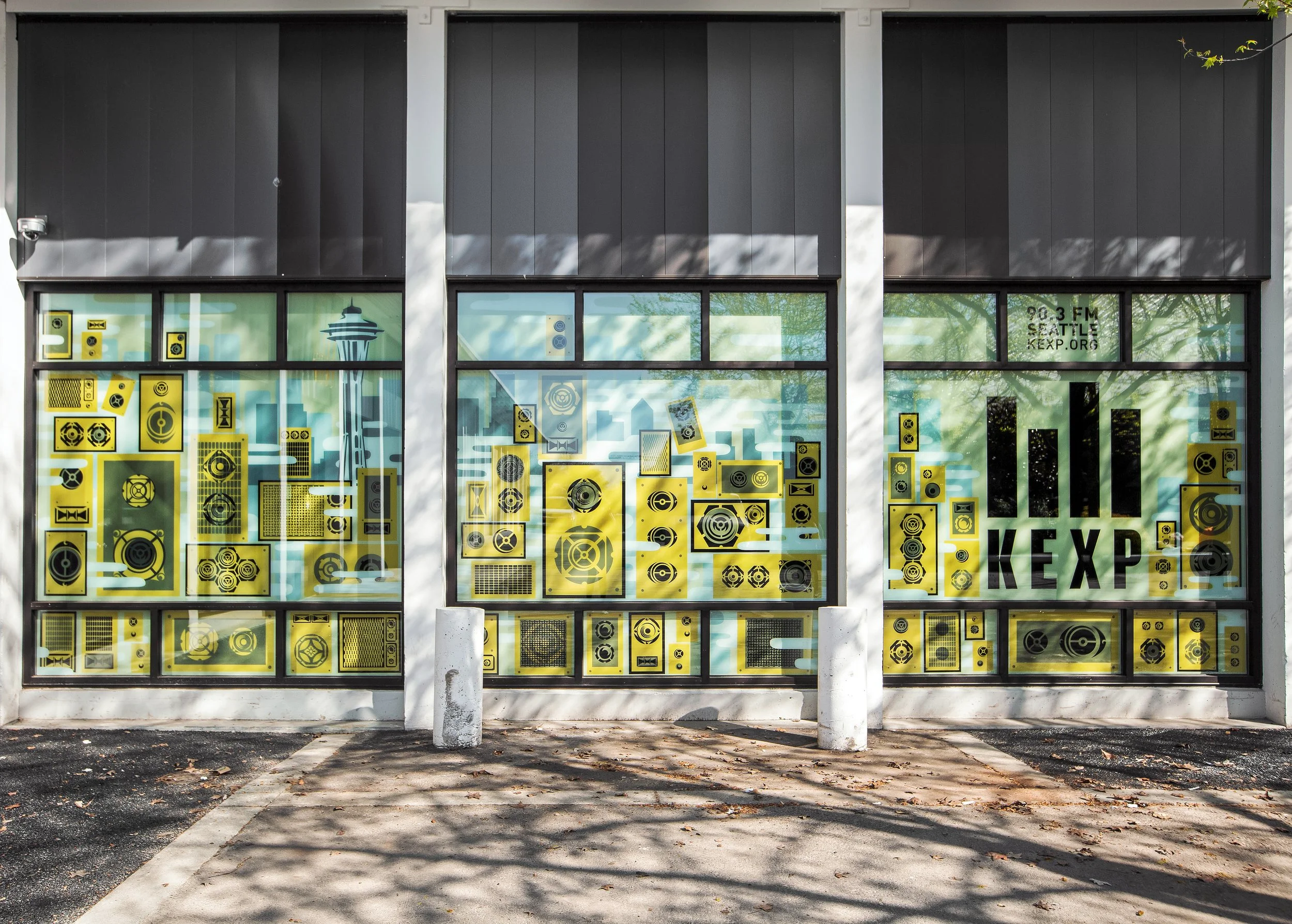
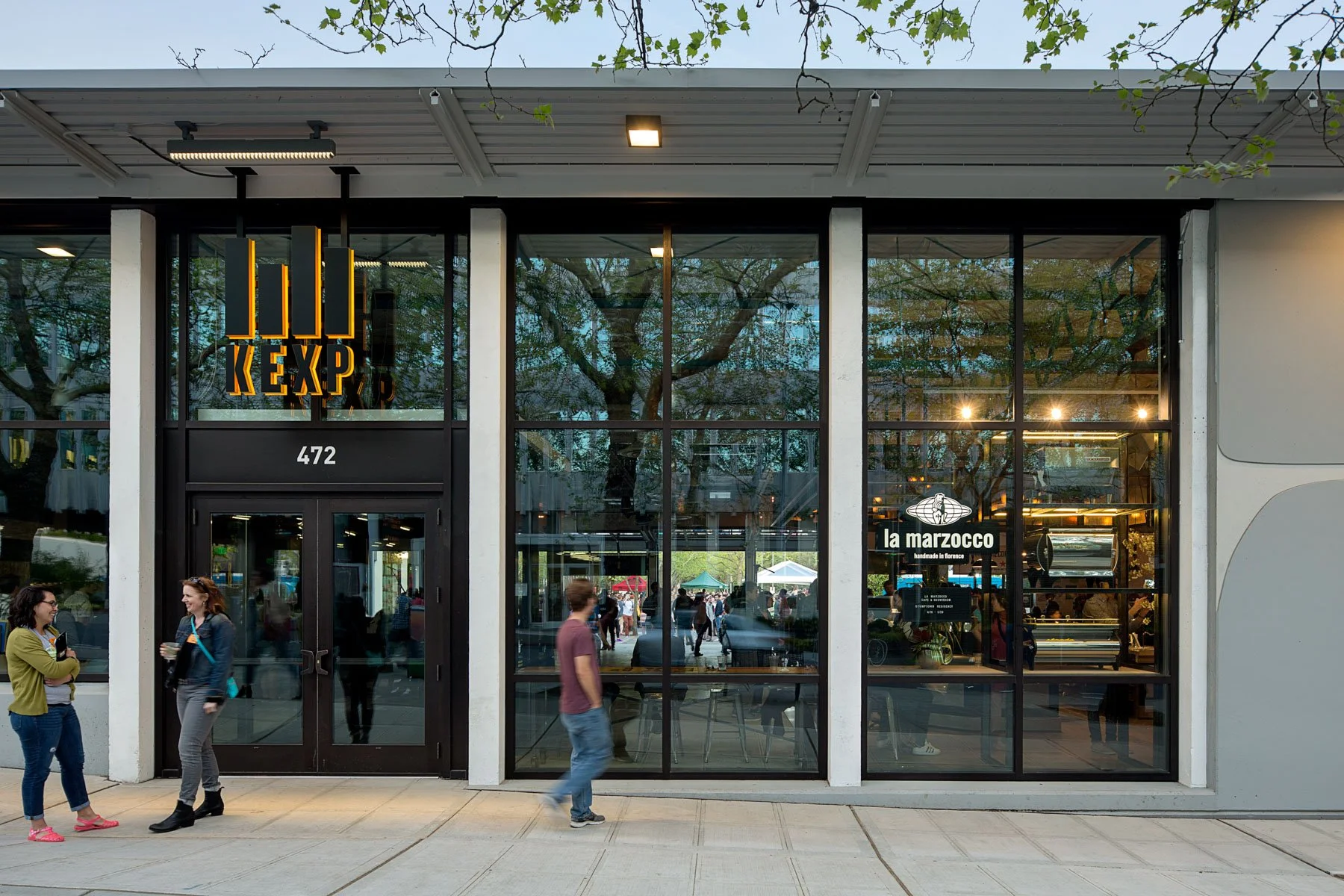
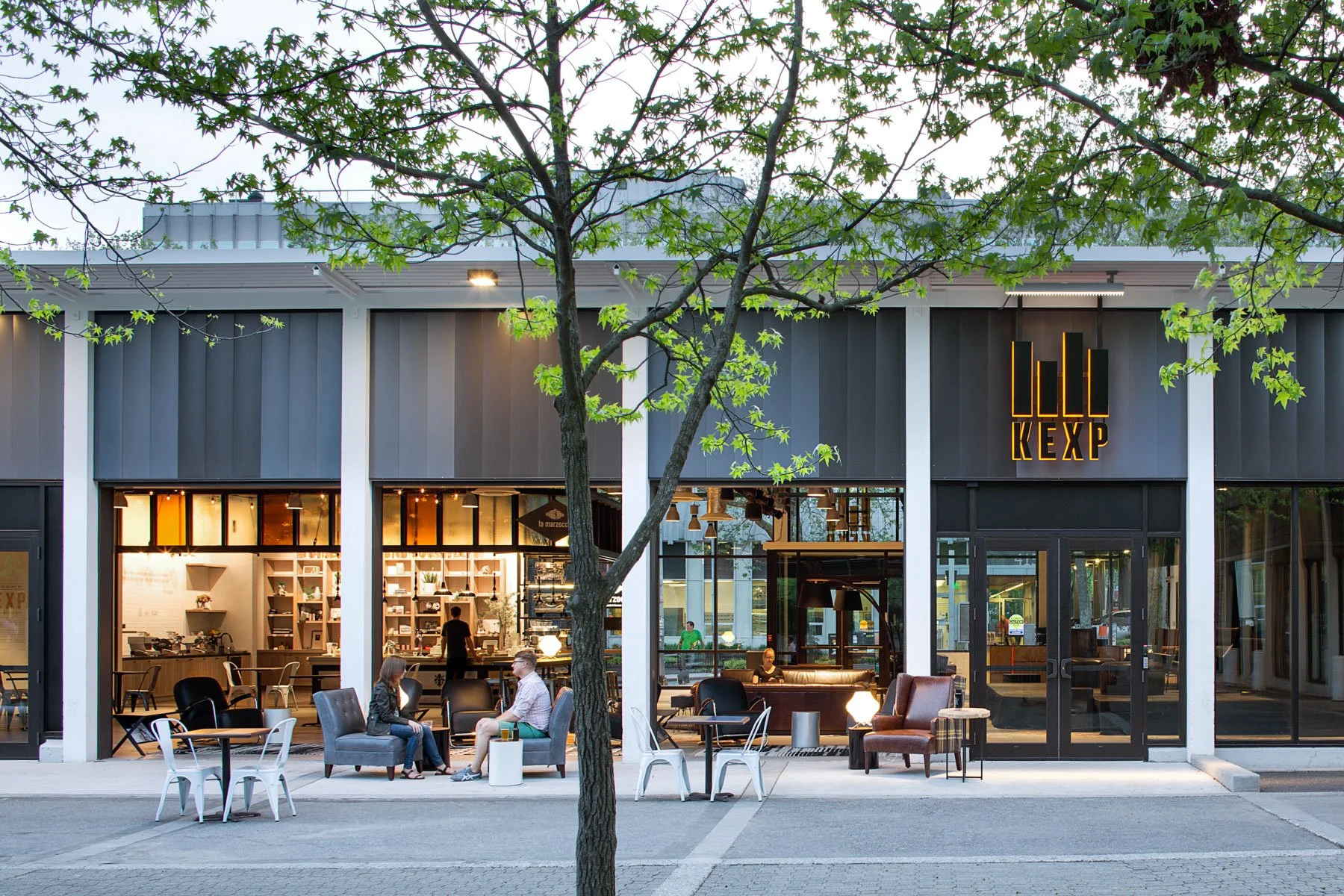
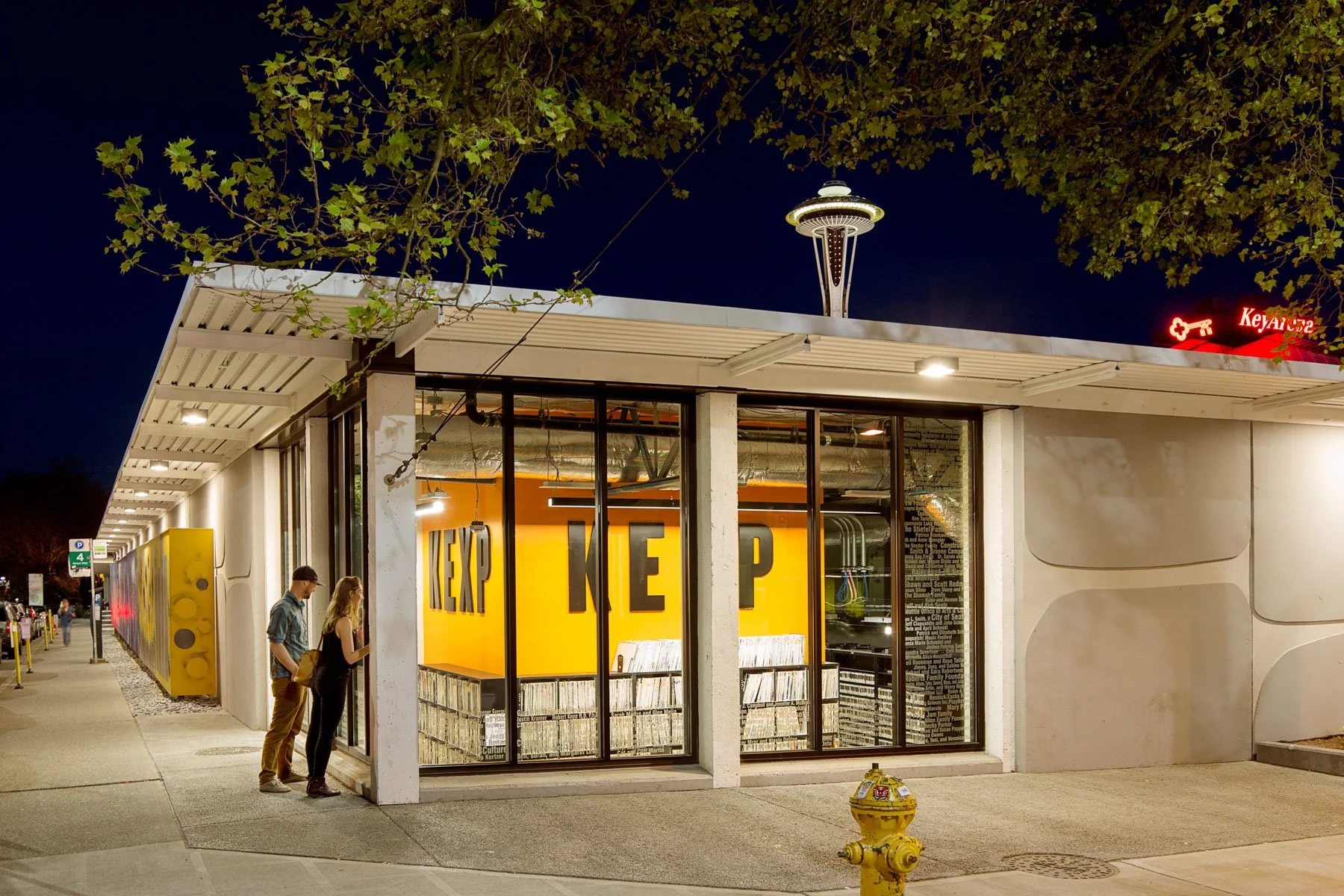
Public art integrated into the façade extends KEXP's presence into the public realm.

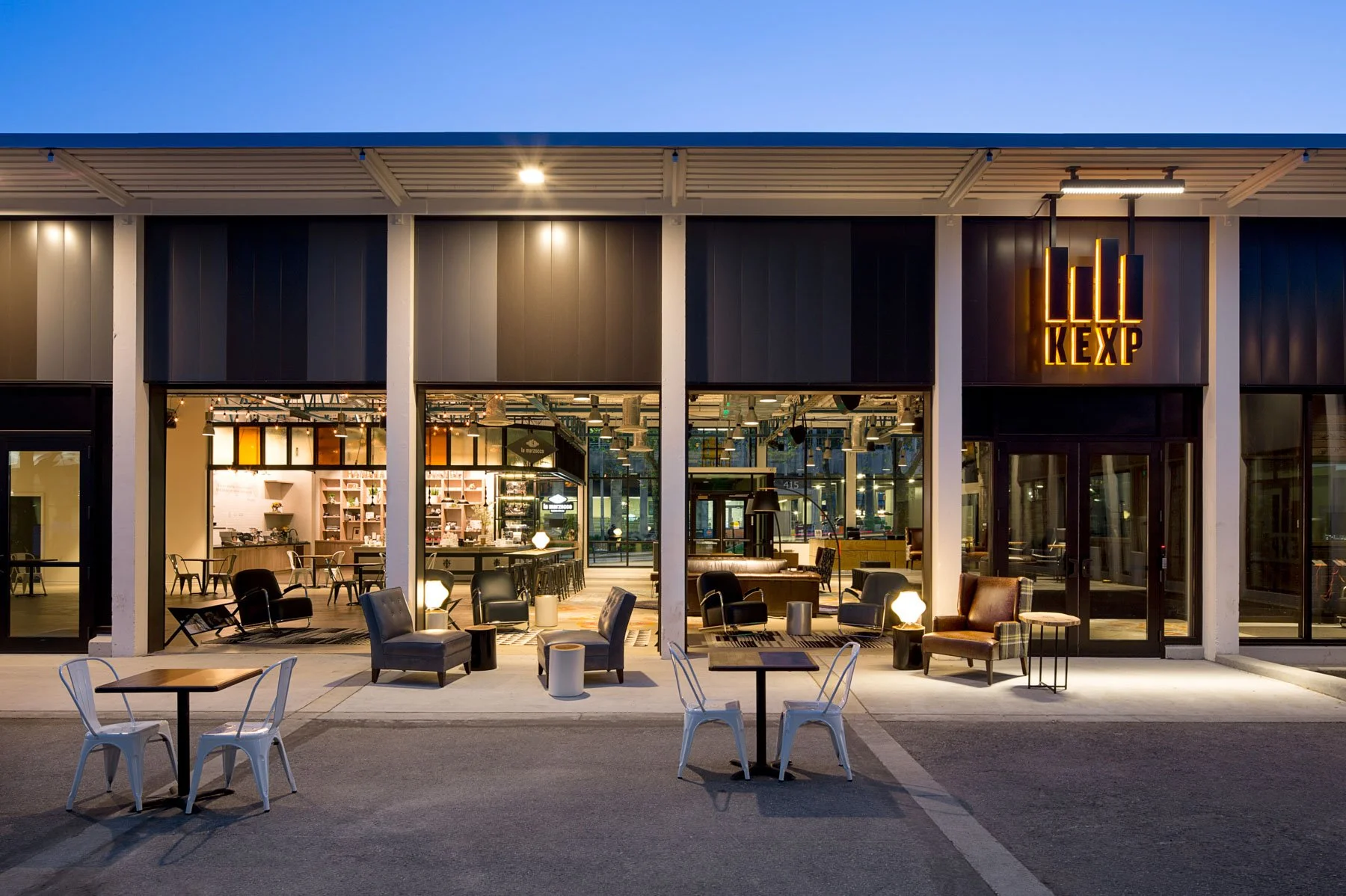
Public gathering spaces are integrated with studios and performance venues, making the station accessible as part of everyday civic life.
Reconnecting the city
“We felt this was a perfect expression of their ambitions to be not just a radio station but a worldwide community music hub”
The new entrance faces First Avenue North, connecting Seattle Center more directly with the neighborhood to the west.
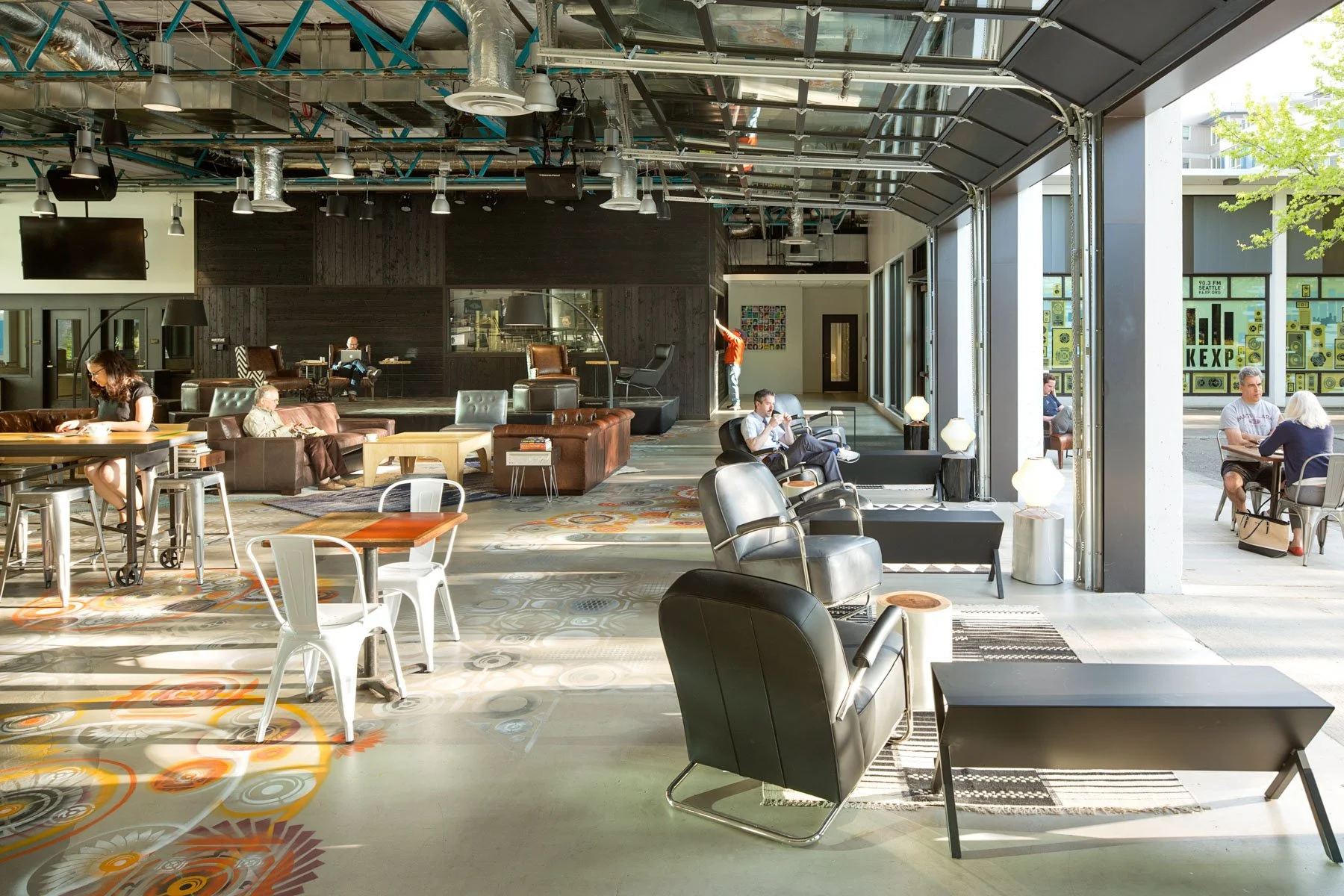
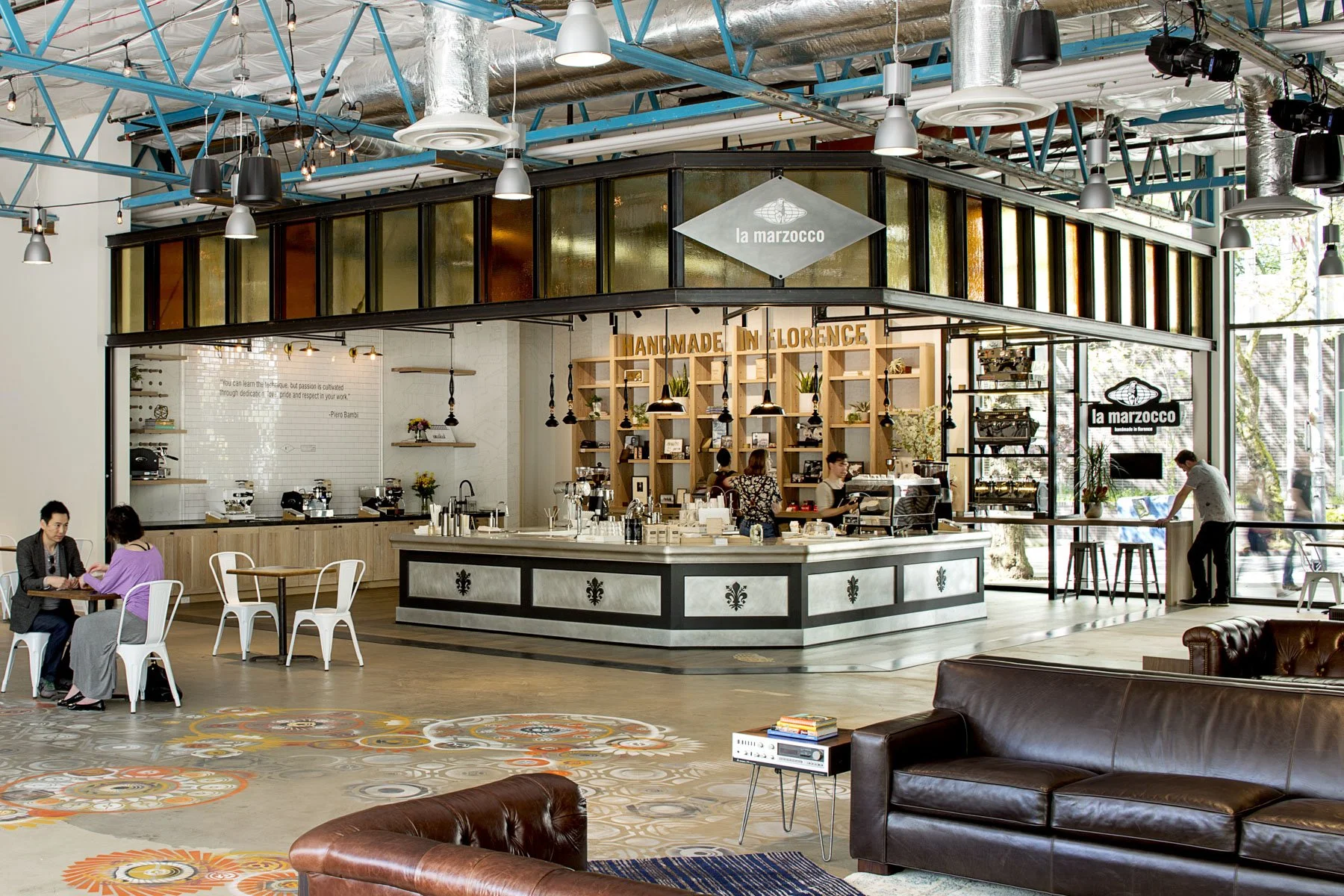
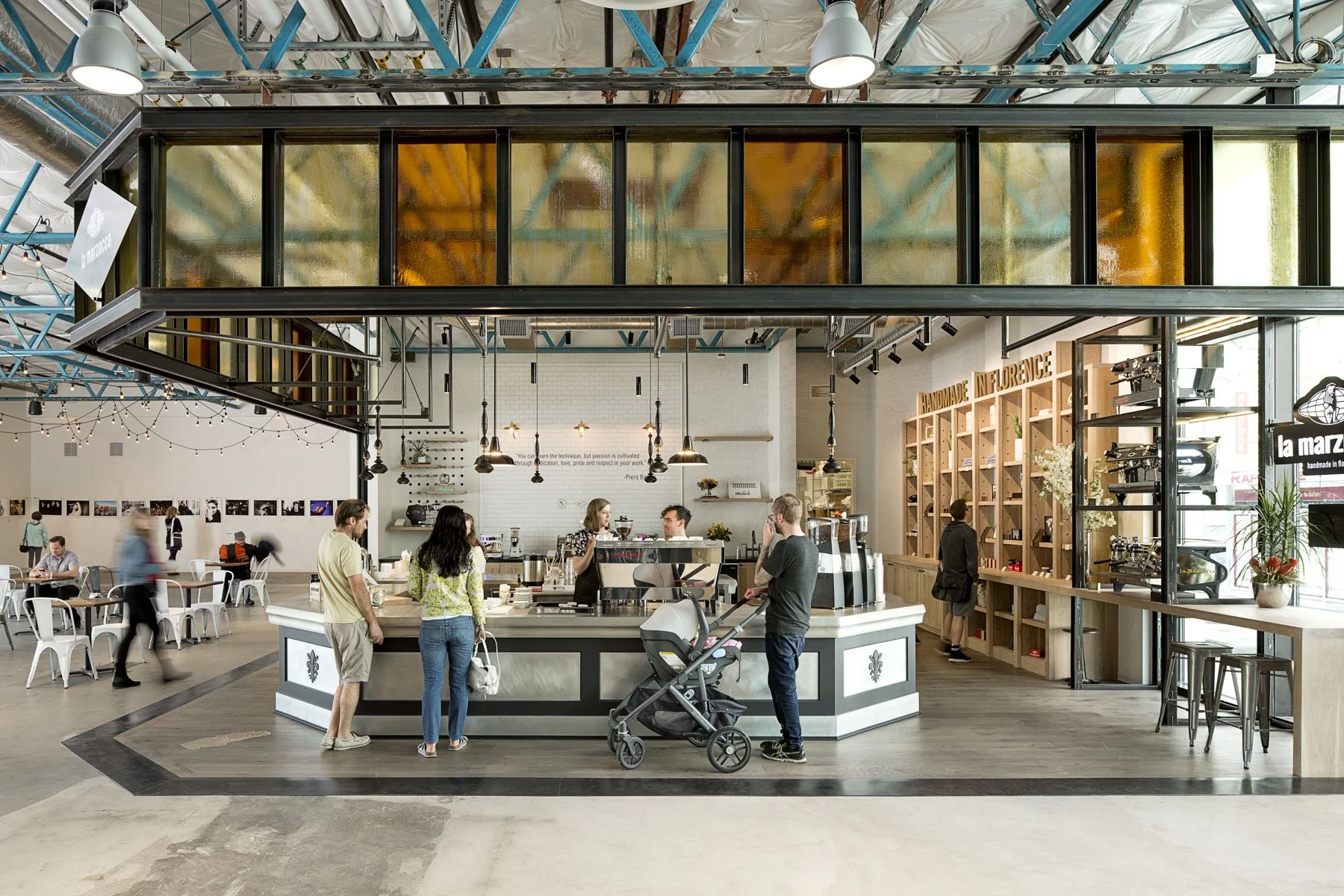
Just inside is the Gathering Space. It was designed without requiring visitors to buy a ticket or have an appointment. Seating, a stage, the café, and views into the station give people several reasons to come in and no prescribed amount of time to stay.
The room changes throughout the day. Coffee in the morning can give way to a live performance, an event, or a room full of people listening together.
Years after opening, that premise remains intact. KEXP describes the Gathering Space as a public hub for music lovers, with coffee, records, events, broadcasts, and free live performances all sharing the same address.
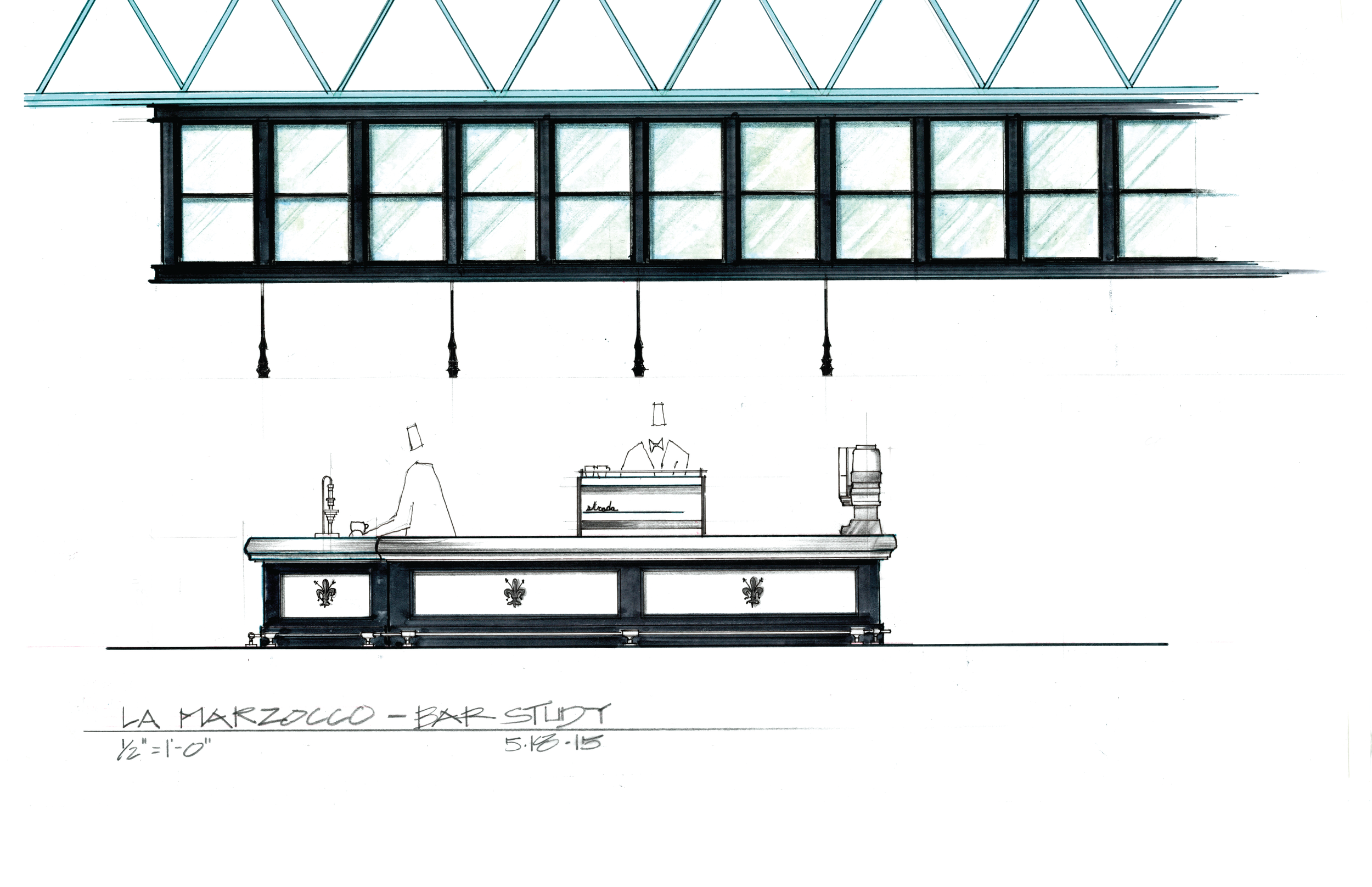
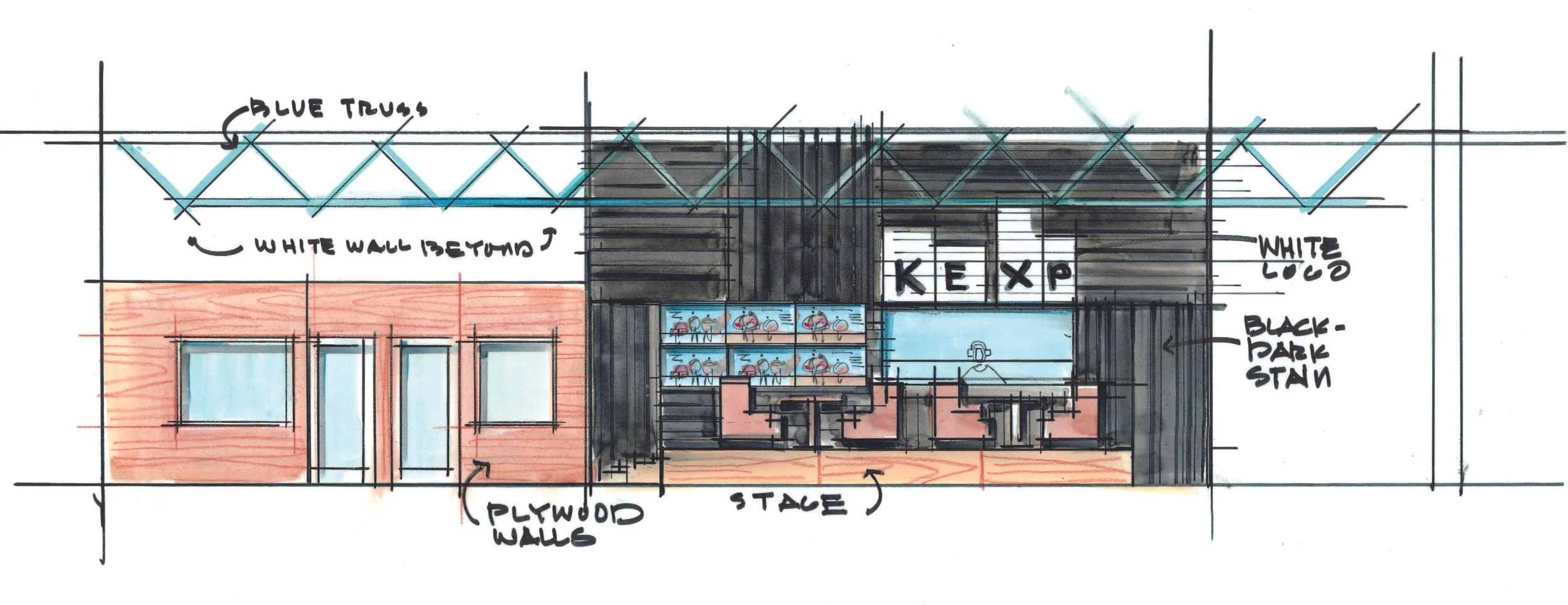
See how it’s made
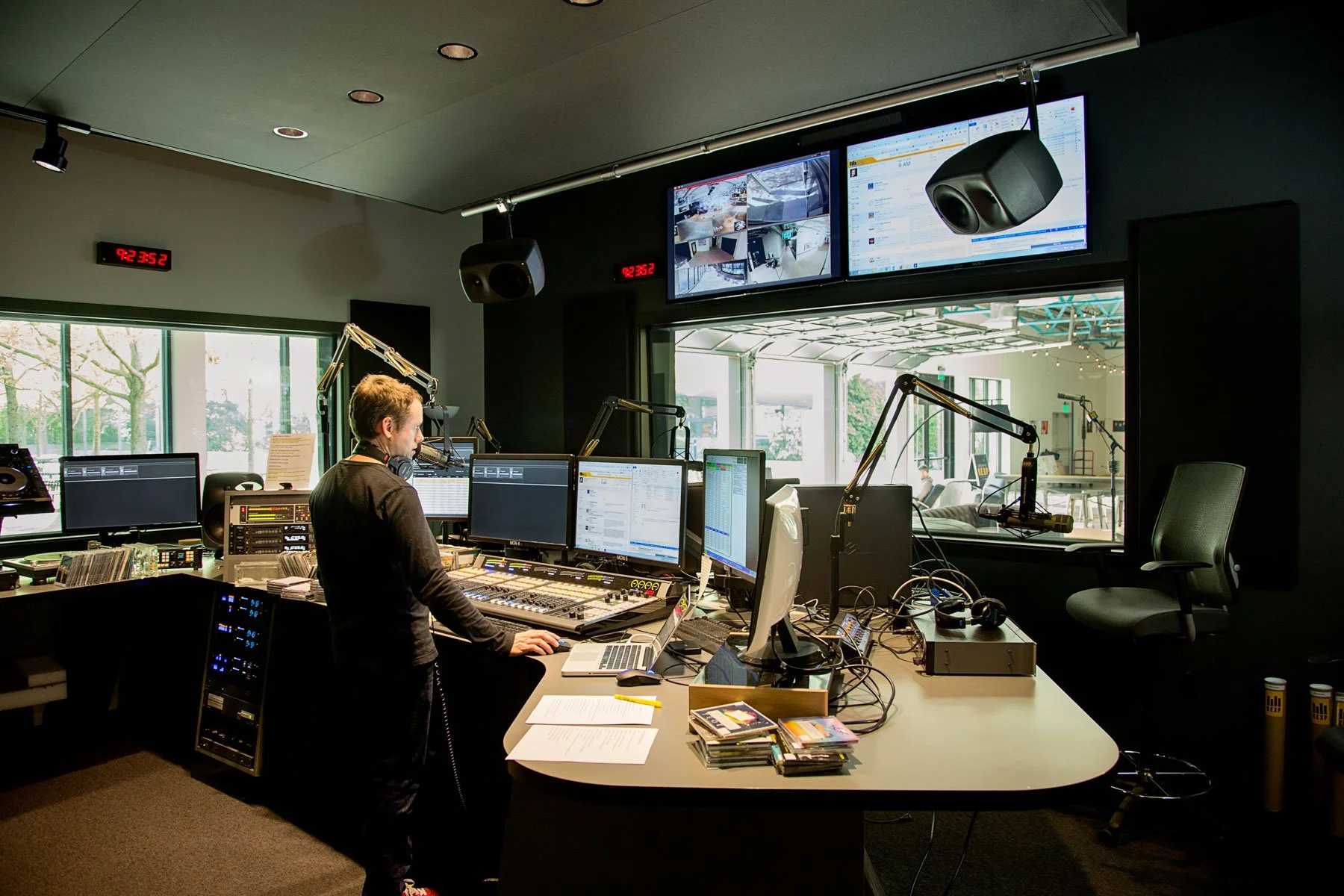
The DJ booth does something radio ordinarily does not. It lets the audience see the person on the other side.
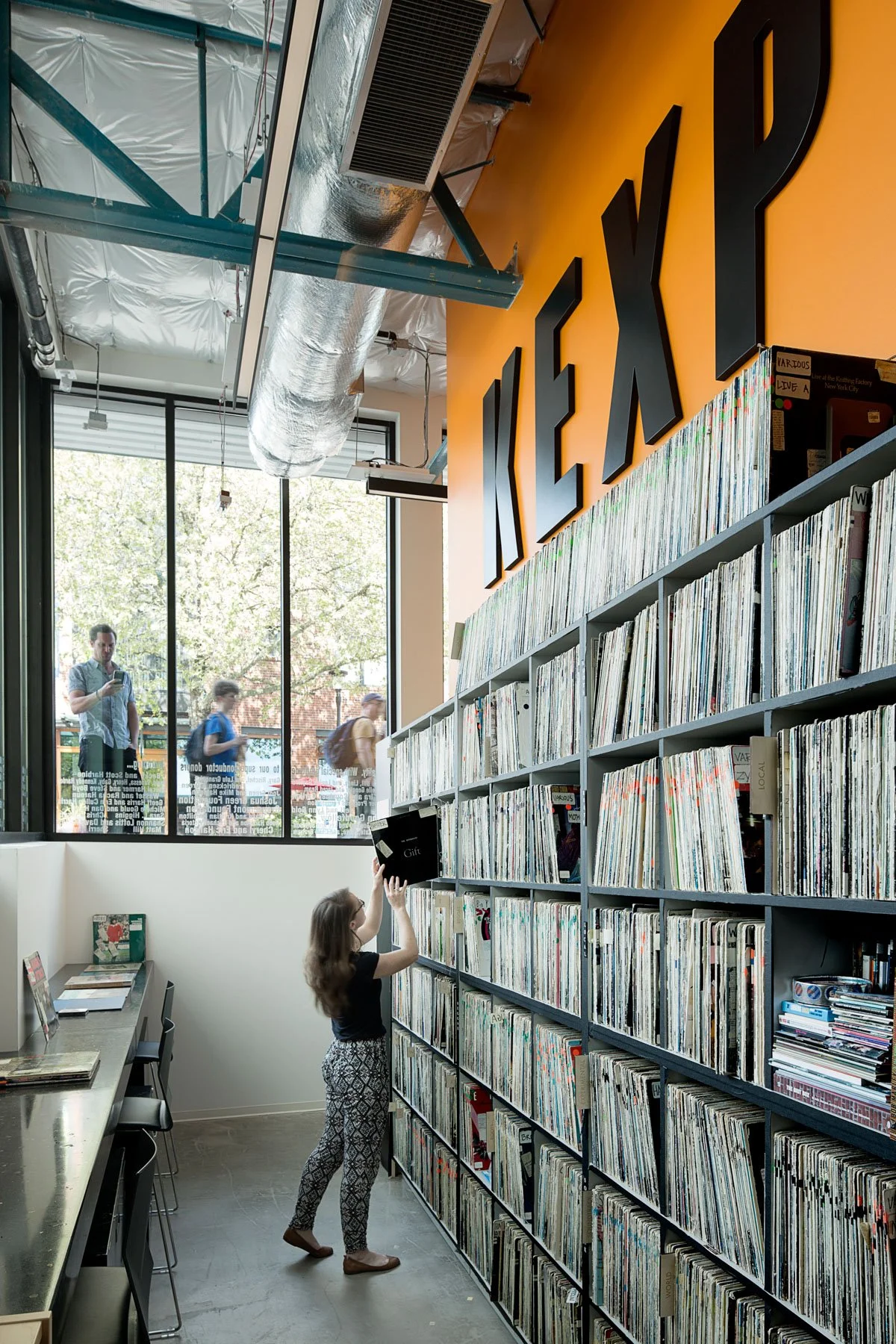
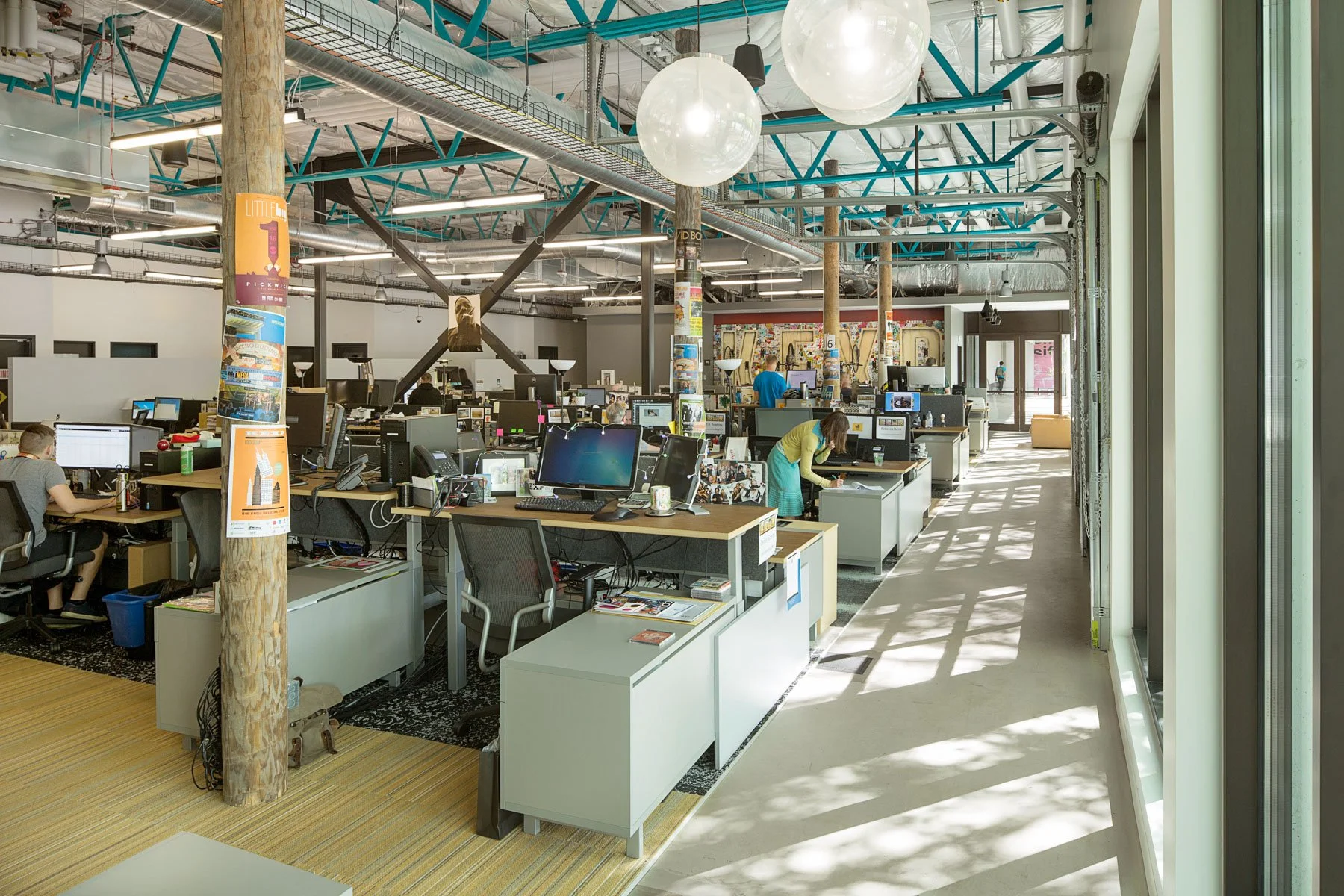
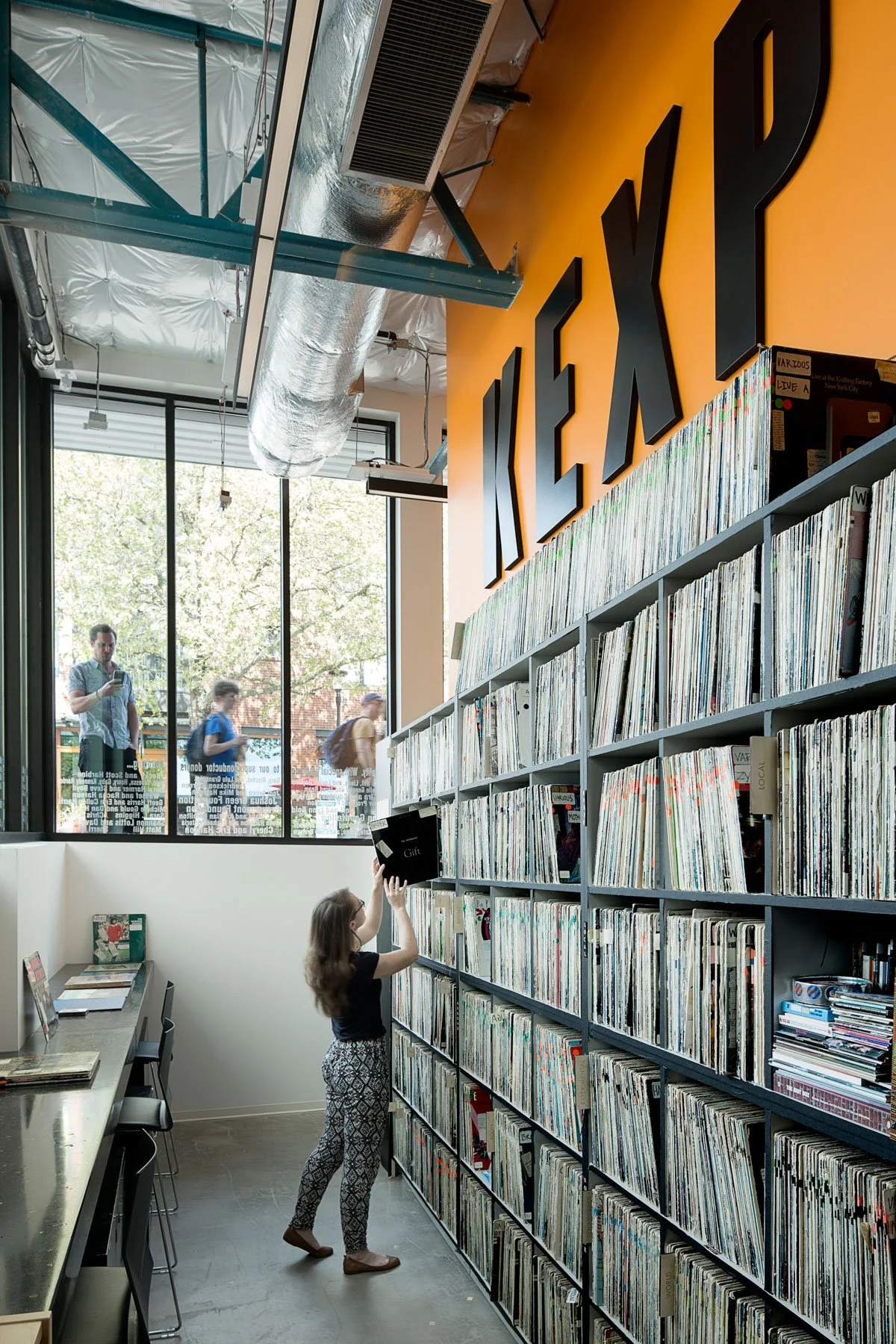
Glass walls place broadcasting and recording within view of the Gathering Space. The Live Room and viewing gallery make performances accessible to an audience while maintaining the acoustic and technical conditions the station needs. Behind them, the music library, work areas, green room, and production spaces support the less visible work required to keep KEXP on the air.
That visibility does not turn the station into an exhibit. DJs still broadcast. Bands still record. Staff still work.