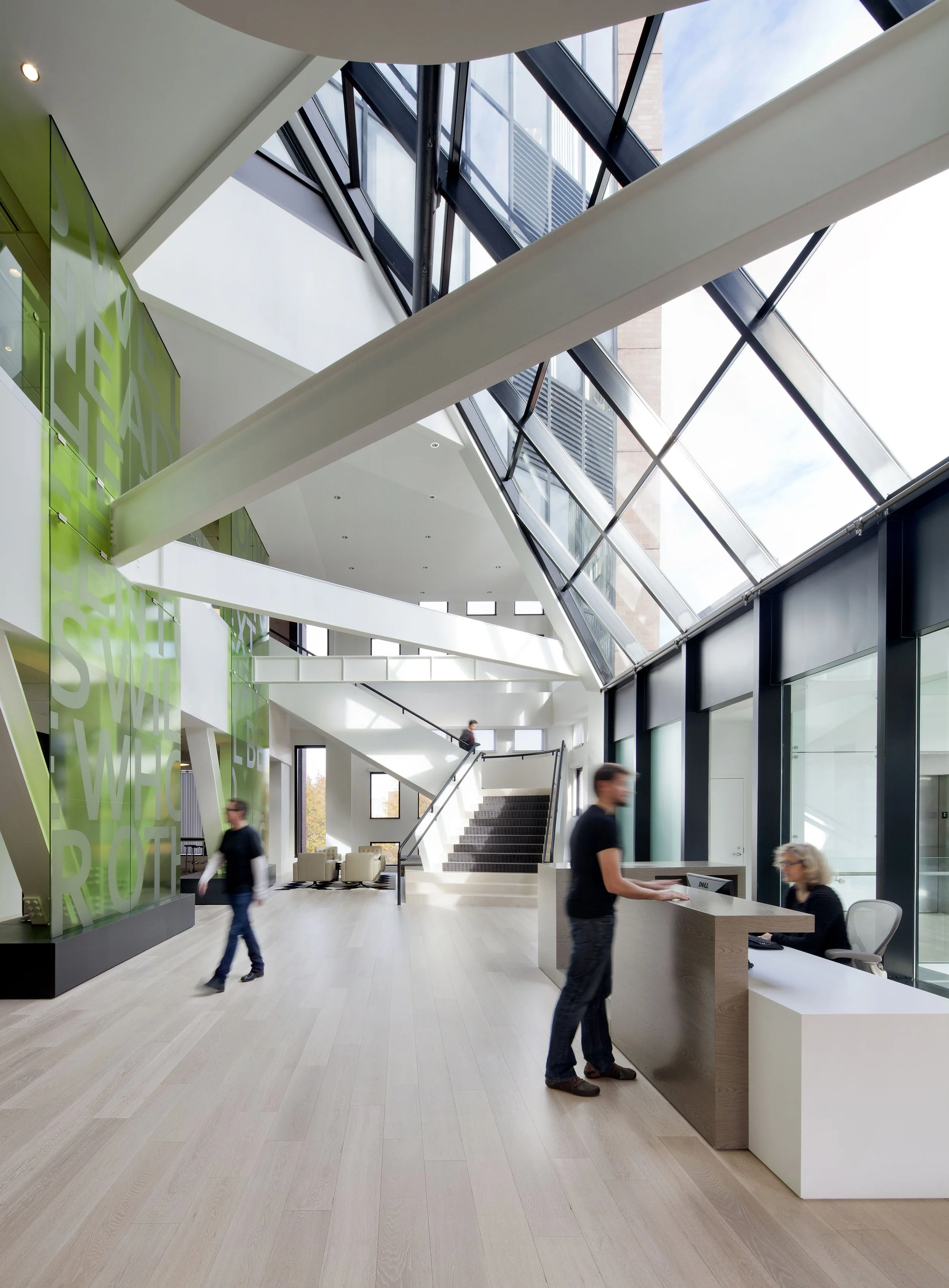
Microsoft Campus
Microsoft’s Cambridge workplace has two audiences: the people who work there and the people who come to understand what Microsoft can do. Across 85,000 square feet and five floors, SkB Architects organized everyday work settings alongside a Technology Center, conferencing, hospitality, and public facing spaces, allowing those audiences to occupy the same building without asking the workplace to operate as a showroom. The Technology Center gives customers a place to encounter Microsoft through experience, making an abstract technology business more tangible while keeping that exchange connected to the people and work behind it. Here, workplace is part infrastructure and part interface, giving Microsoft a physical setting for relationships that cannot happen entirely through a screen.
Cambridge, MA
Workplace
Urban Campus
85,000 SF
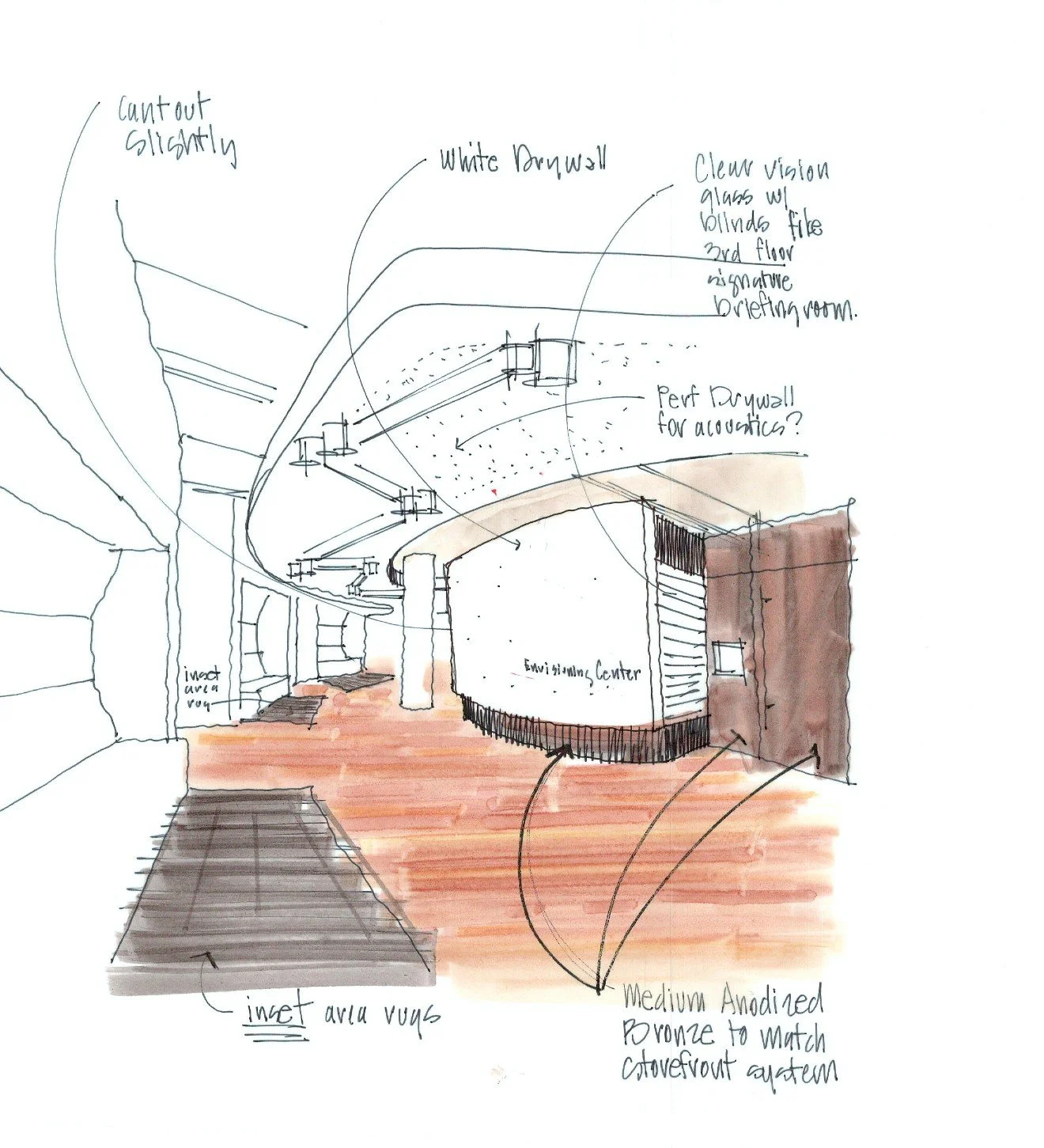

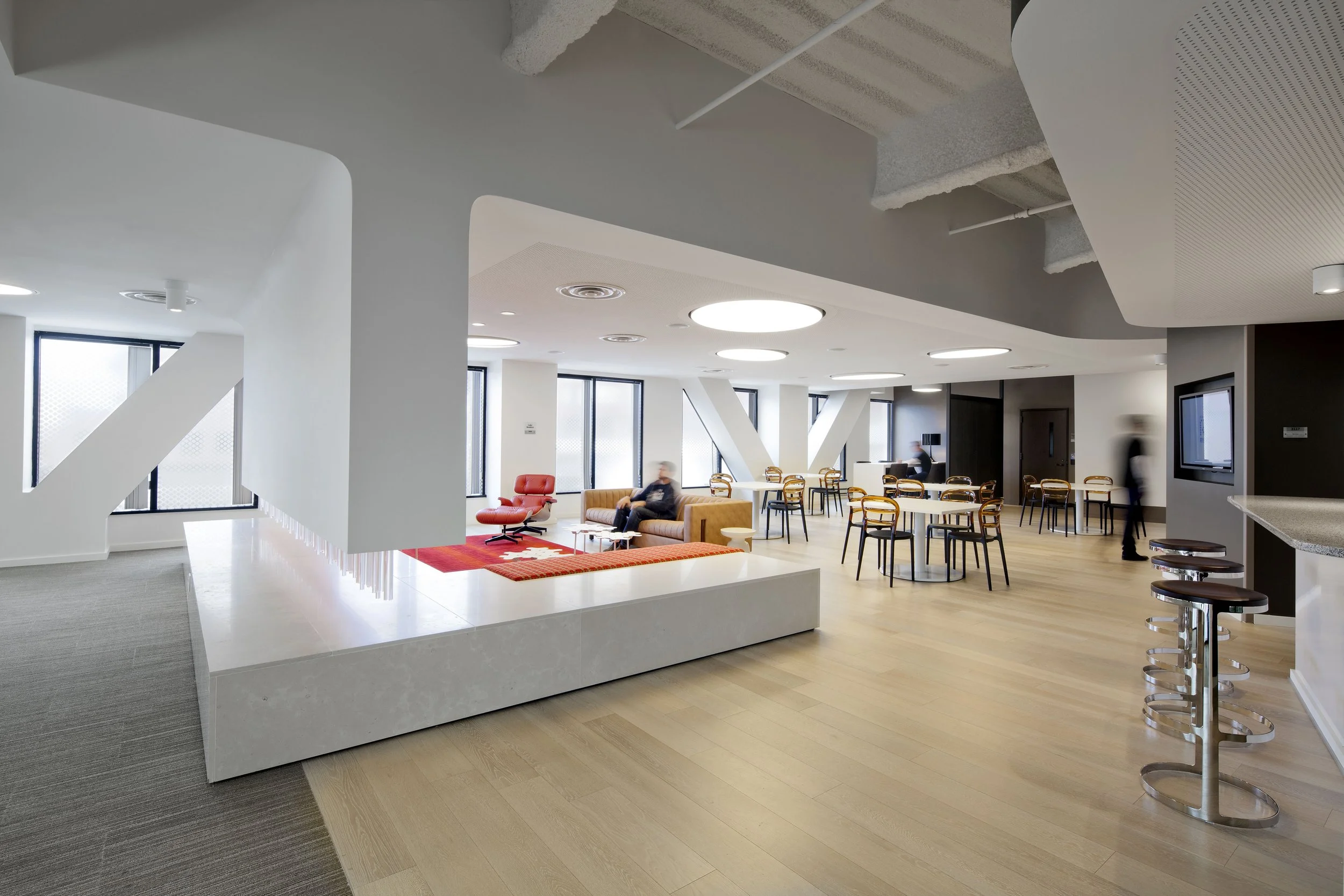
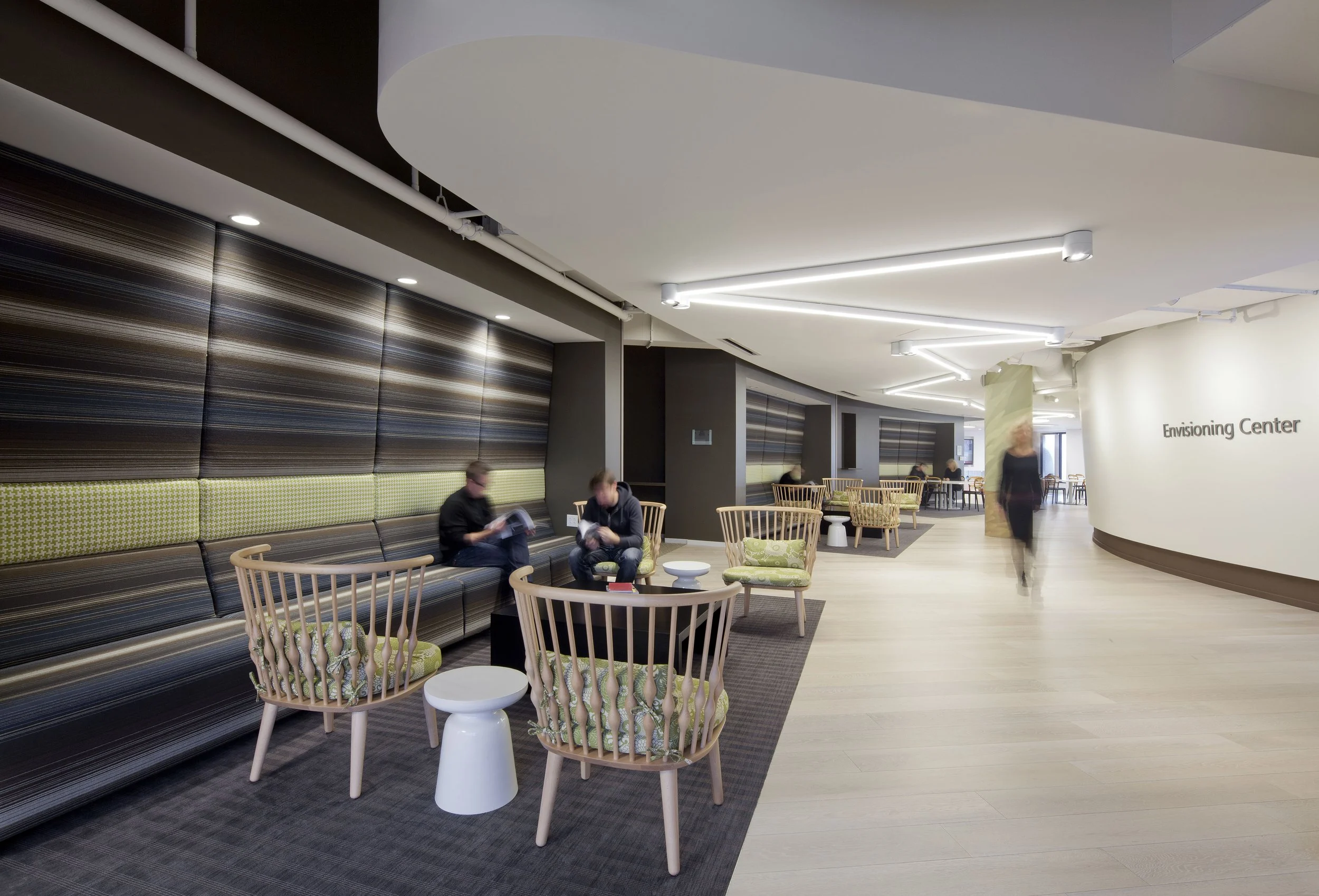
Microsoft’s Cambridge Envisioning Center gives circulation somewhere to pause, turning a route through the office into informal seating for conversation, waiting and work. The value is straightforward: more of the floorplate participates in the working day.

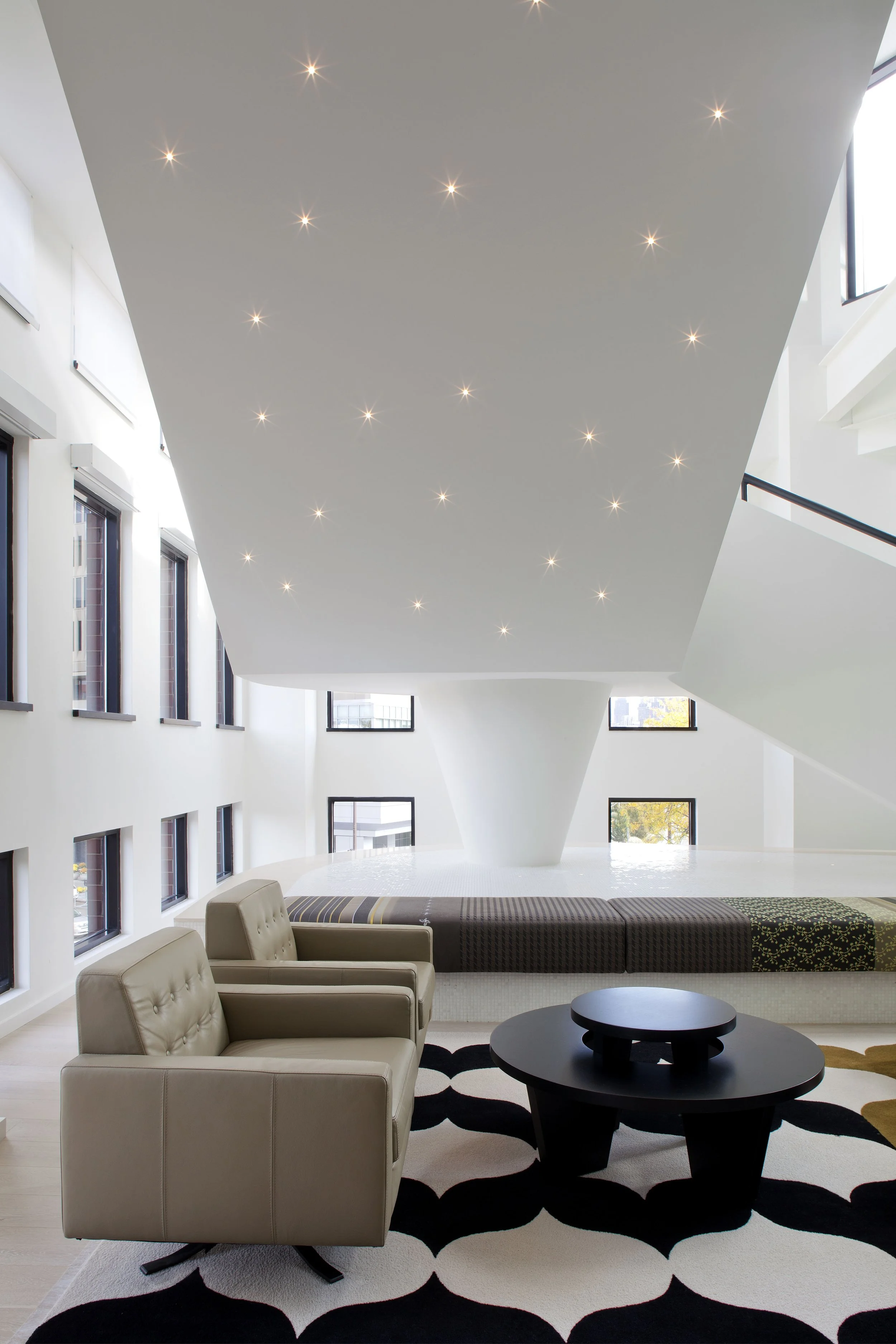
A quieter seating area occupies the building’s internal volume, physically removed from the conventional workstation. Its usefulness comes from being recognisably different. People do not need signage to understand that a different kind of behaviour belongs here.

The central atrium gives Microsoft Cambridge a clear spatial identity through daylight, height and visible circulation. In a large office, orientation matters. A legible shared centre reduces the sense of moving through anonymous corporate floorplates.

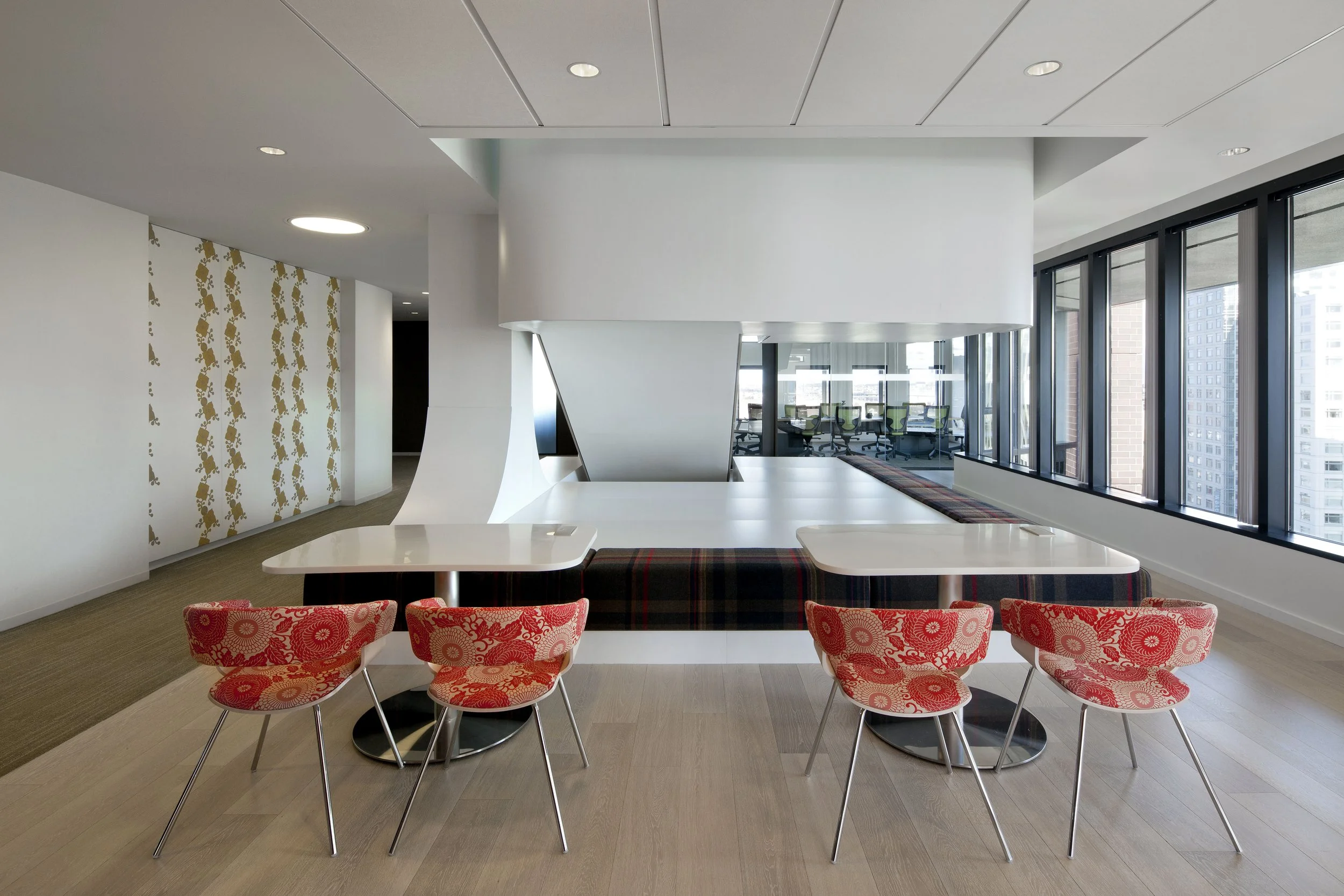
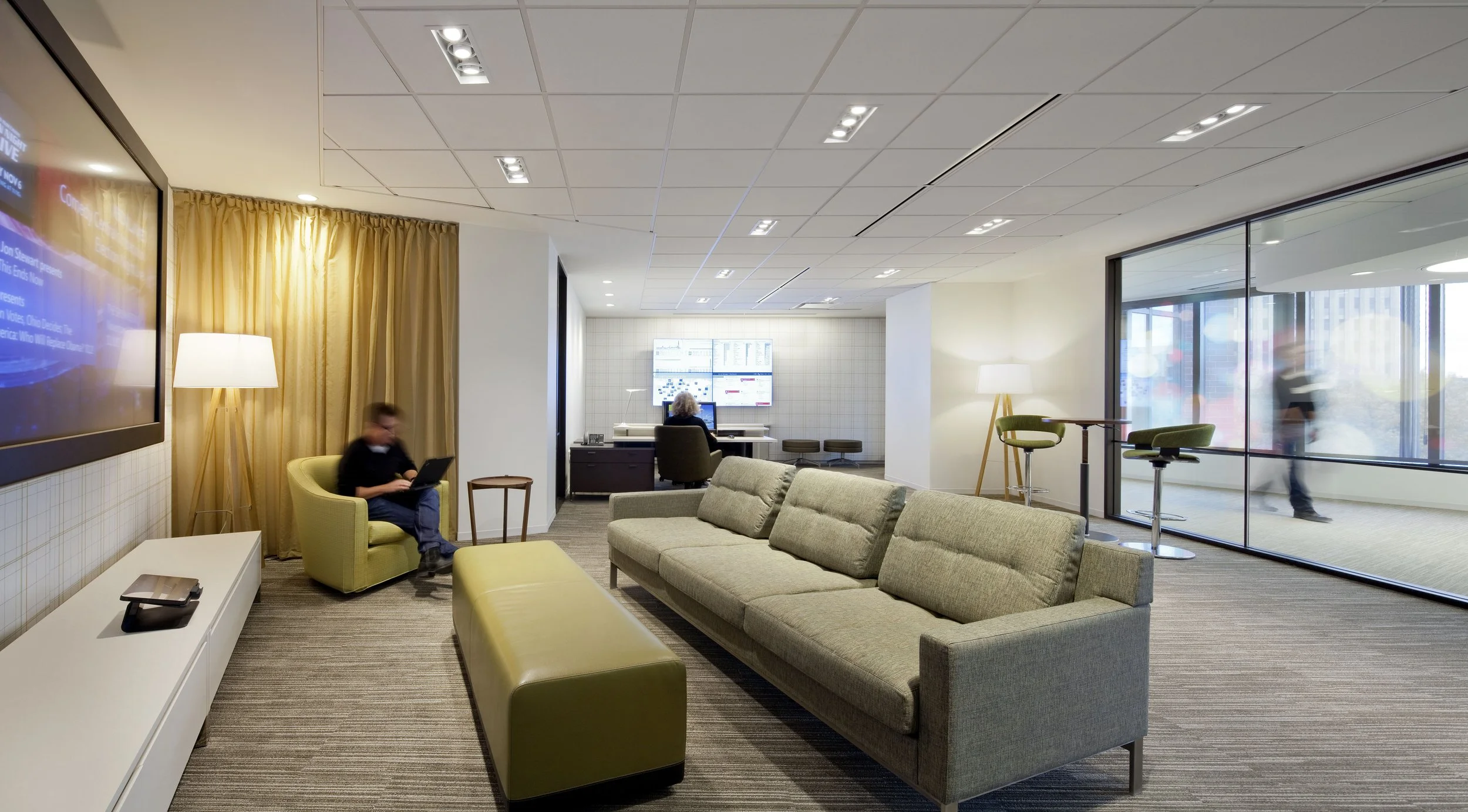
Dining, informal meetings and individual work share the same setting rather than being separated into dedicated rooms. This is workplace planning with a fairly practical premise: the most useful spaces are often those capable of absorbing several ordinary activities throughout the day.

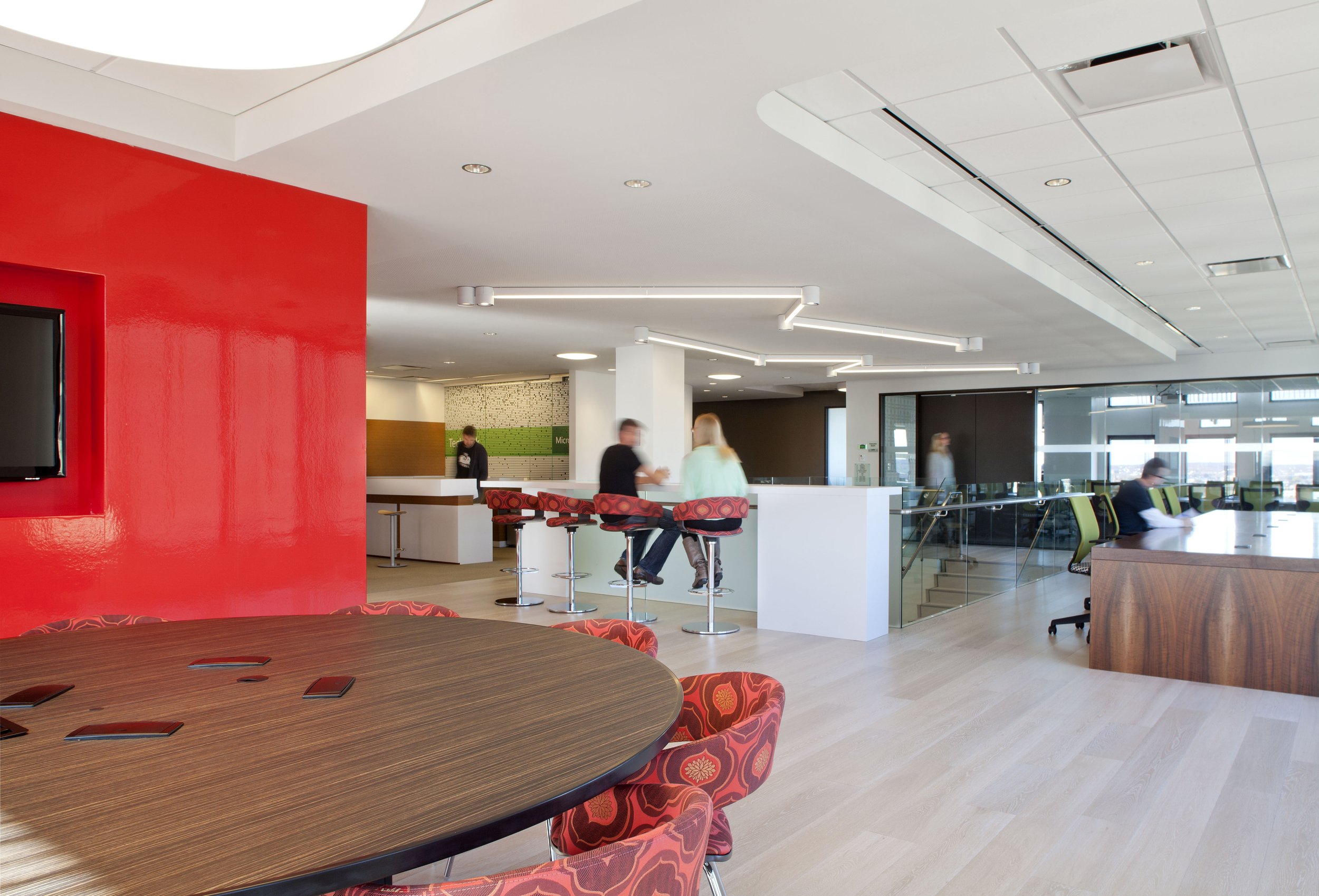
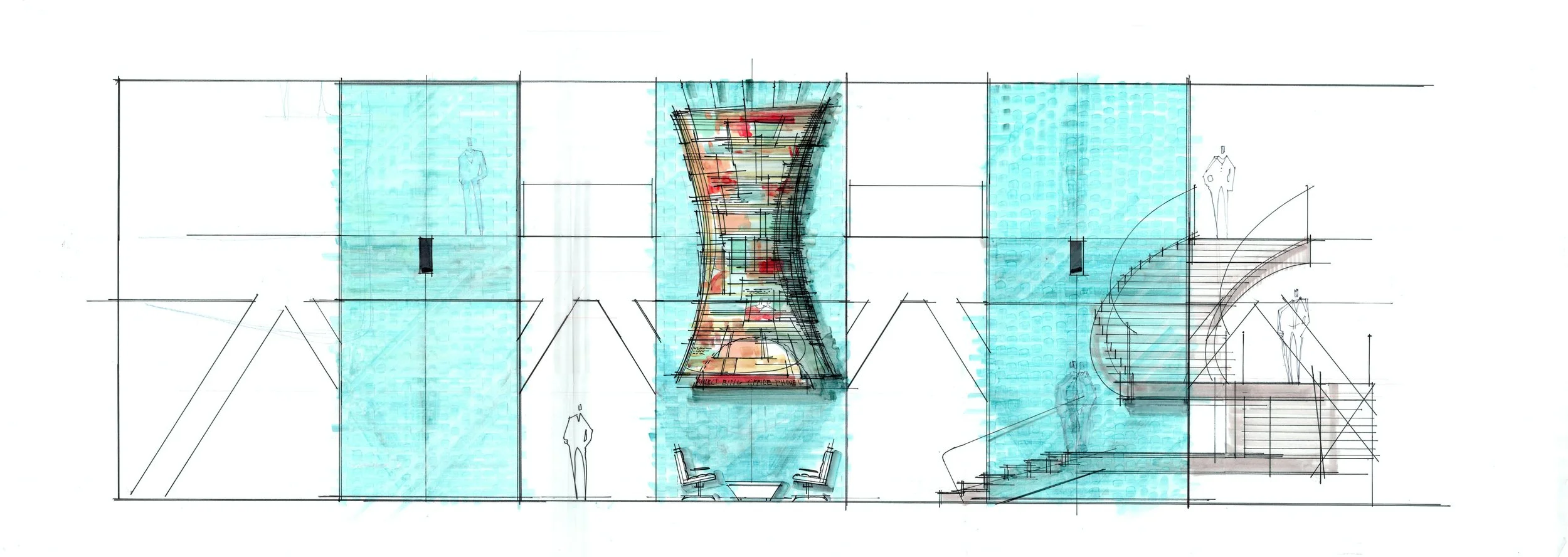
Red, patterned upholstery and familiar Microsoft color cues sit within an otherwise restrained workplace palette. The office remains recognizably corporate, but not generic.
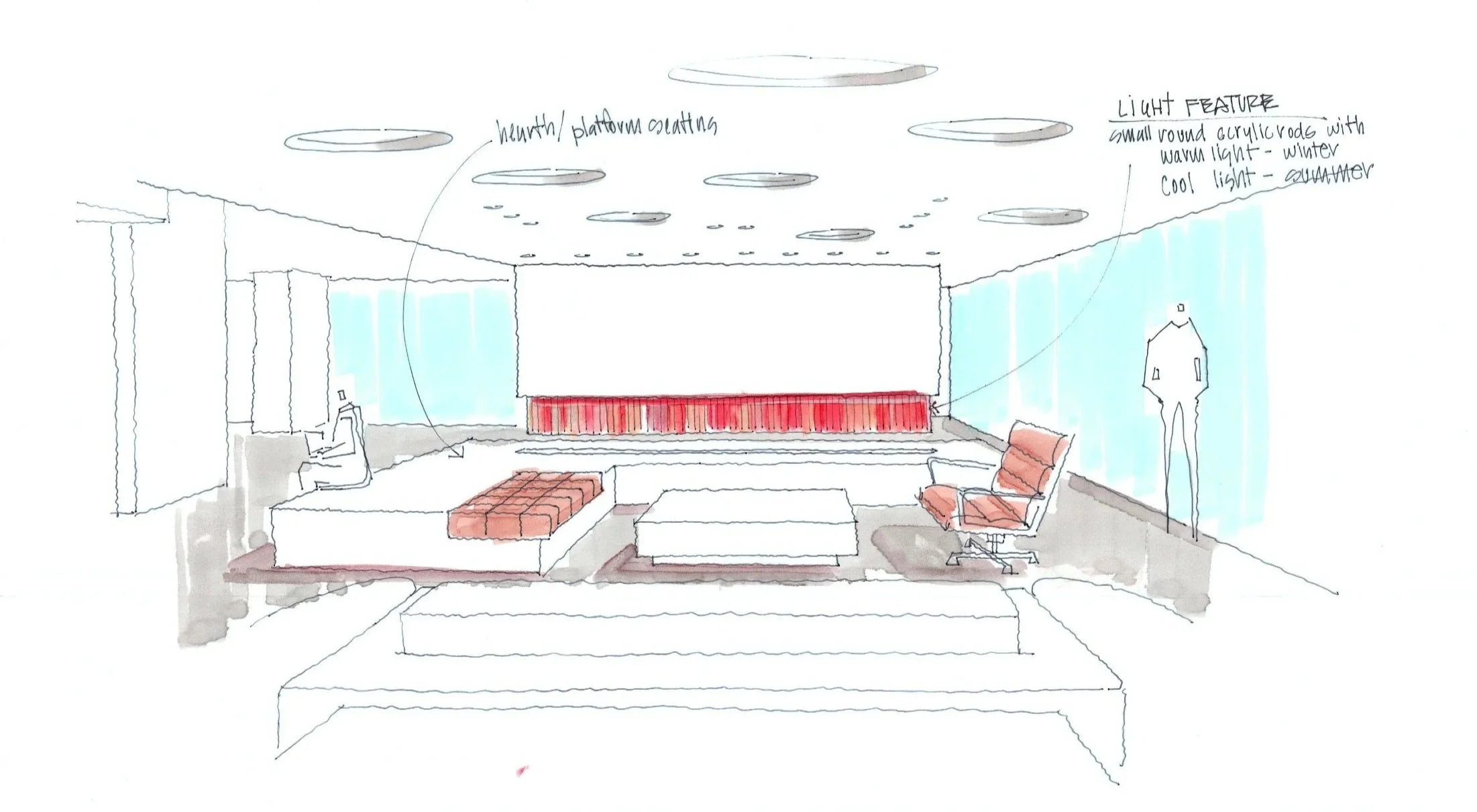

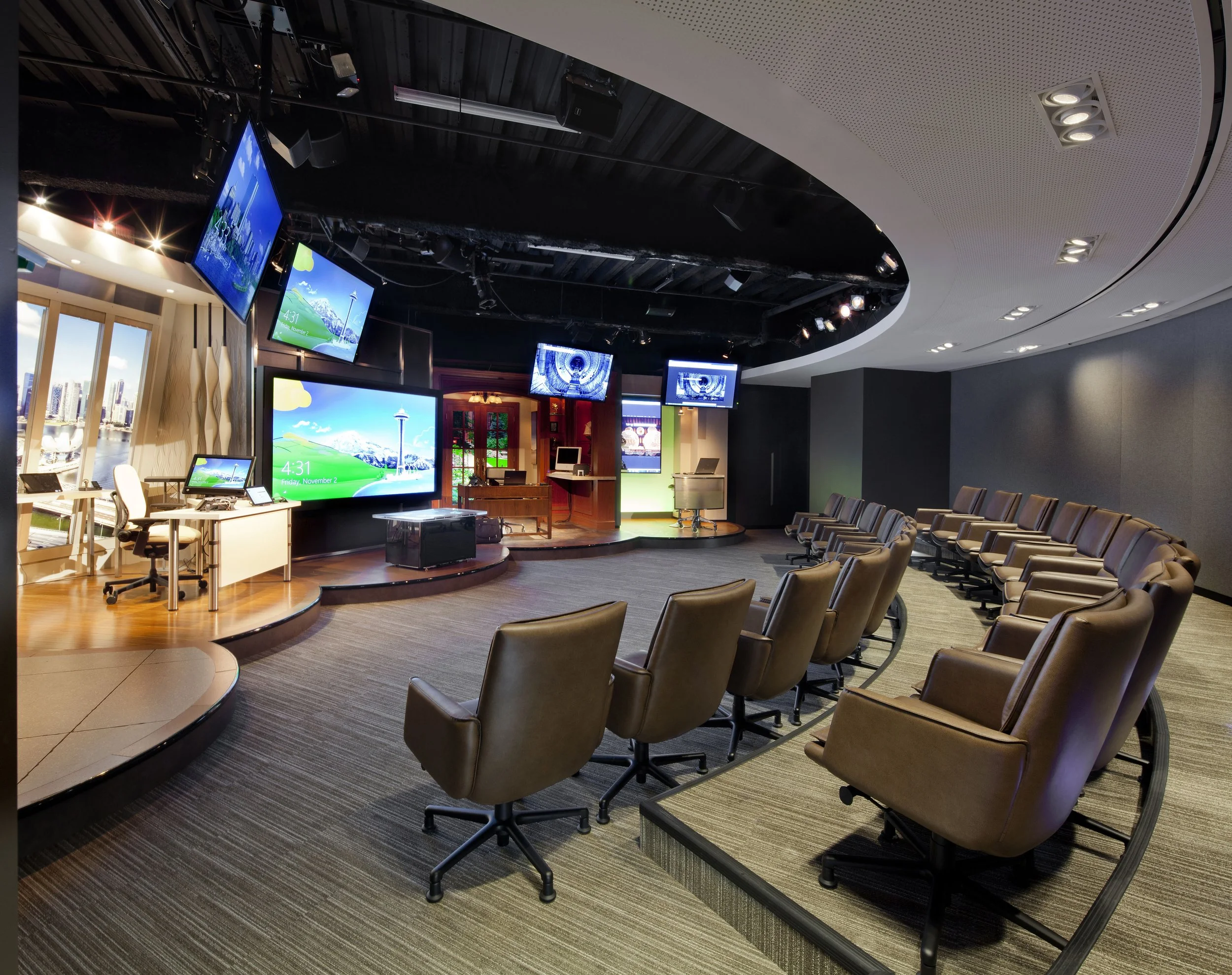
Microsoft’s Cambridge technology environment is designed for demonstration as much as occupation, bringing presentation, screens and live technology into a dedicated client setting. For a technology company, the workplace has unusual commercial potential because the building itself can participate in explaining what the business does.
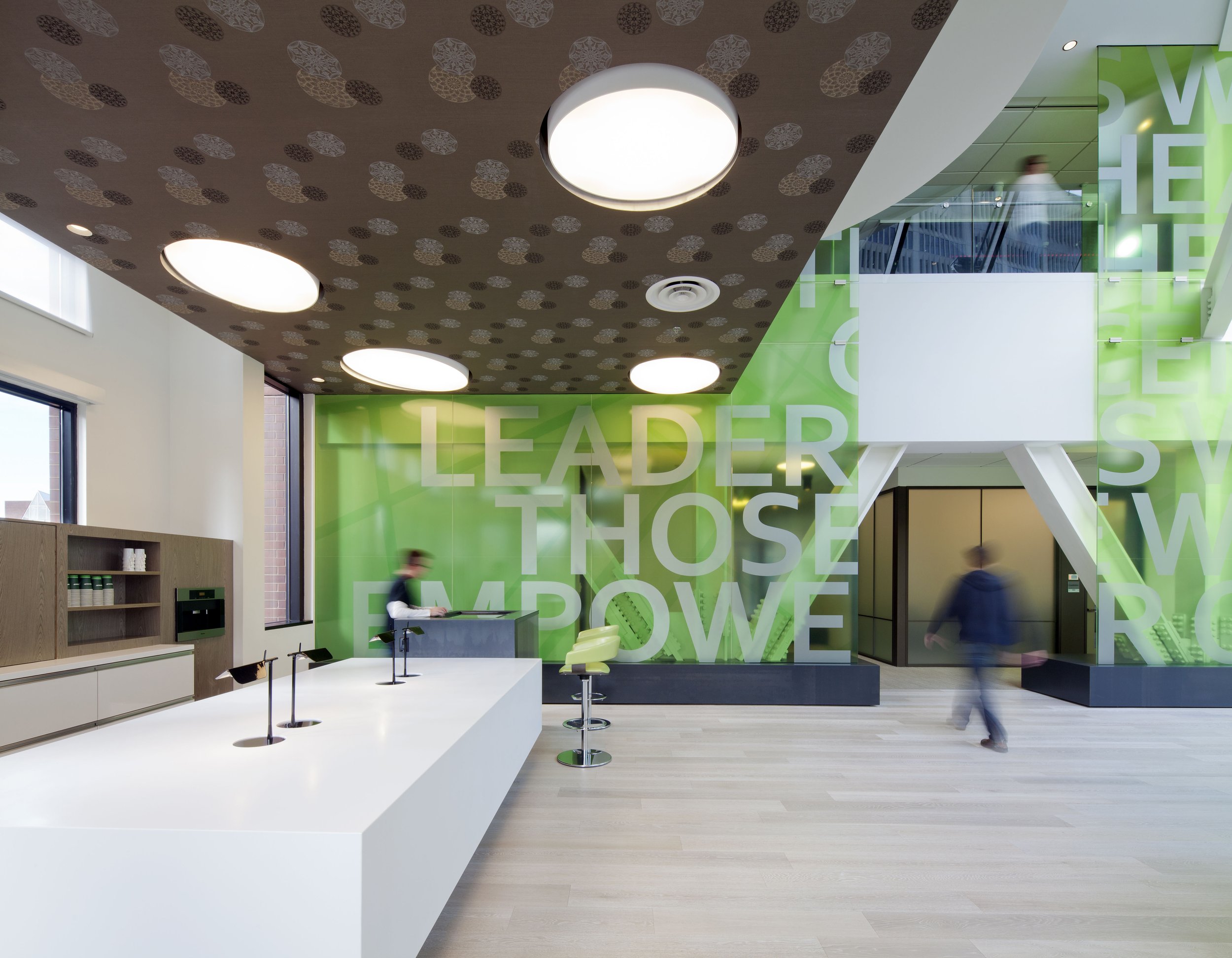
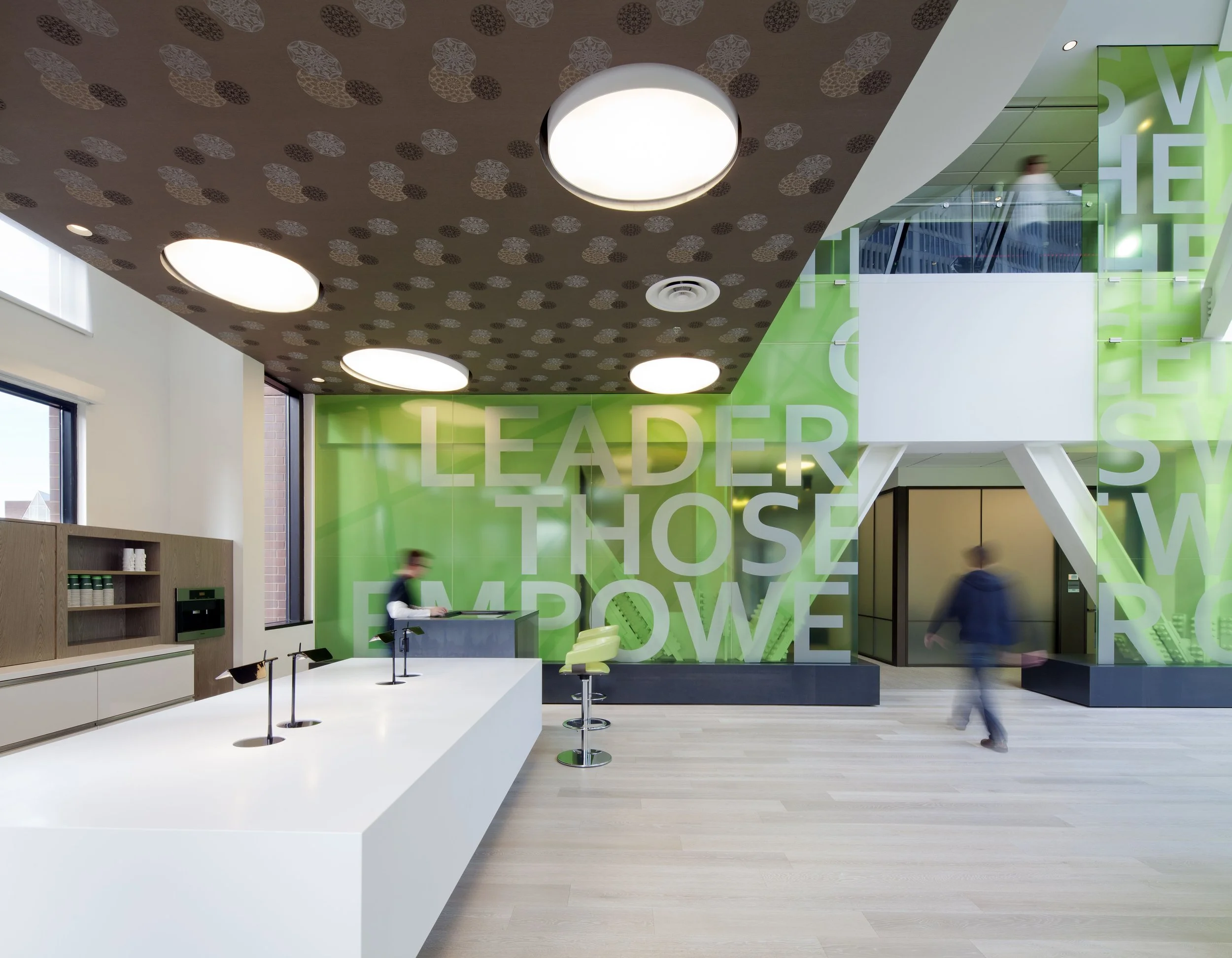
Large scale graphics give this Microsoft workplace a recognisable visual language while marking an important shared zone within the plan. Branding has more architectural value when it helps people understand where they are, rather than simply reminding them whose office they are in.