Set within a historic Art Deco building in Santa Monica, this regional headquarters is organized around the different places people need over the course of a workday. Desks and enclosed rooms are joined by window seats, lounges, a café, informal meeting areas, and places to work alone without retreating behind a door.
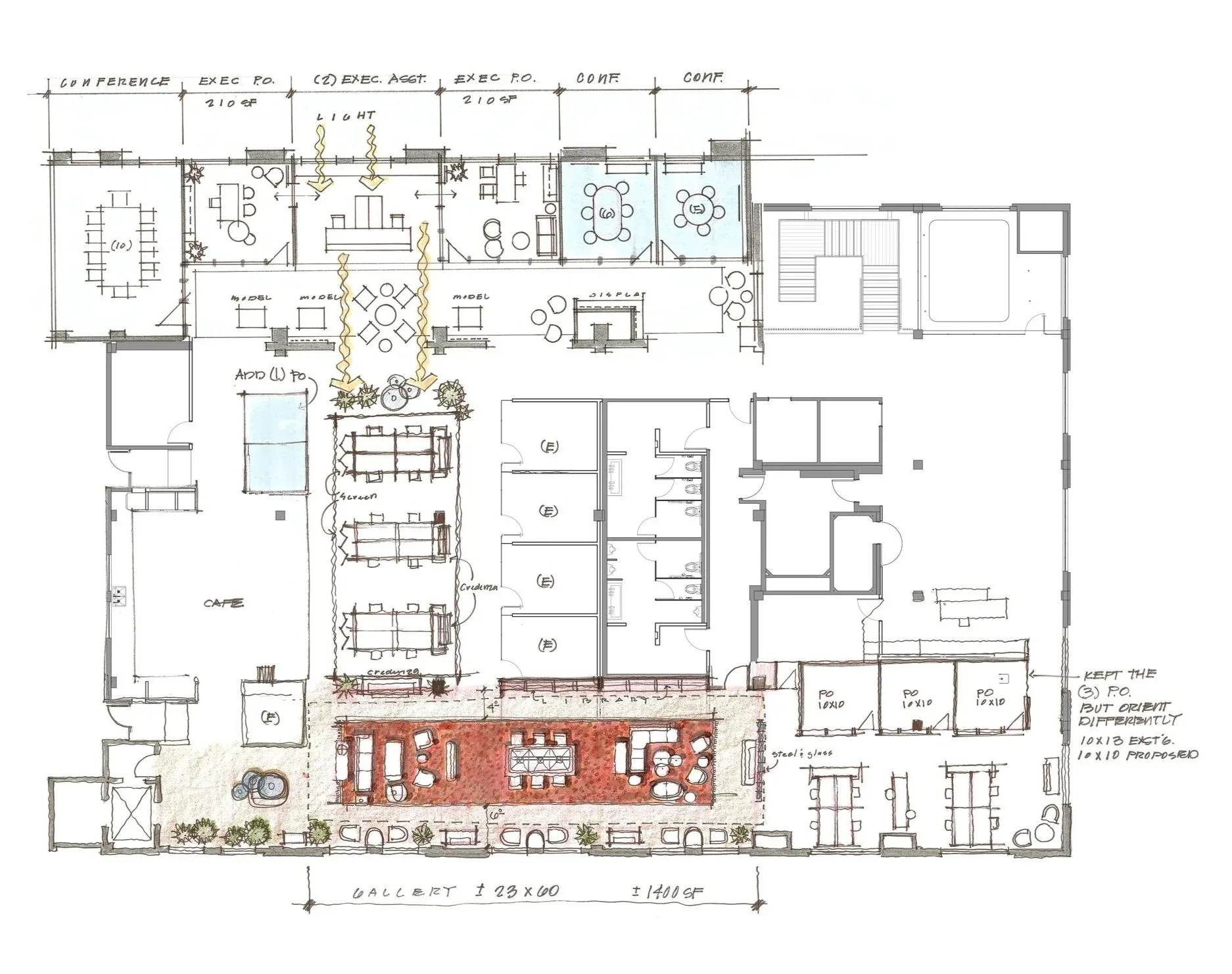
At the center of the plan is the veranda, a long sequence of shared settings along the building’s windows. Drawing from hospitality, the design gives people room to choose where to settle according to what they are doing, who they are with, and how long they intend to stay.
Santa Monica, CA
15,700 SF
Workplace
Hospitality
Concept
The existing space offered tall windows, exposed concrete, and an open industrial shell. SkB Architects used those conditions to create several kinds of workplace within one floor.
More structured work happens deeper in the plan, while shared settings gather along the windows. The café and larger communal spaces give people reasons to move through the office during the day. Enclosed rooms remain available when privacy or concentration matters.
The plan allows someone to change settings as their work changes, without treating every activity as either desk work or a formal meeting.
“The central move was the creation of the ‘veranda’—a procession of varied settings along the window wall that mixes workstations with soft seating and casual meeting areas.”

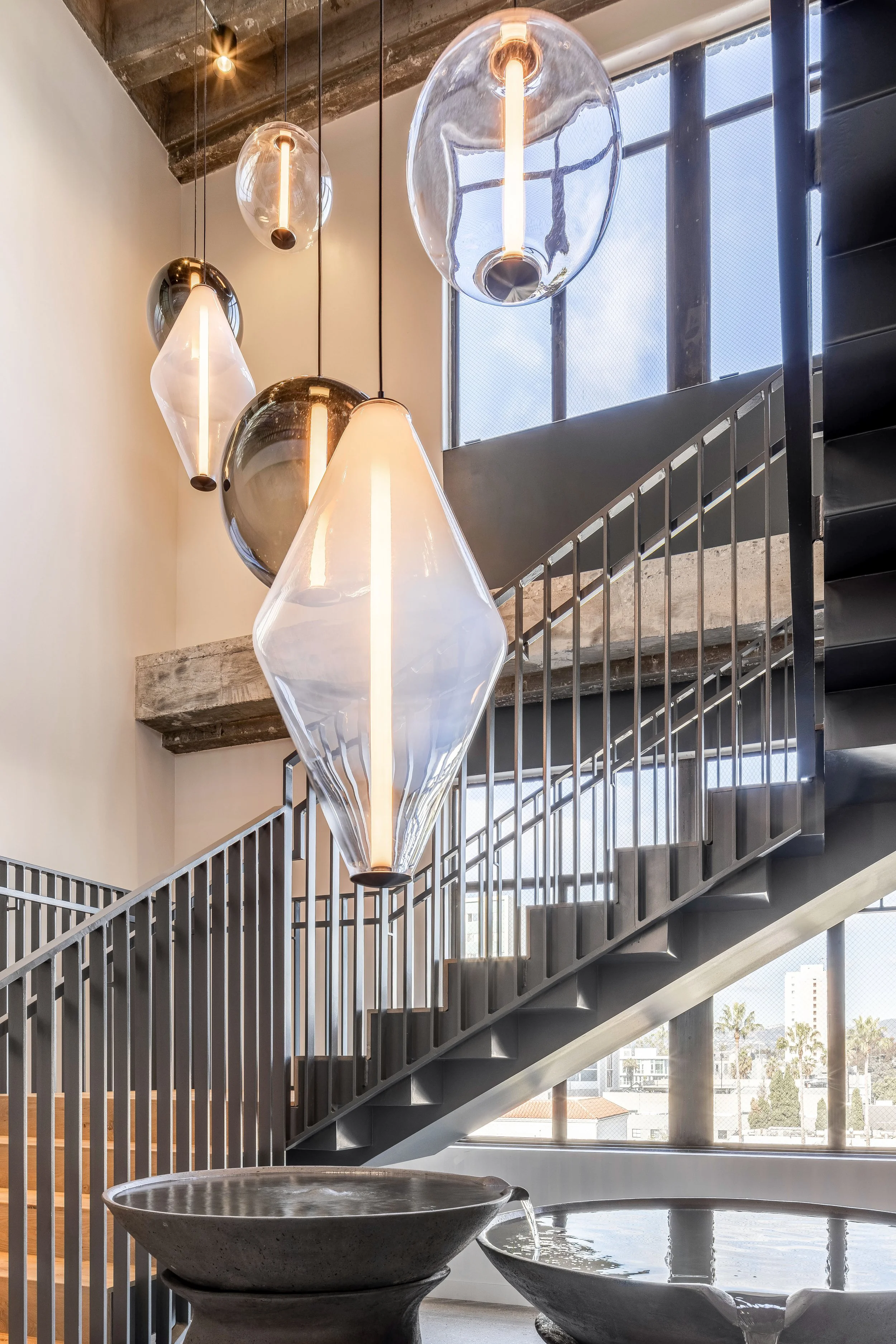
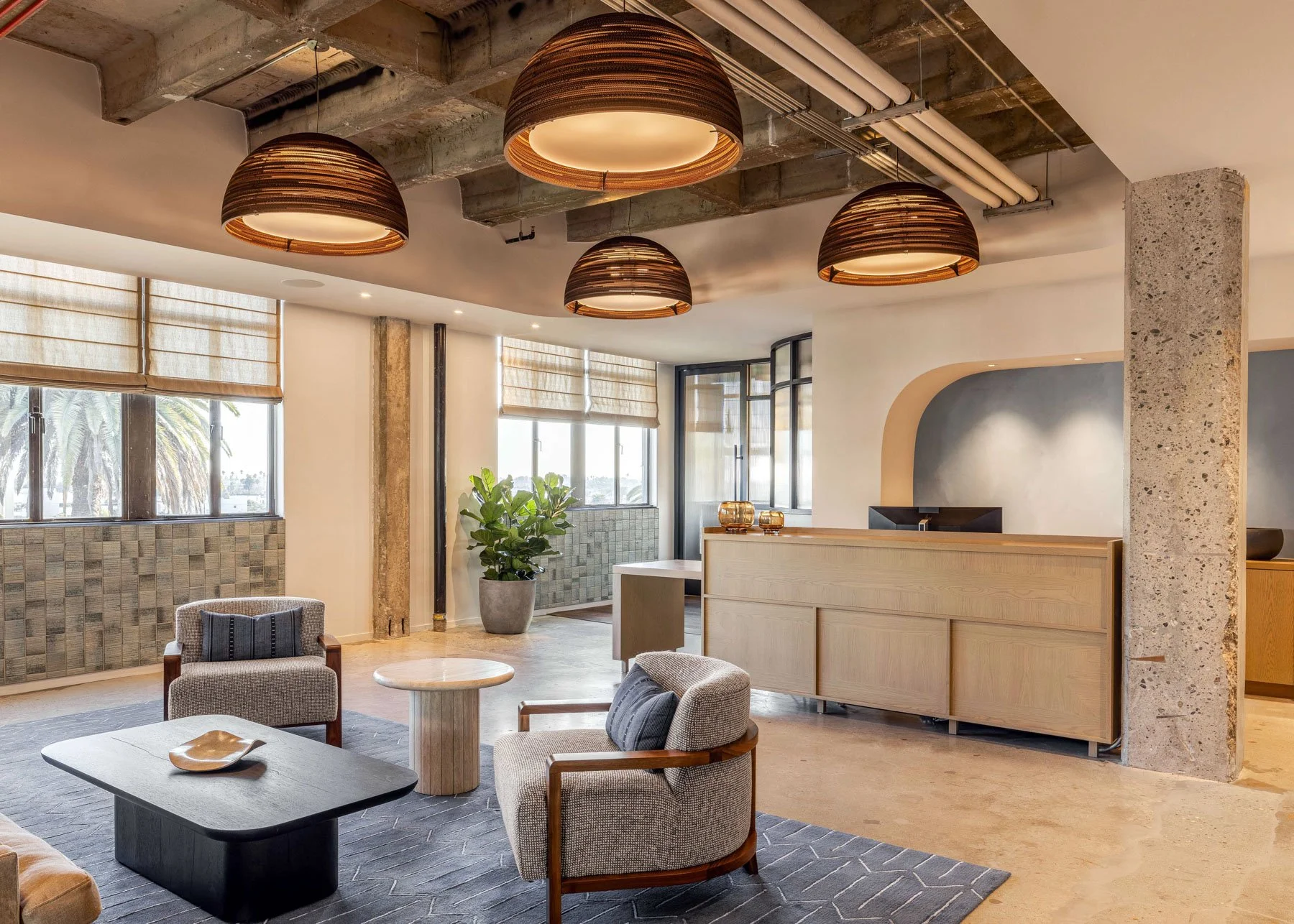
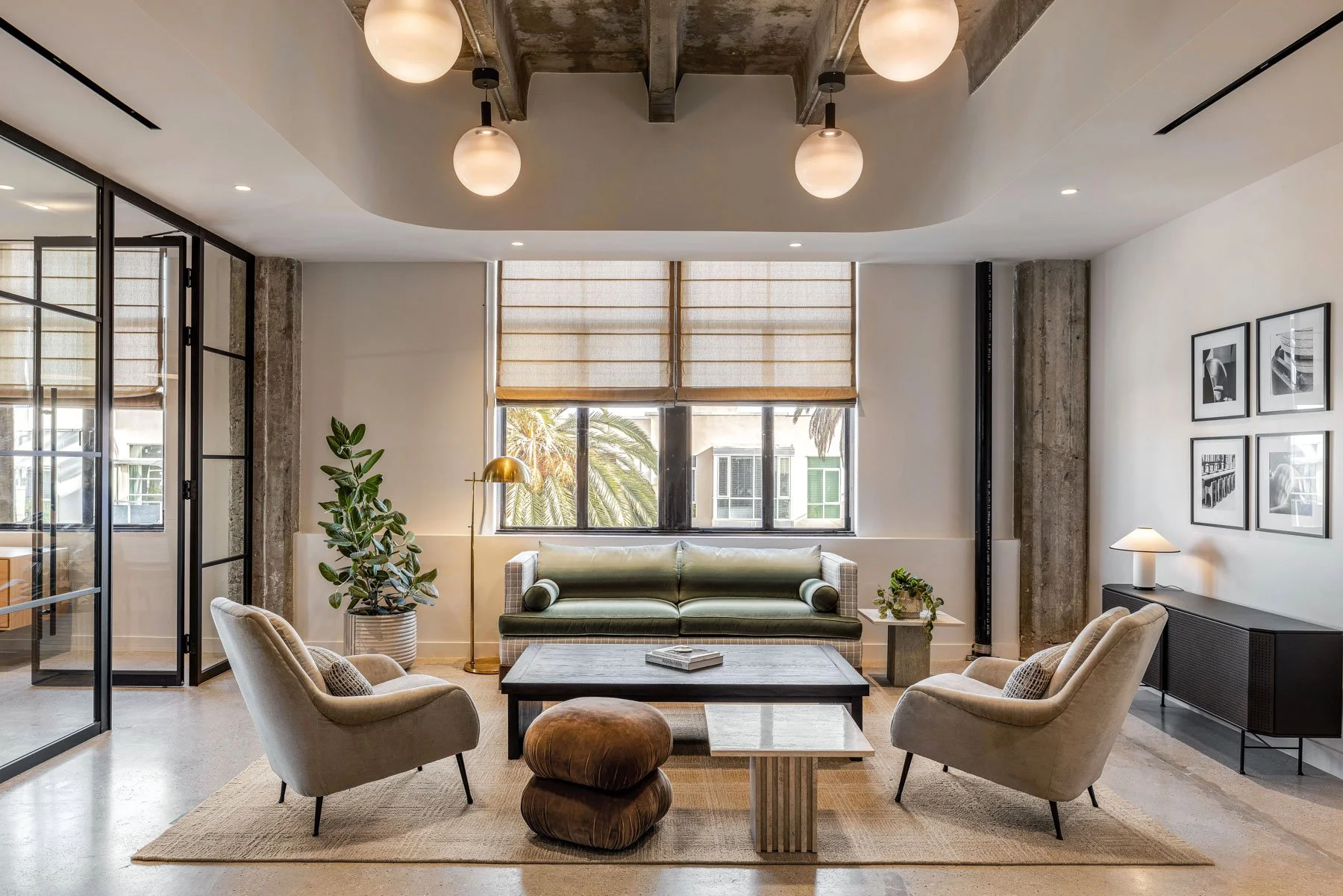
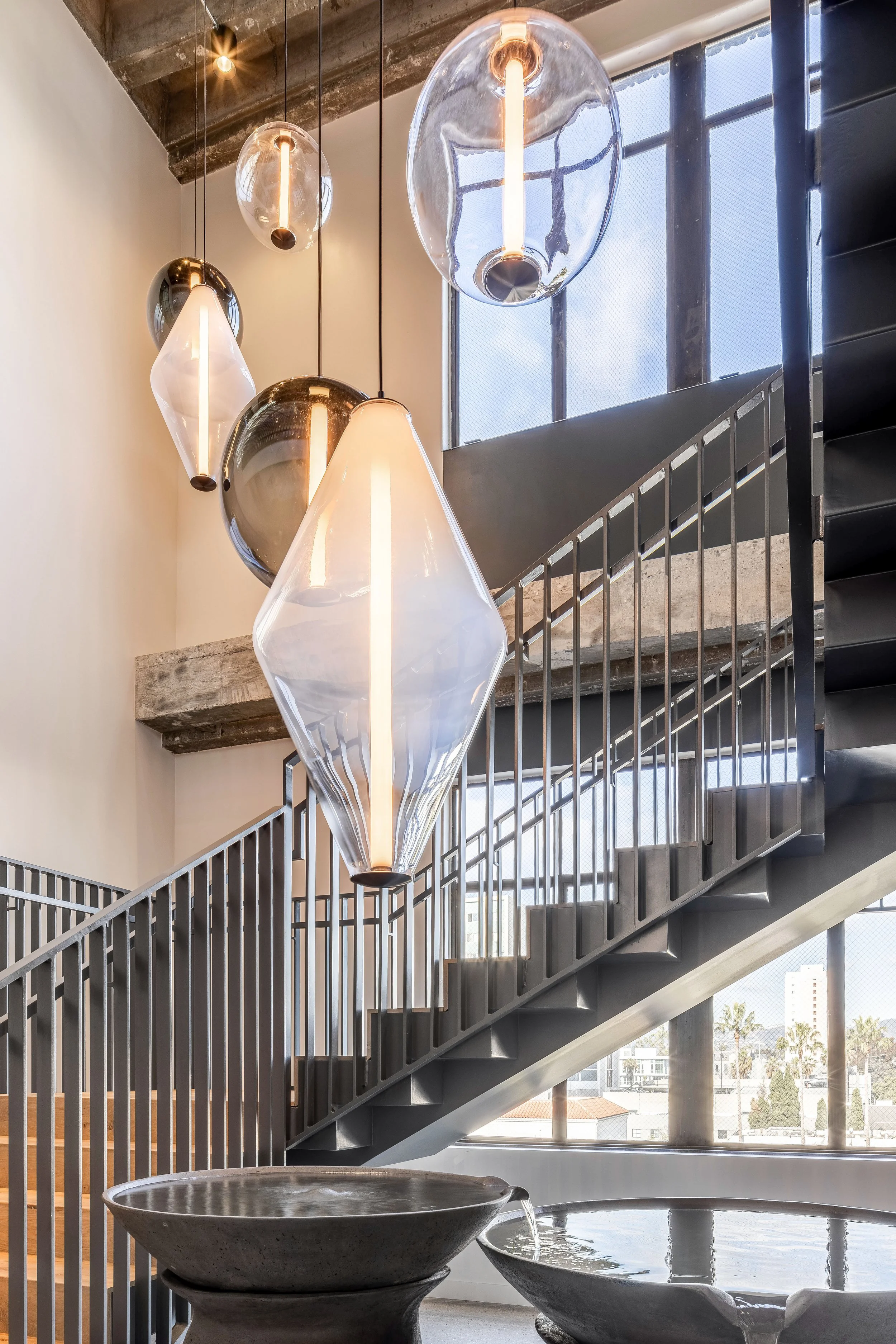
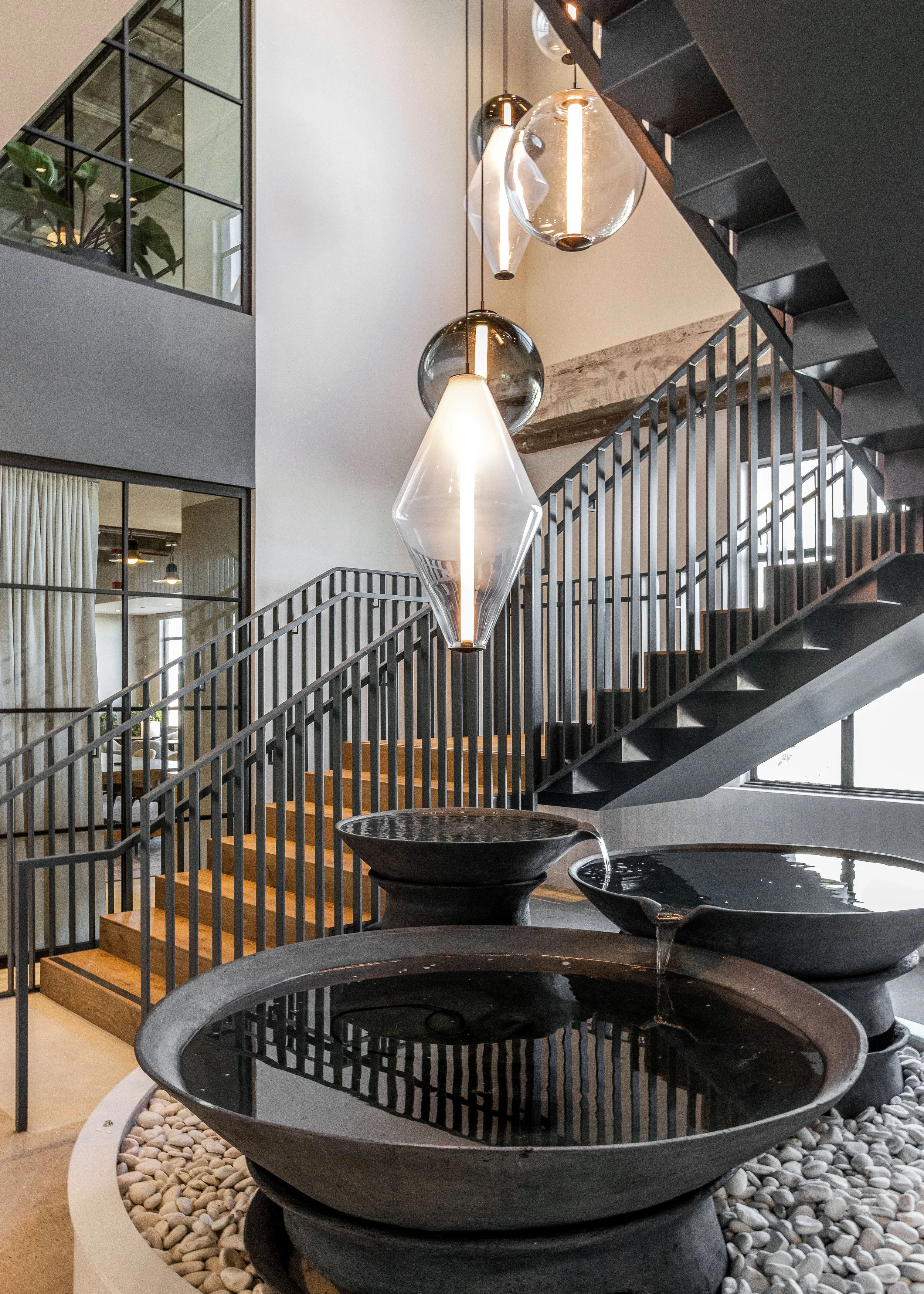
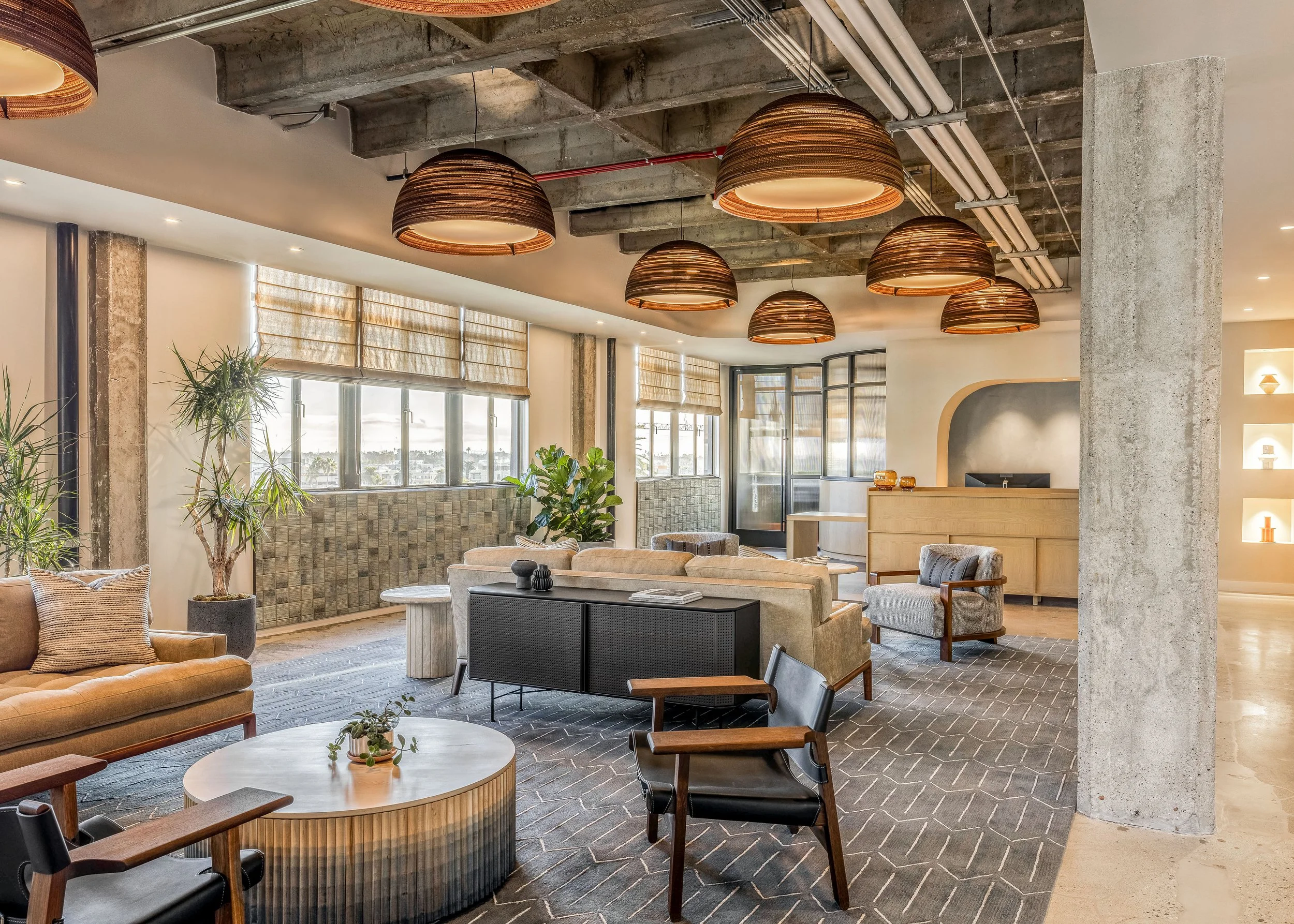
At reception, exposed concrete from the historic Art Deco building is paired with wood, woven lighting, and residential furnishings, introducing the hospitality influenced character of the workplace.
The Veranda
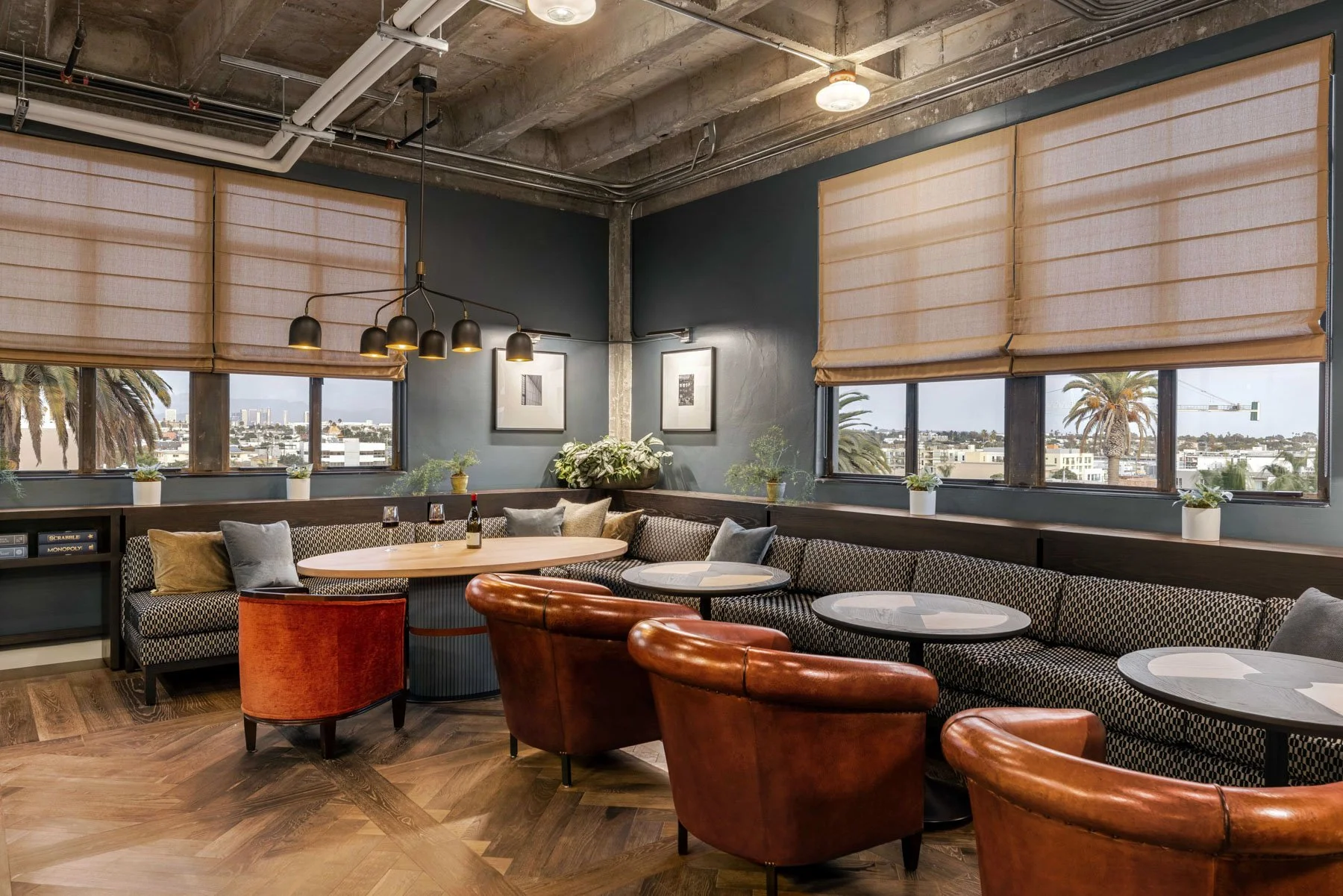
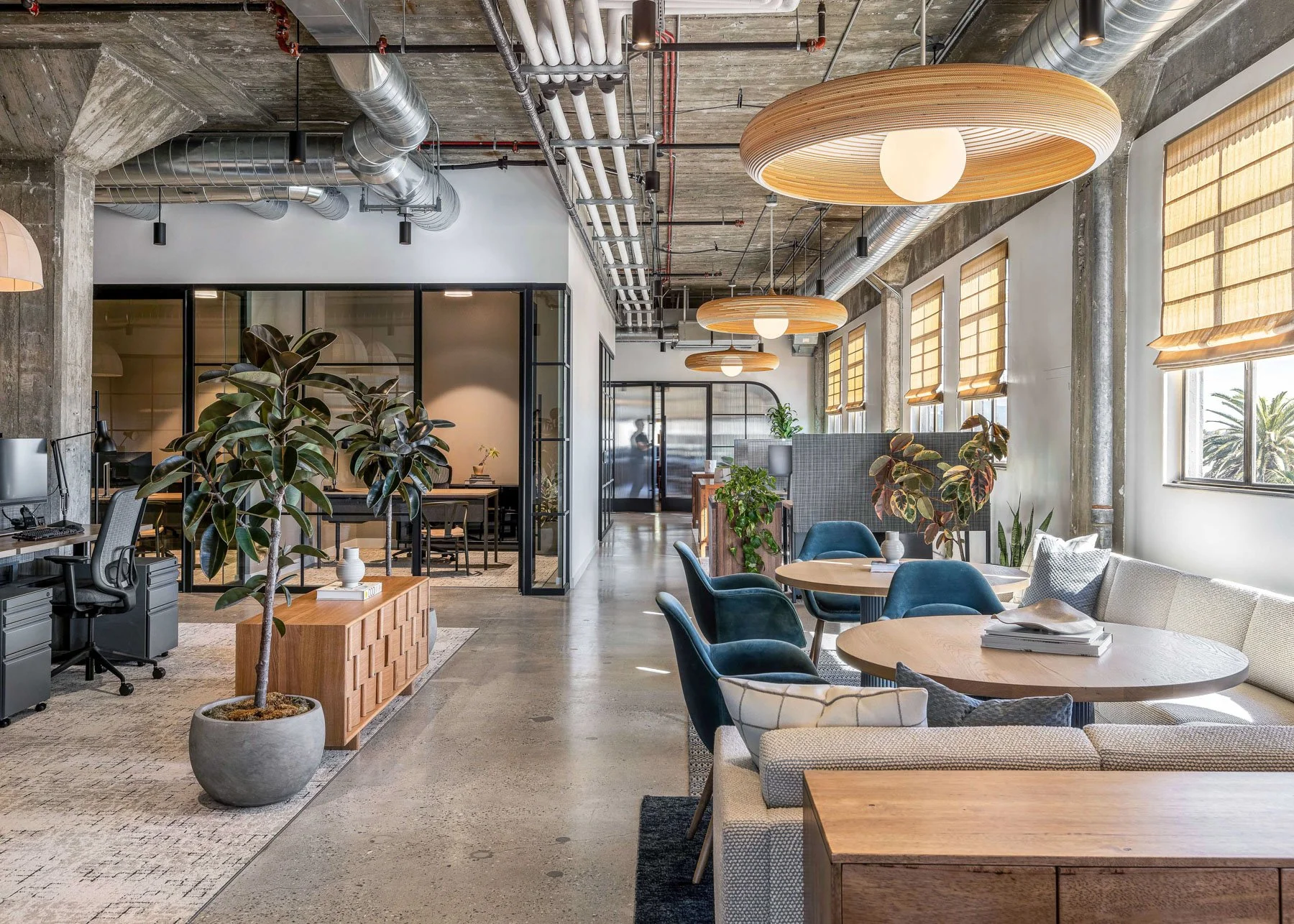
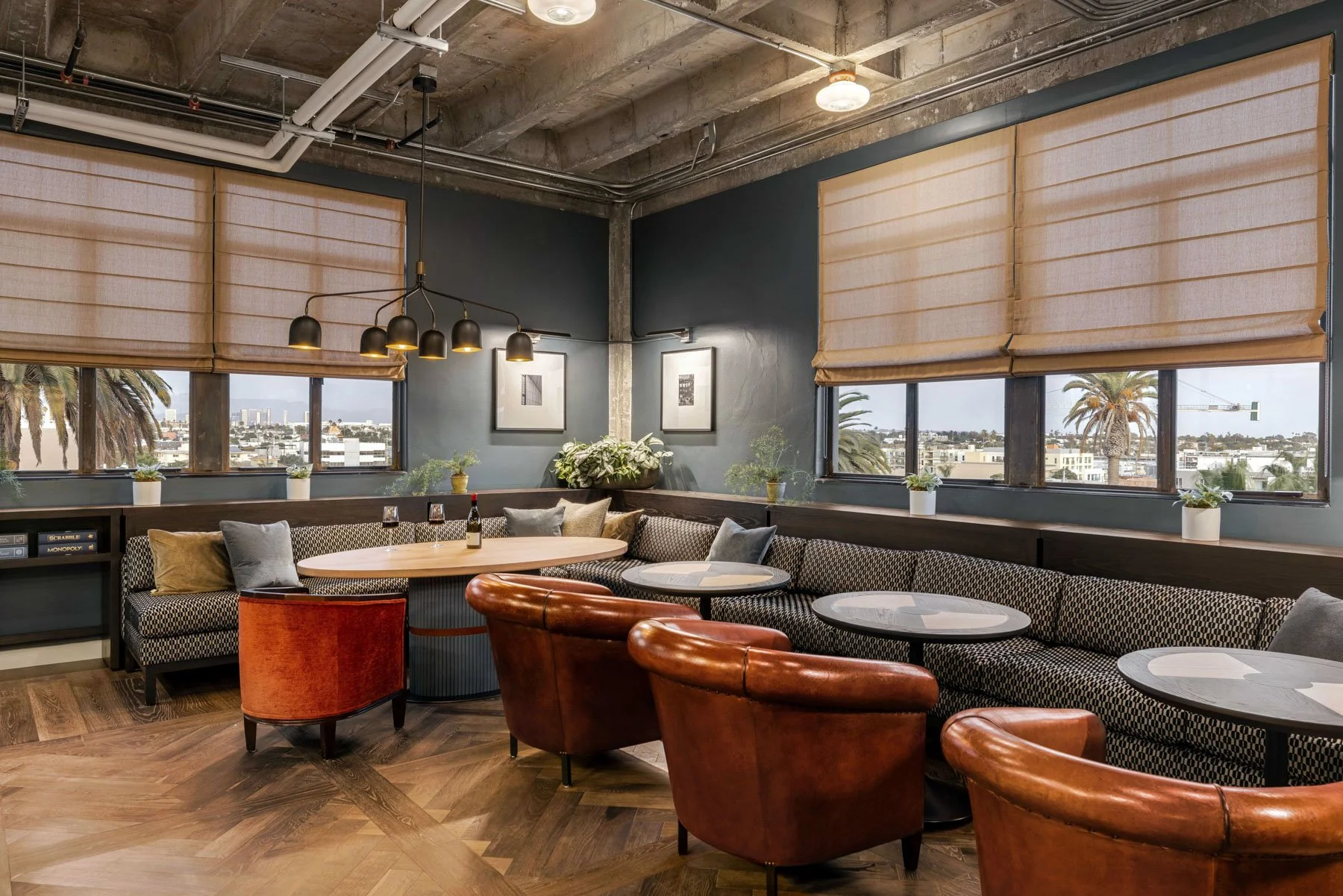
The veranda runs along the window wall, mixing workstations with sofas, shared tables, planting, and smaller places to meet. Daylight and views are shared rather than reserved for a single type of room.
Someone can settle there with a laptop, move a conversation out of an enclosed room, sit with a few colleagues, or simply work somewhere different for part of the day. The settings change along its length, so the veranda can accommodate several ways of working without becoming another row of assigned seats.
That is much closer to the brand voice because it describes what people can actually do.

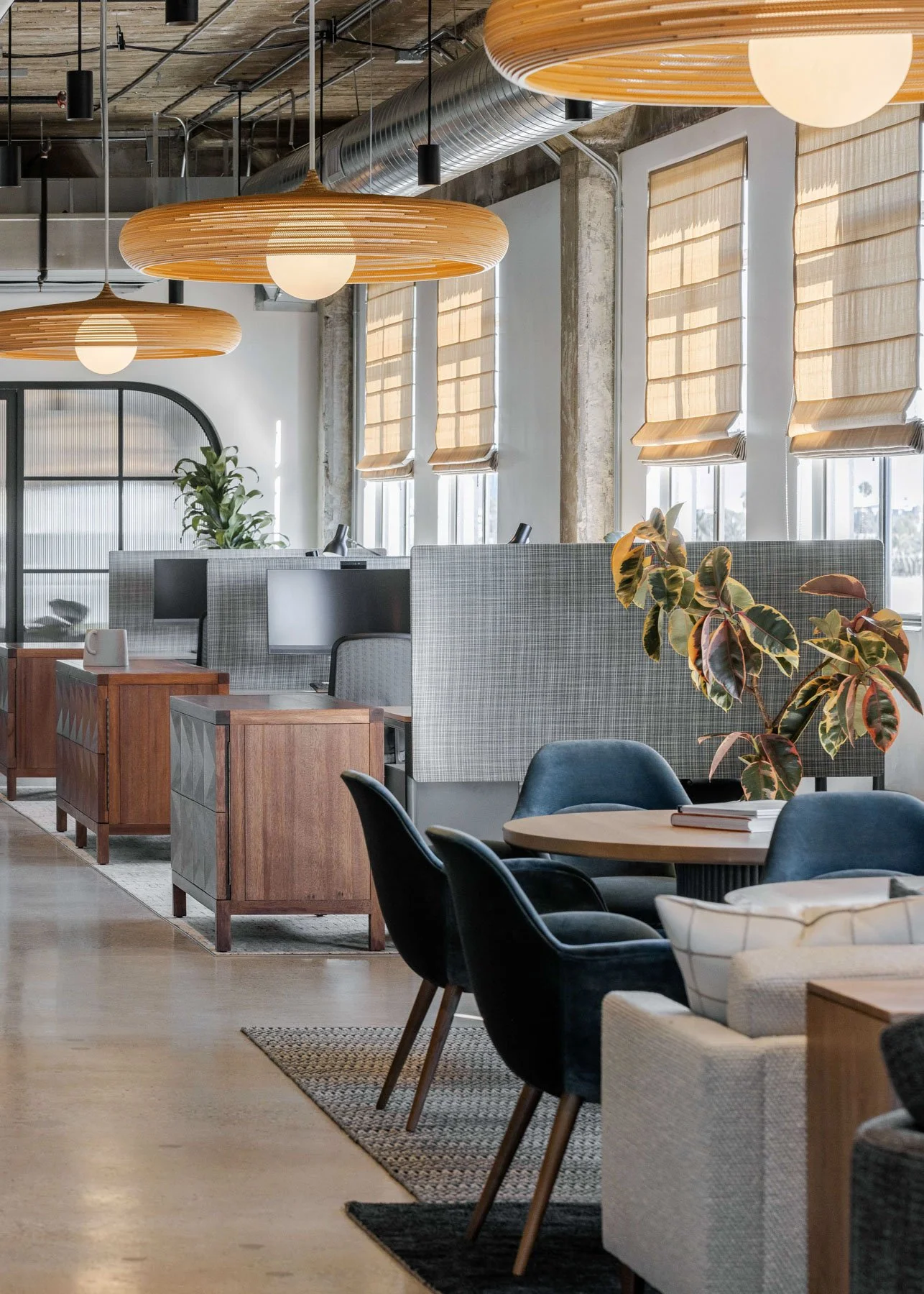
Along the veranda, open workstations sit beside smaller shared settings, giving people a choice between focused work and informal conversation without moving far from their desks.
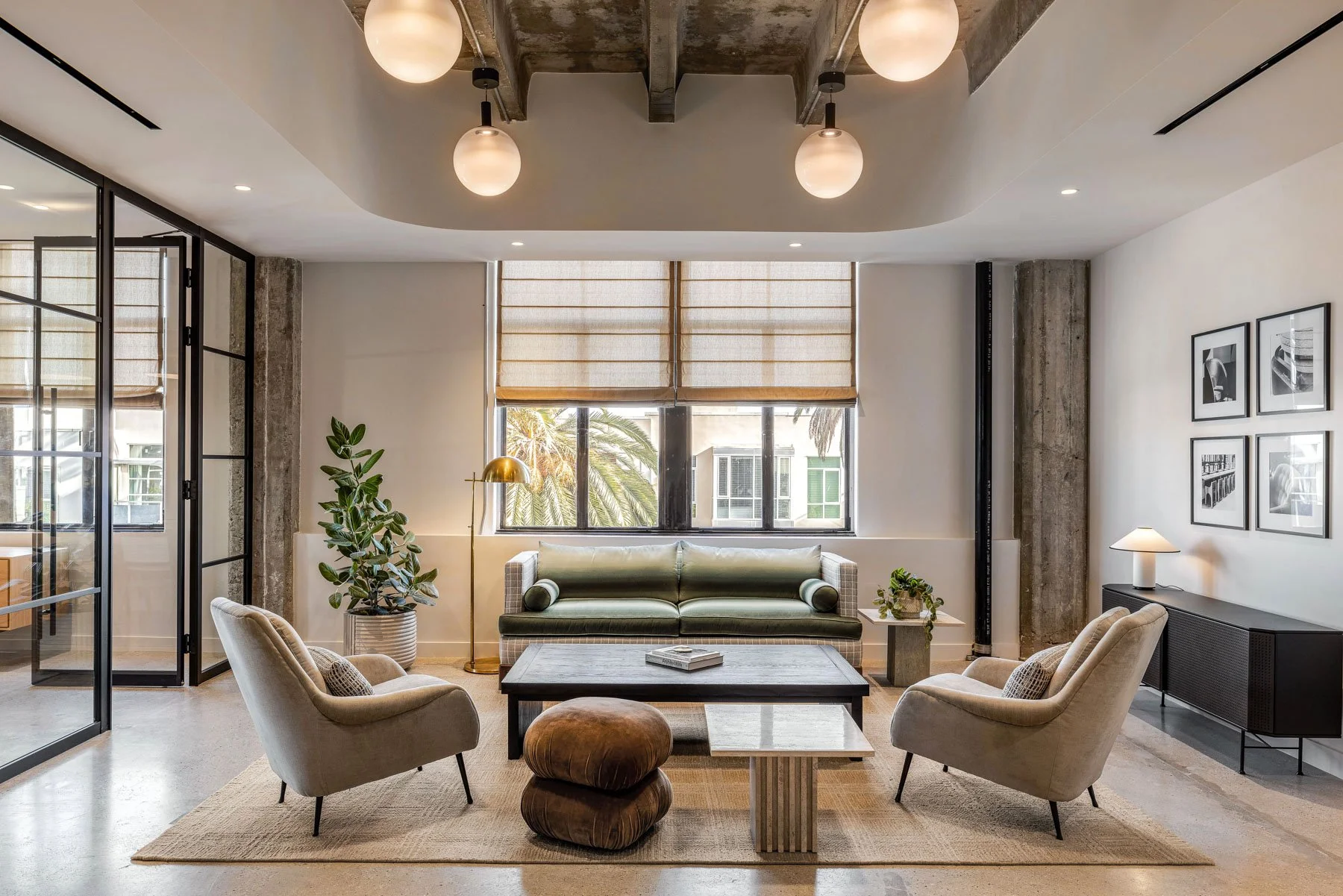
A window lounge creates one of several places to step away from the desk, using the Santa Monica headquarters’ existing windows and daylight to make room for a different pace of work.

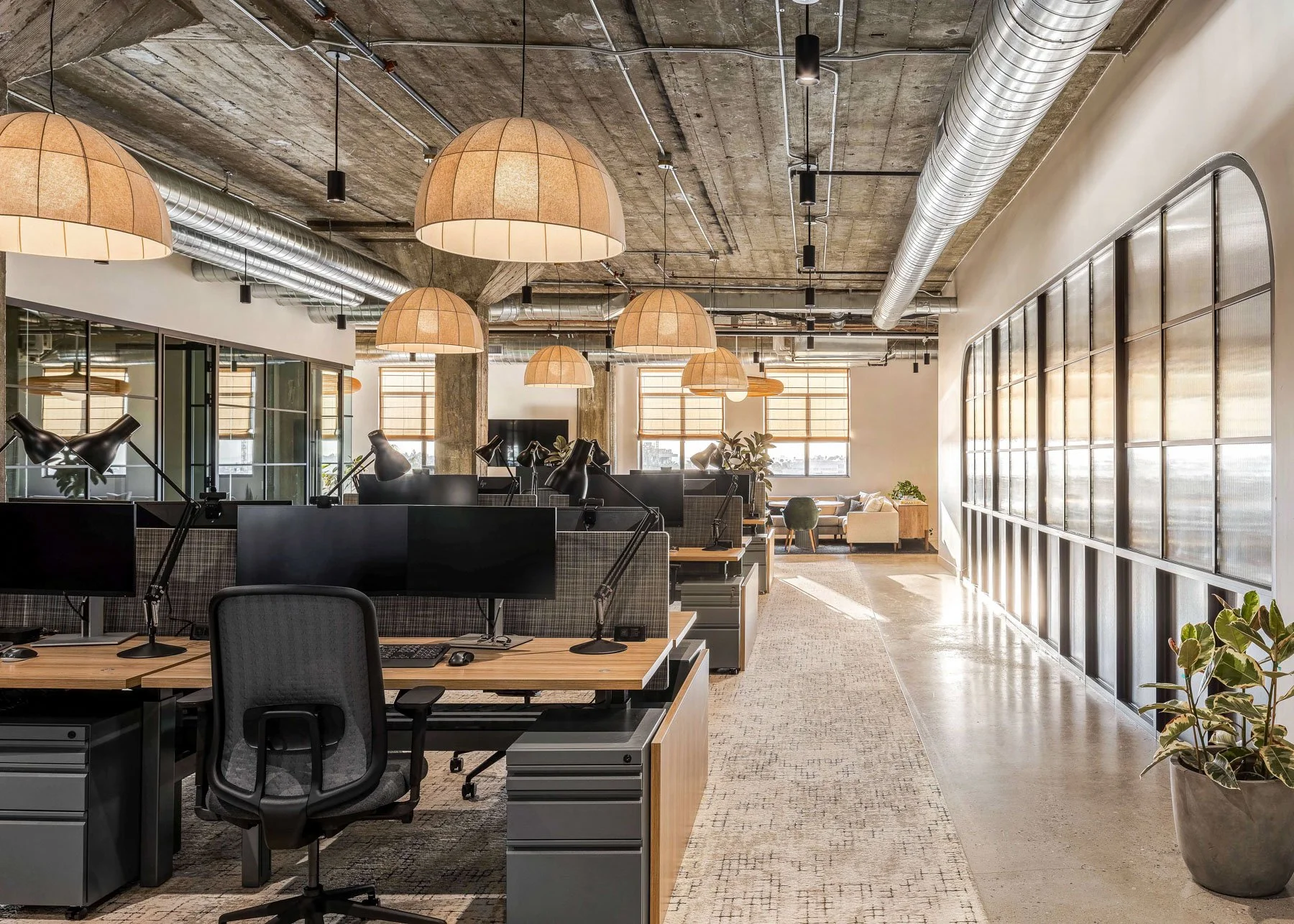
Open workstations sit alongside the veranda, a sequence of shared settings along the windows that gives people places to step away from their desks without leaving the working environment.
Hospitality at work
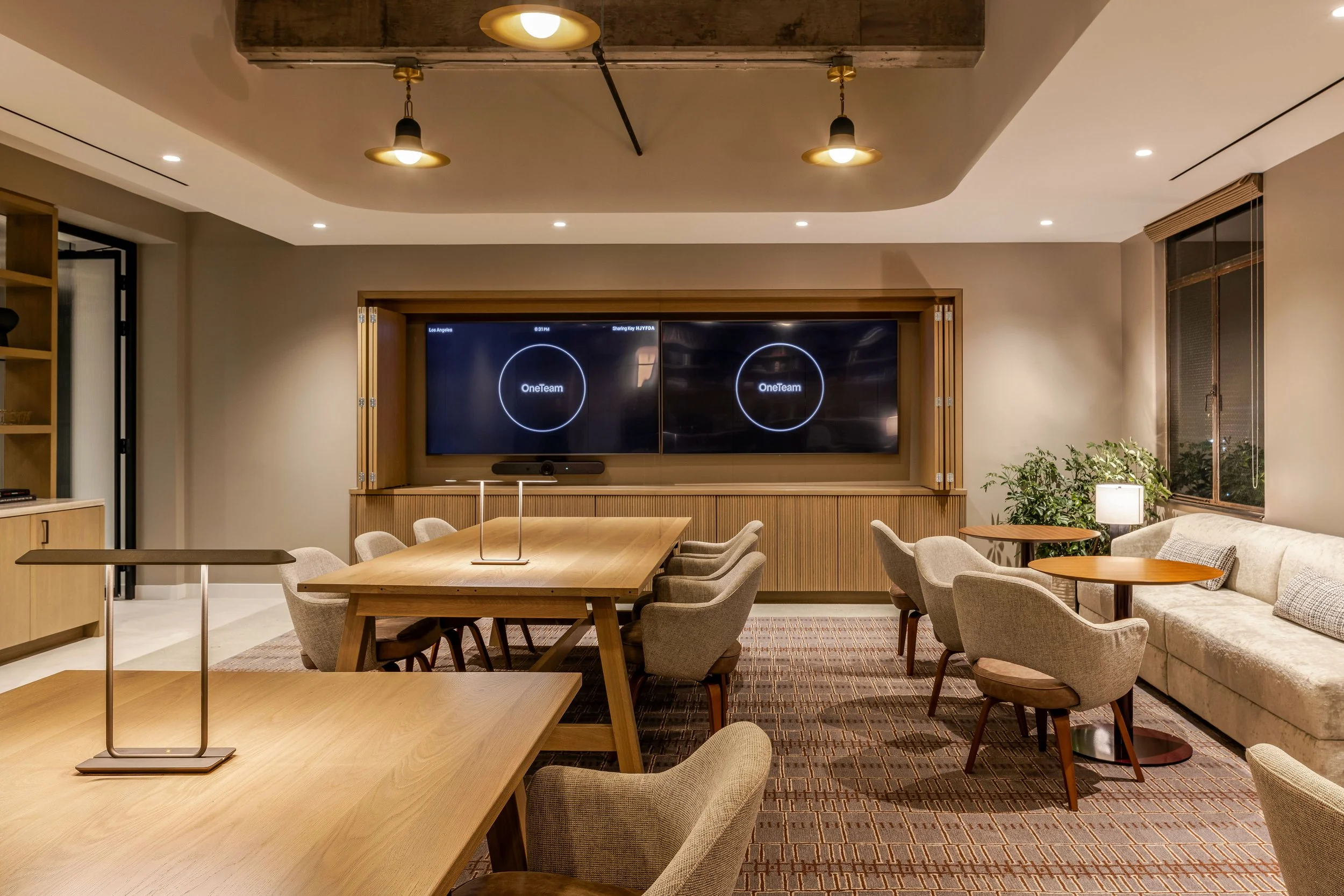
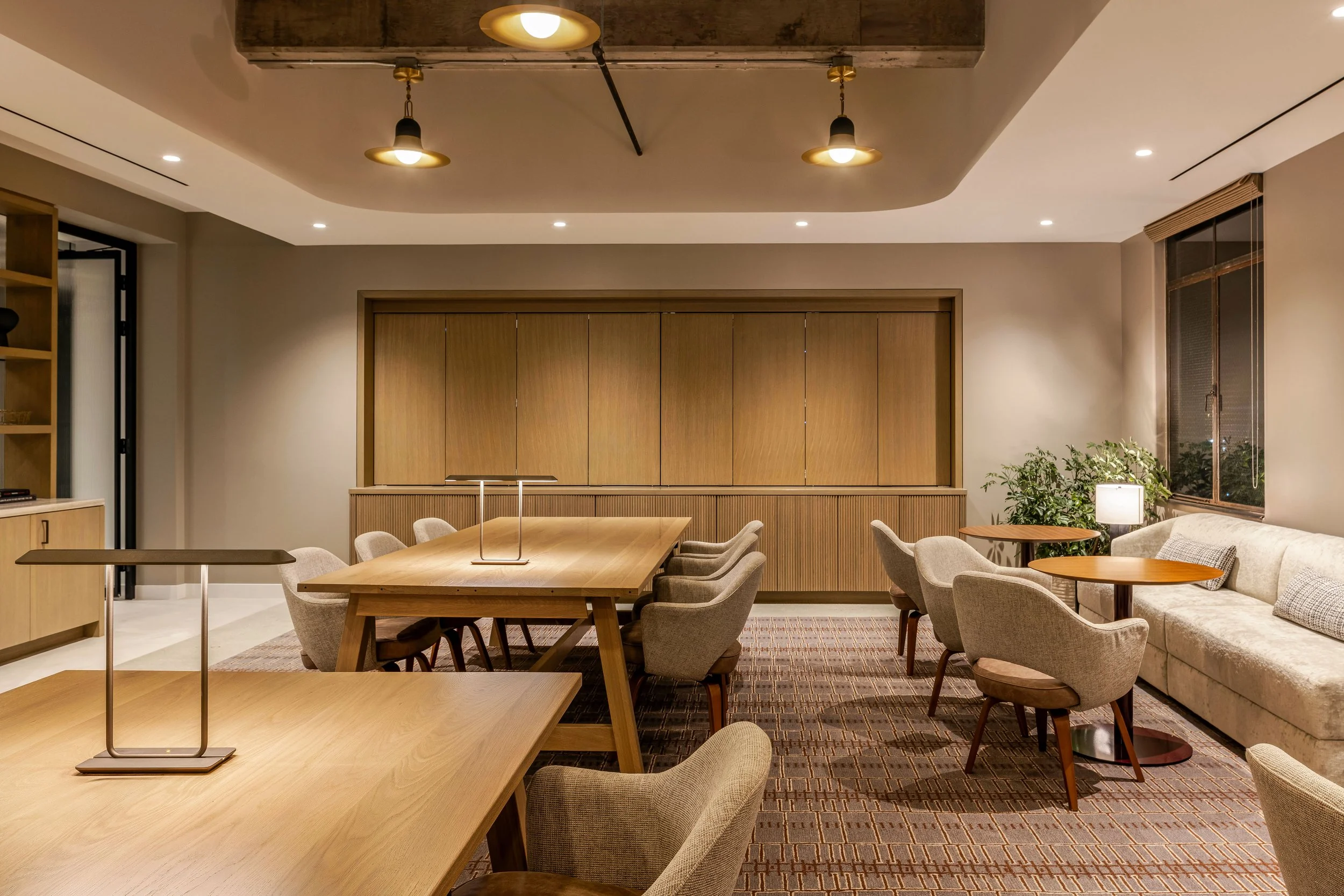
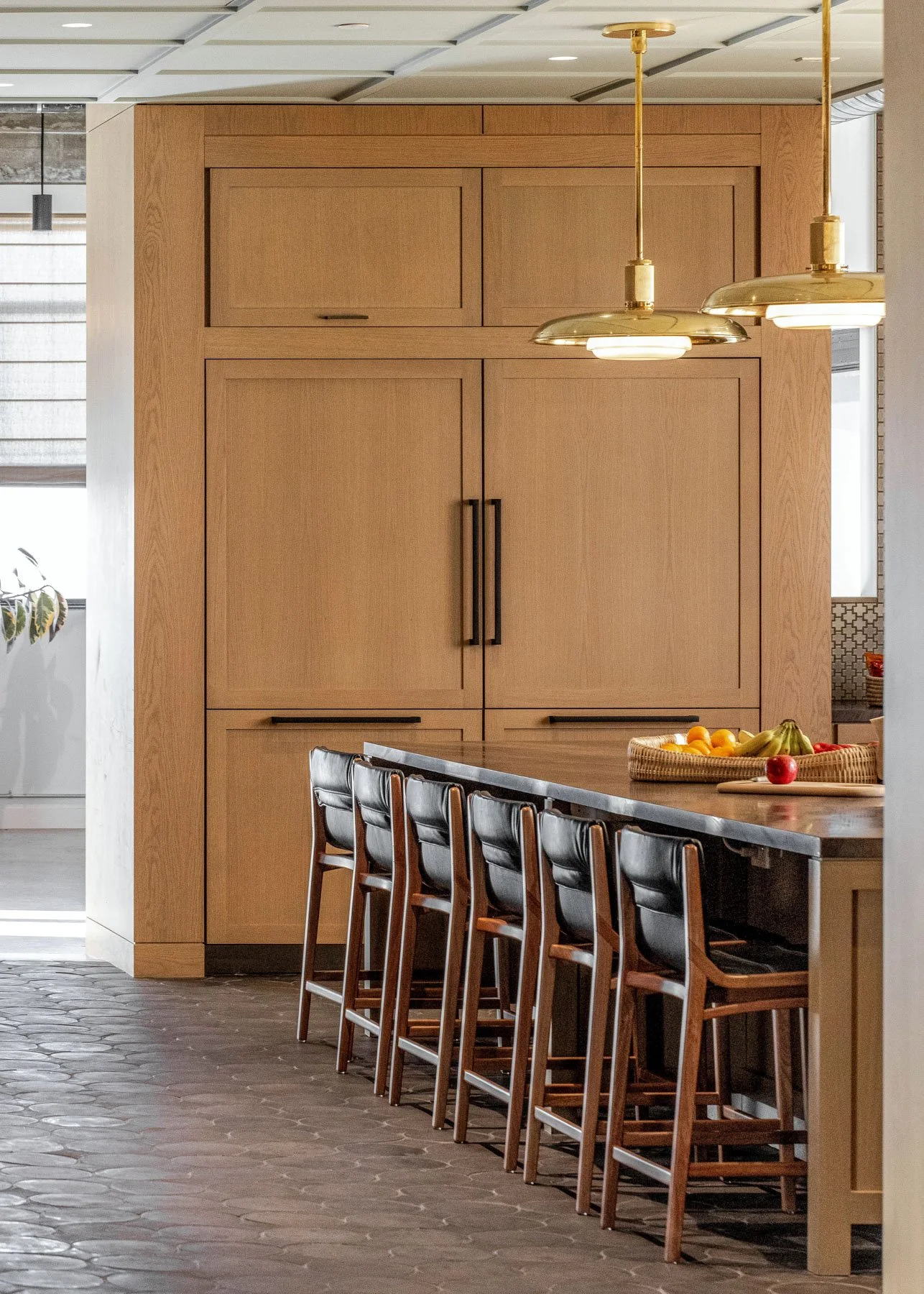
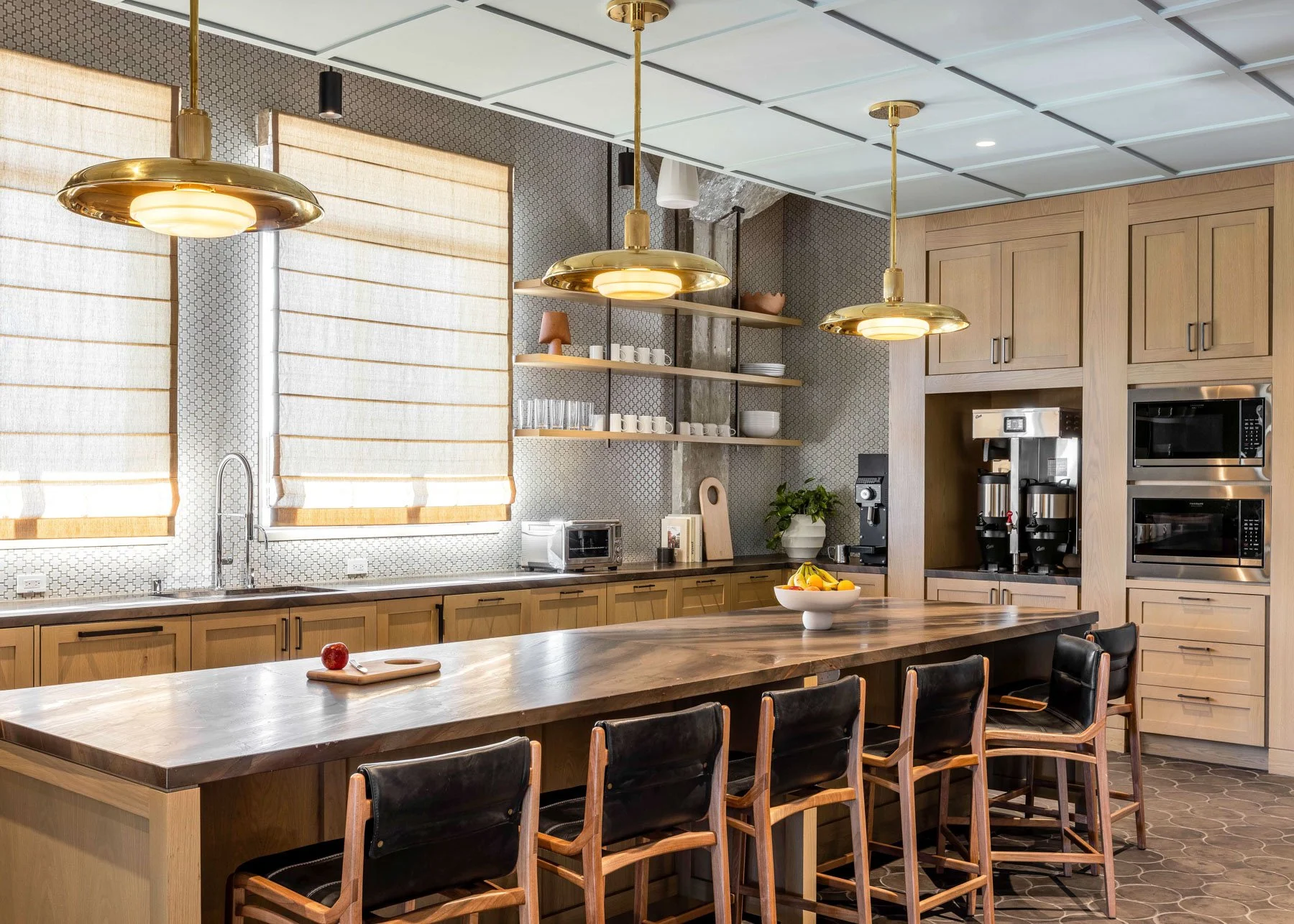
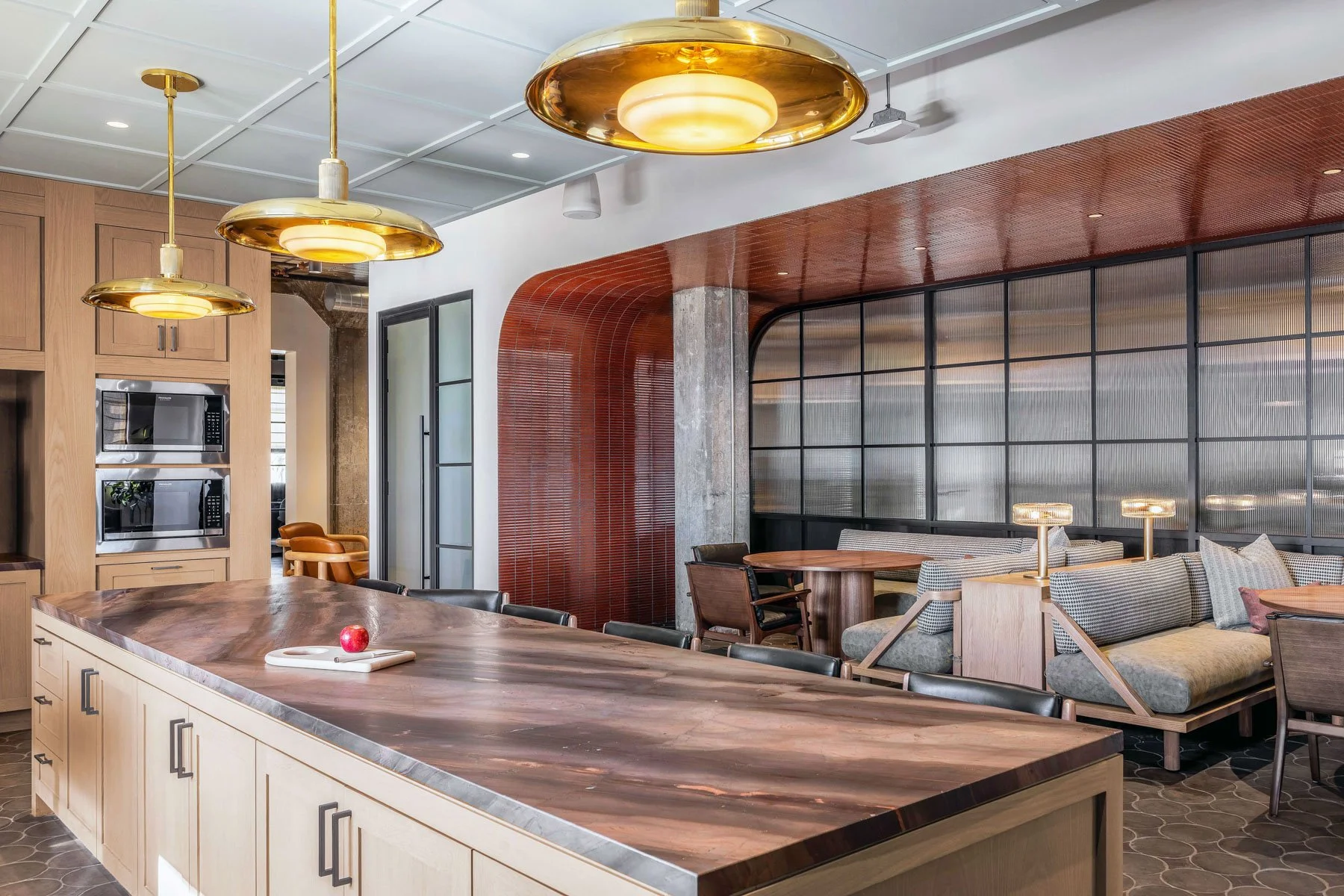
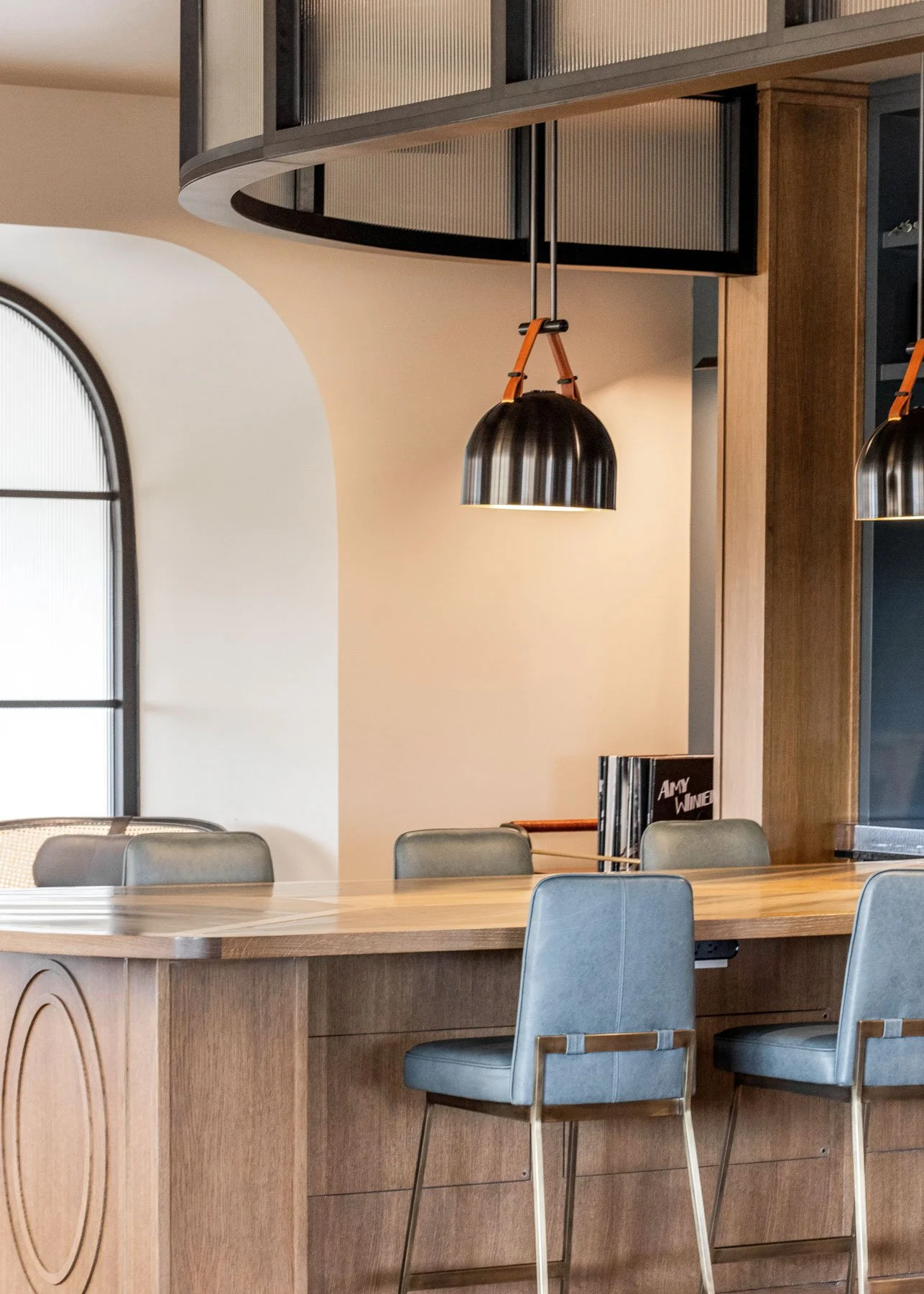
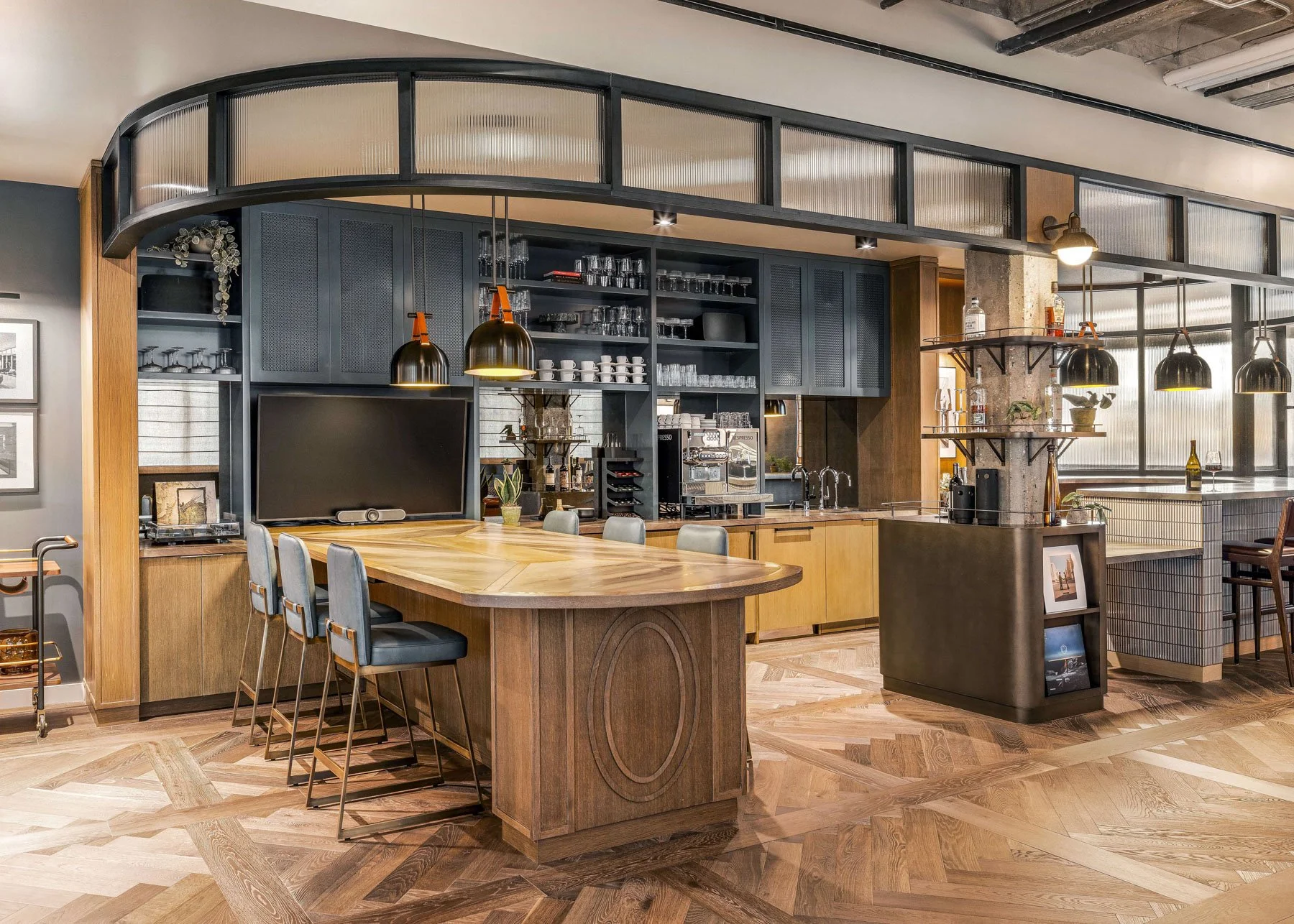
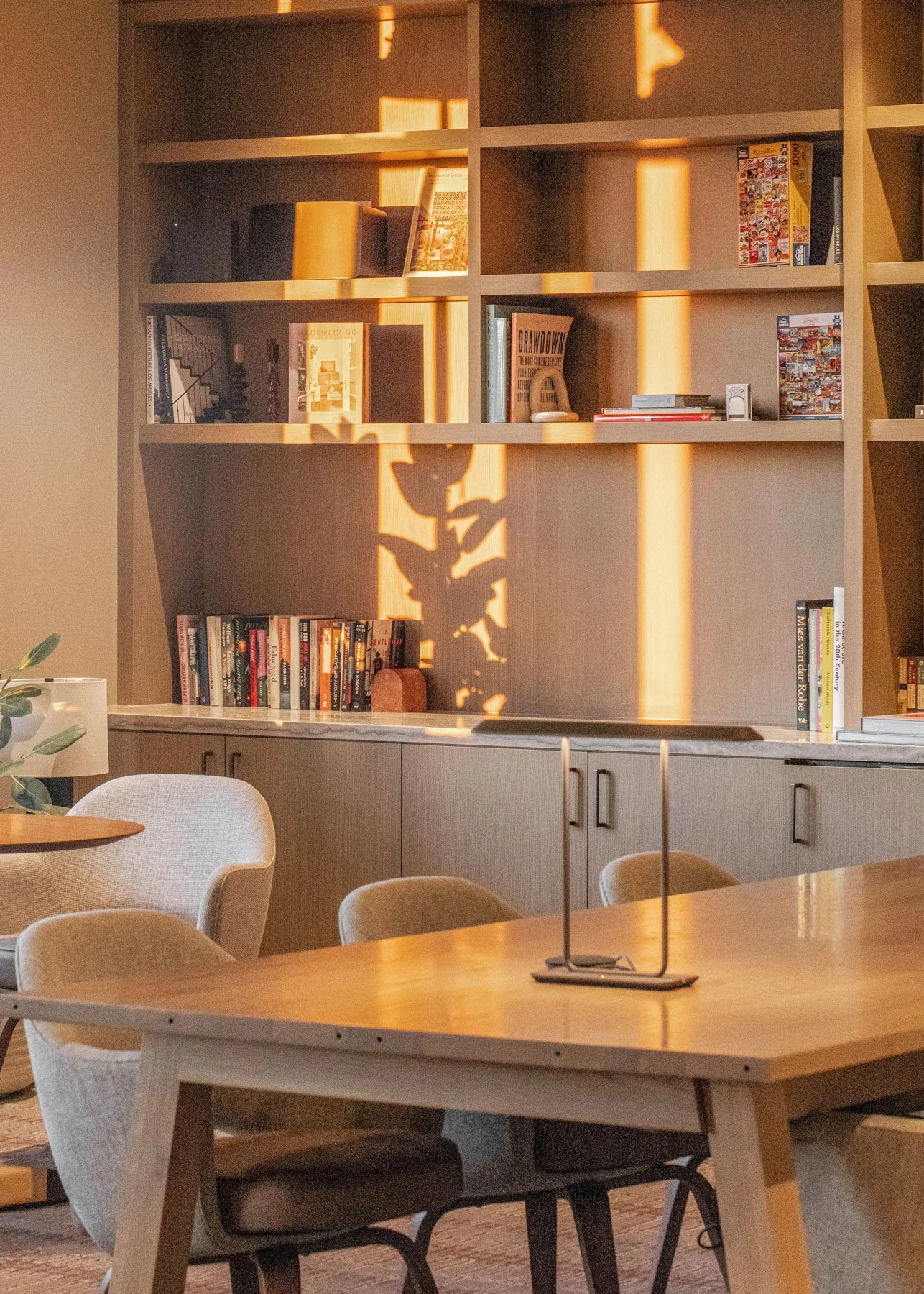
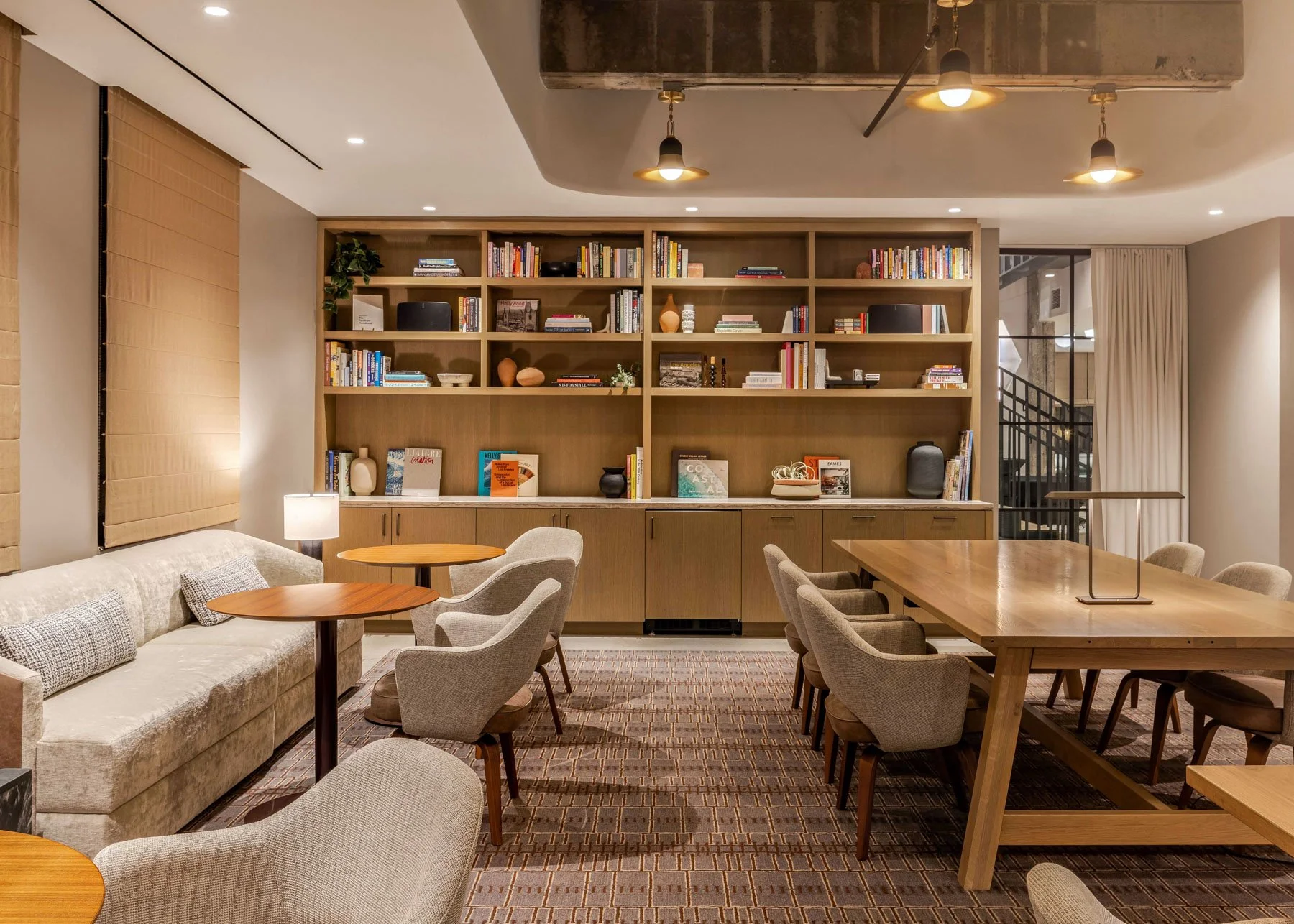
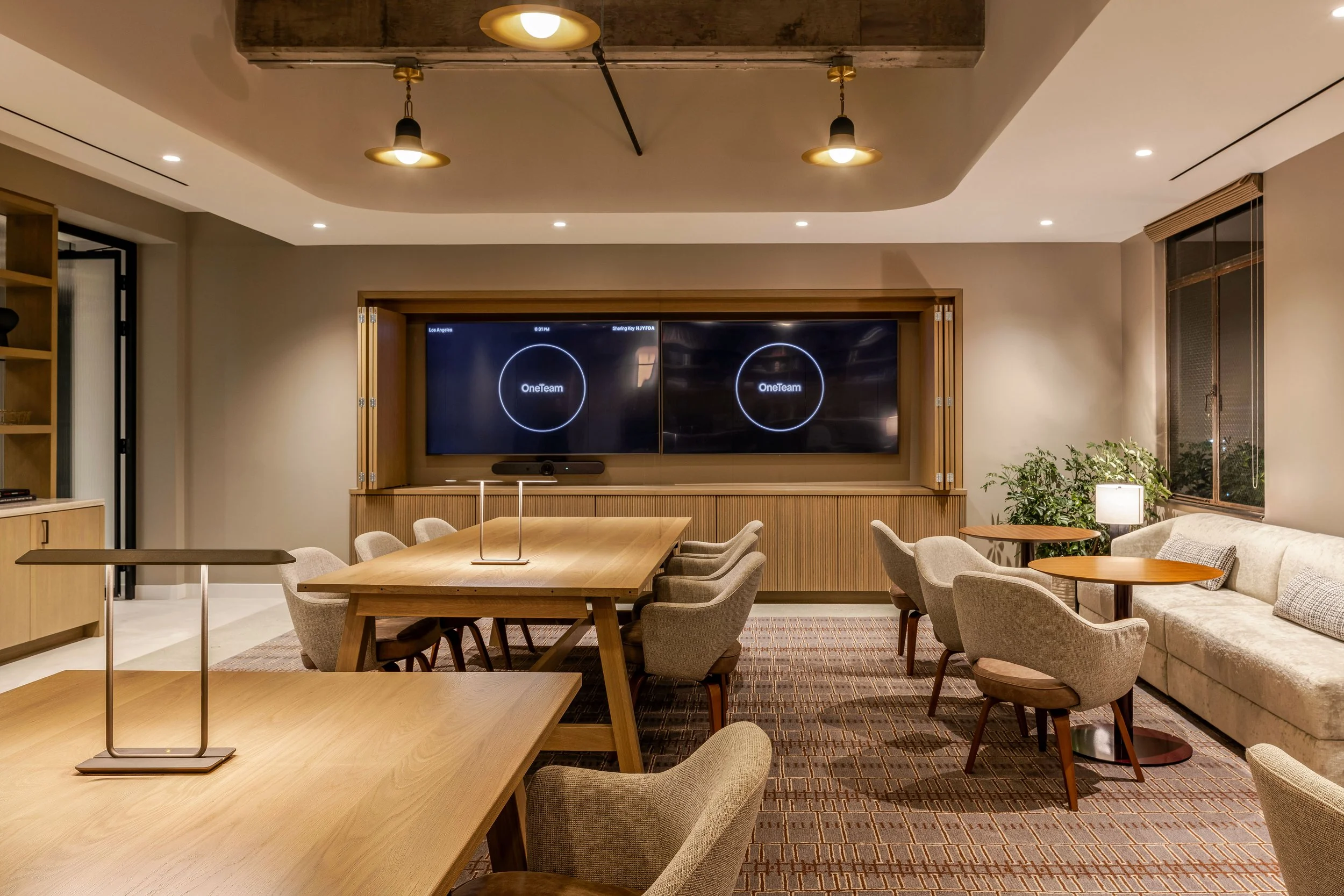
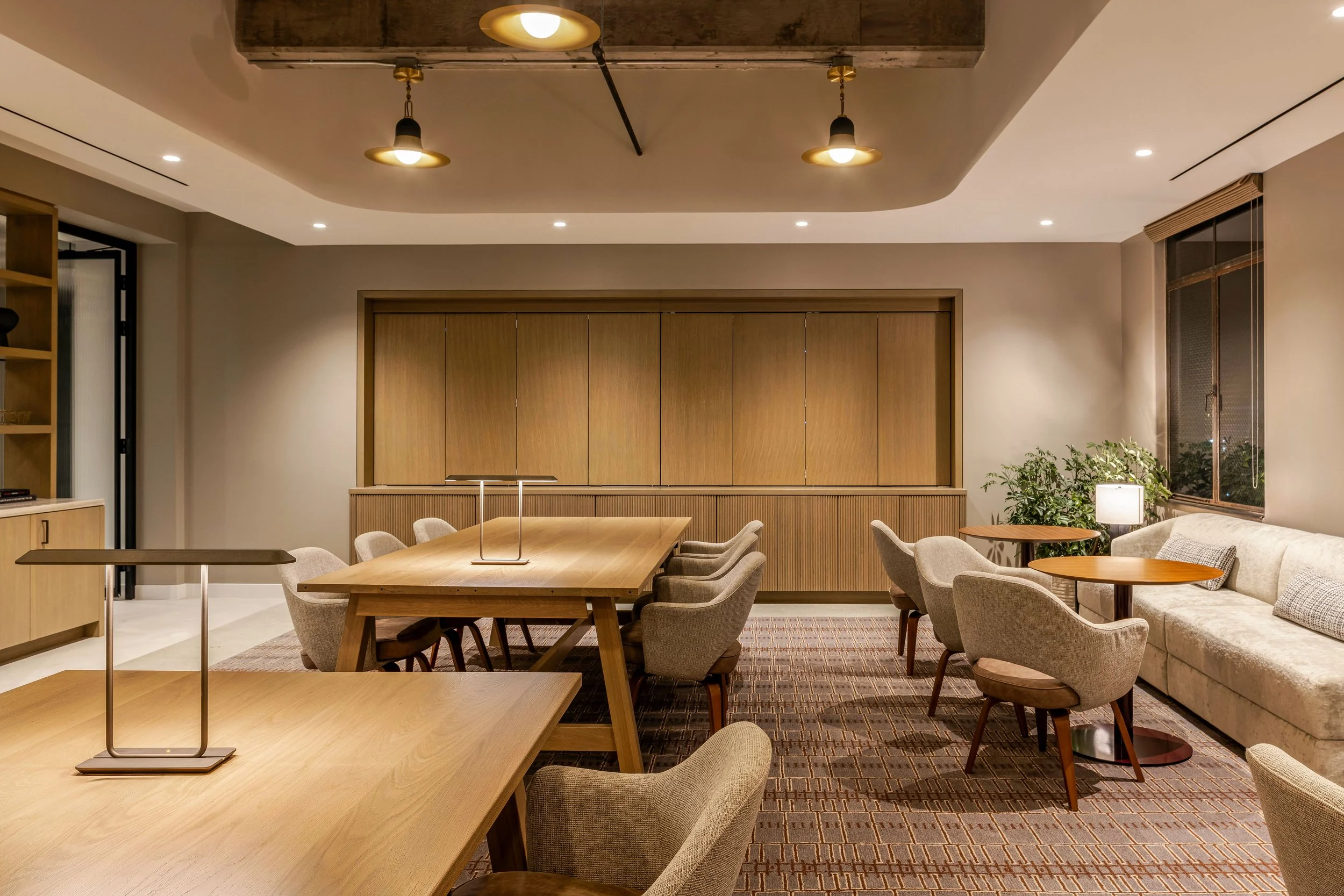
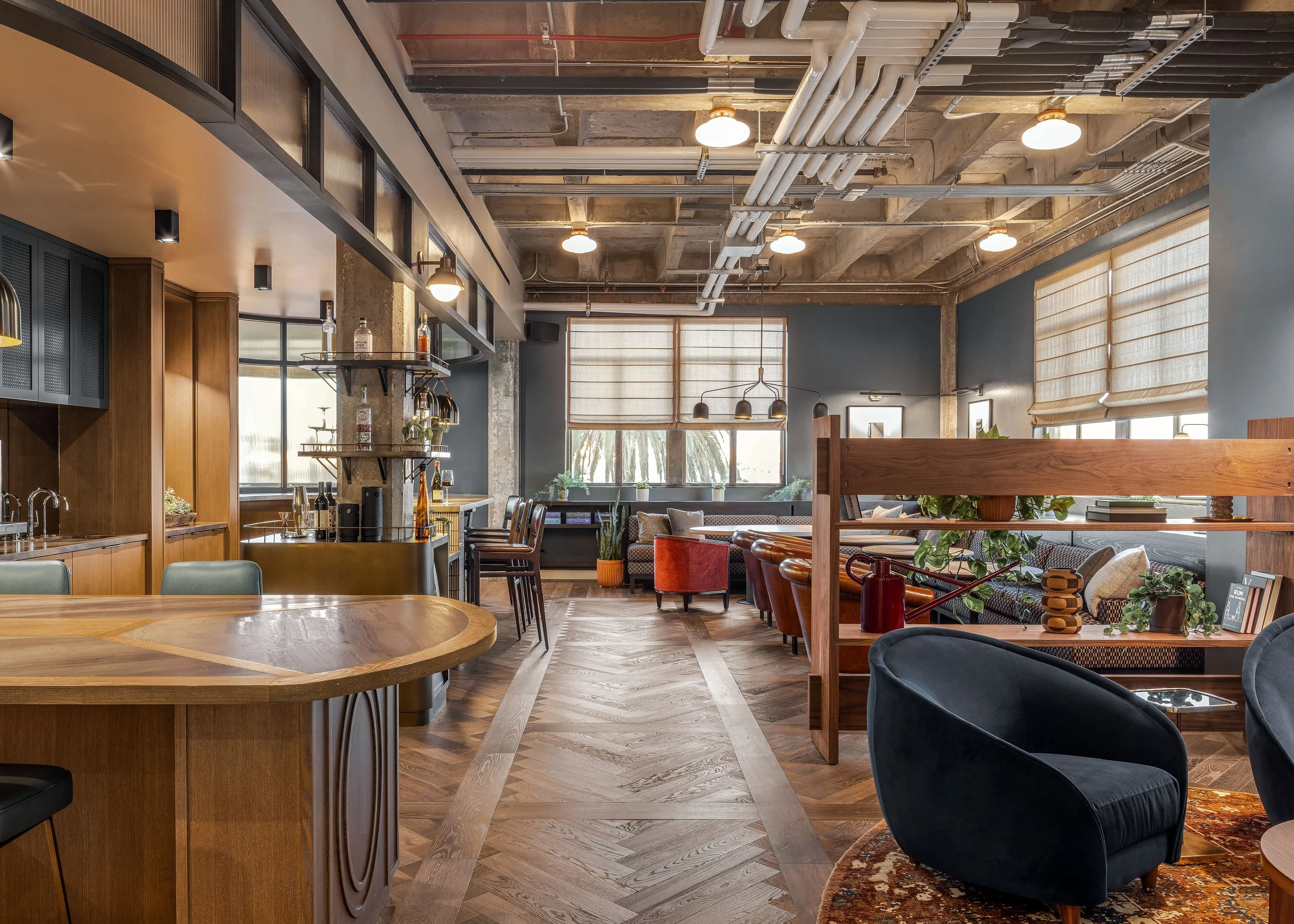
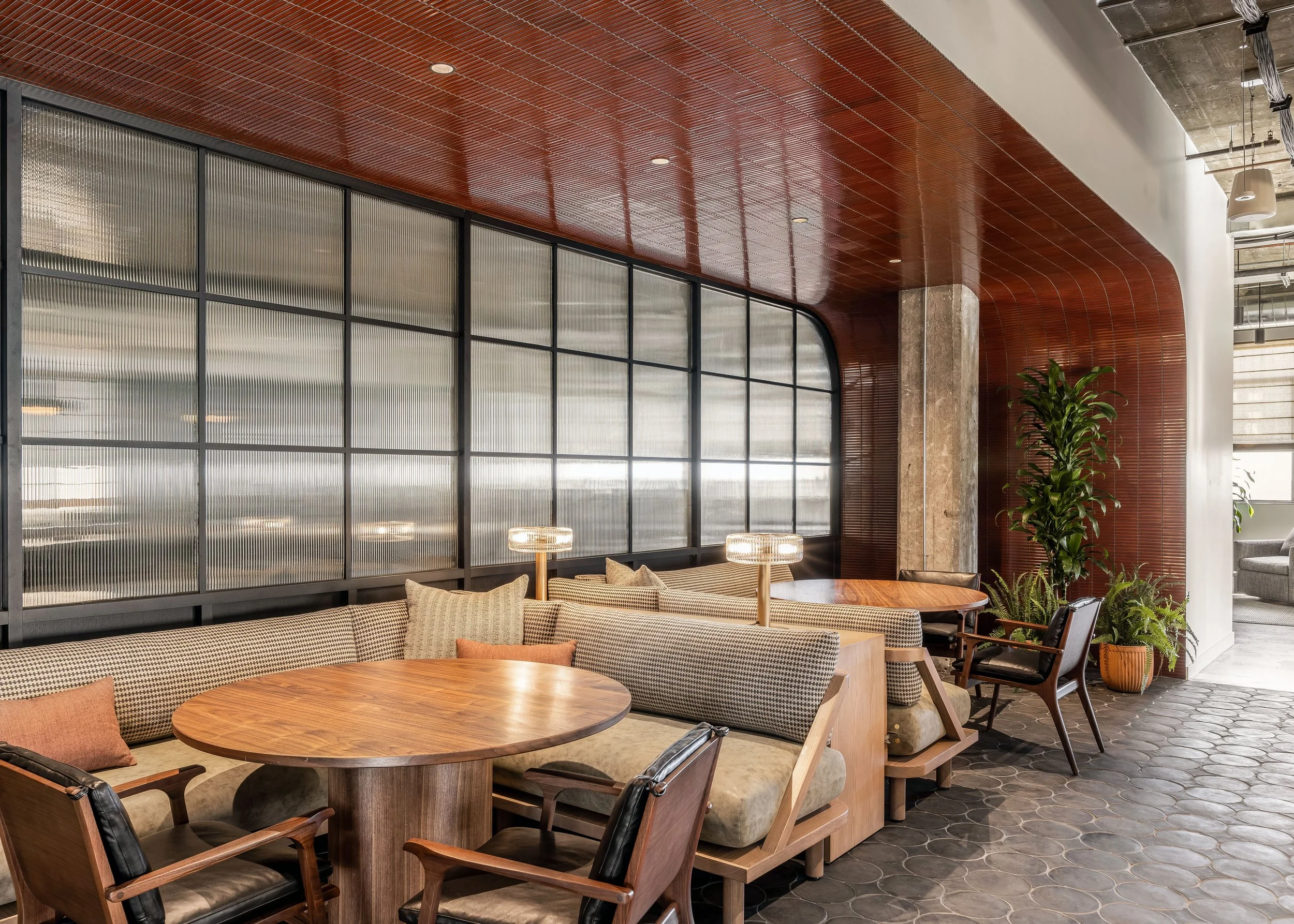
The café bar is used for morning coffee, informal conversations, and gatherings later in the day. At the other end of the office, the boardroom works more like a library, with shelving, banquette seating, movable tables, and concealed technology.
Both came from thinking about how people occupy hospitality spaces. A room can support different reasons for being there, and furniture can give people choices without requiring the space itself to change completely.
Applied to the workplace, that thinking creates useful places between the desk and the conference room.
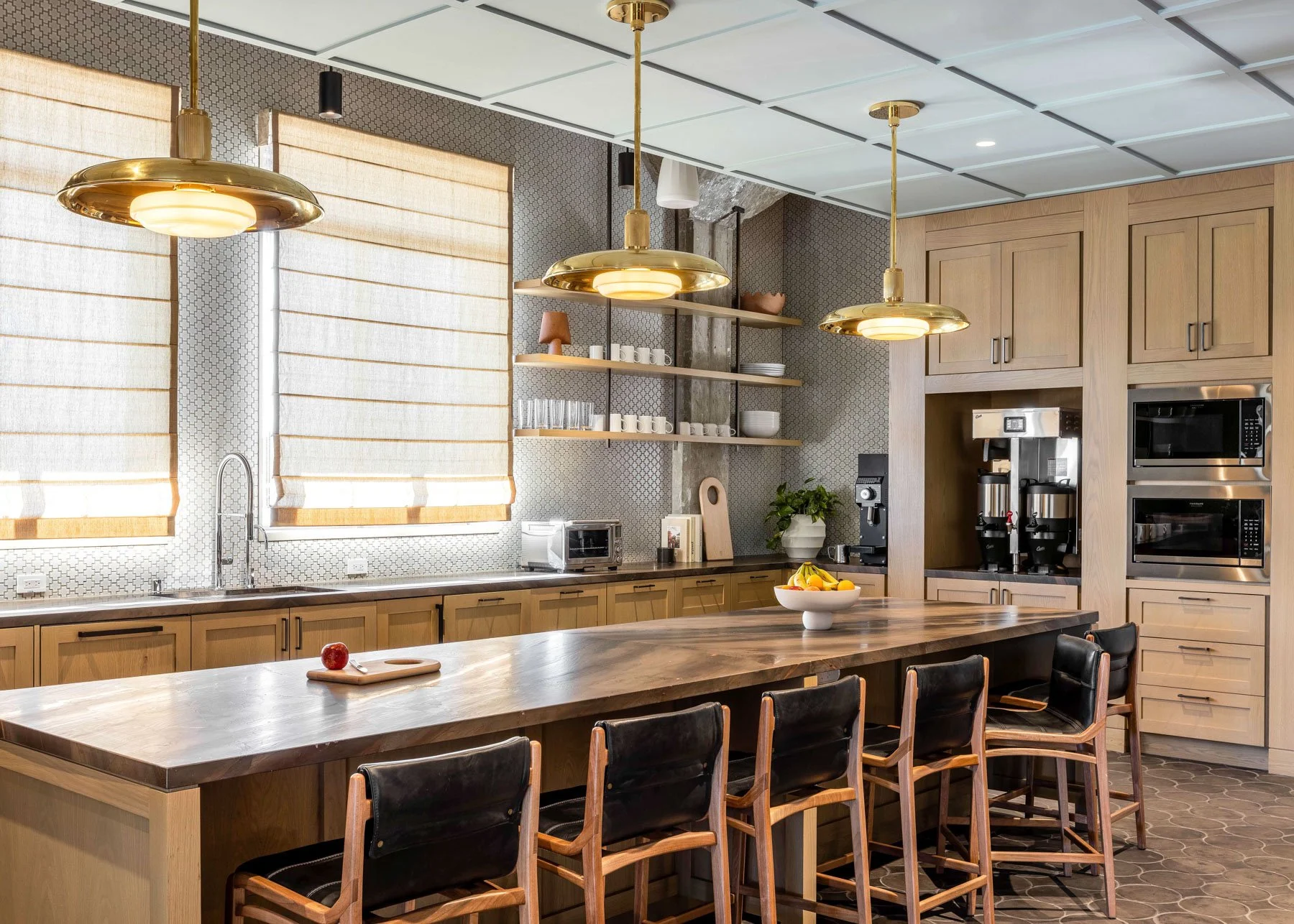
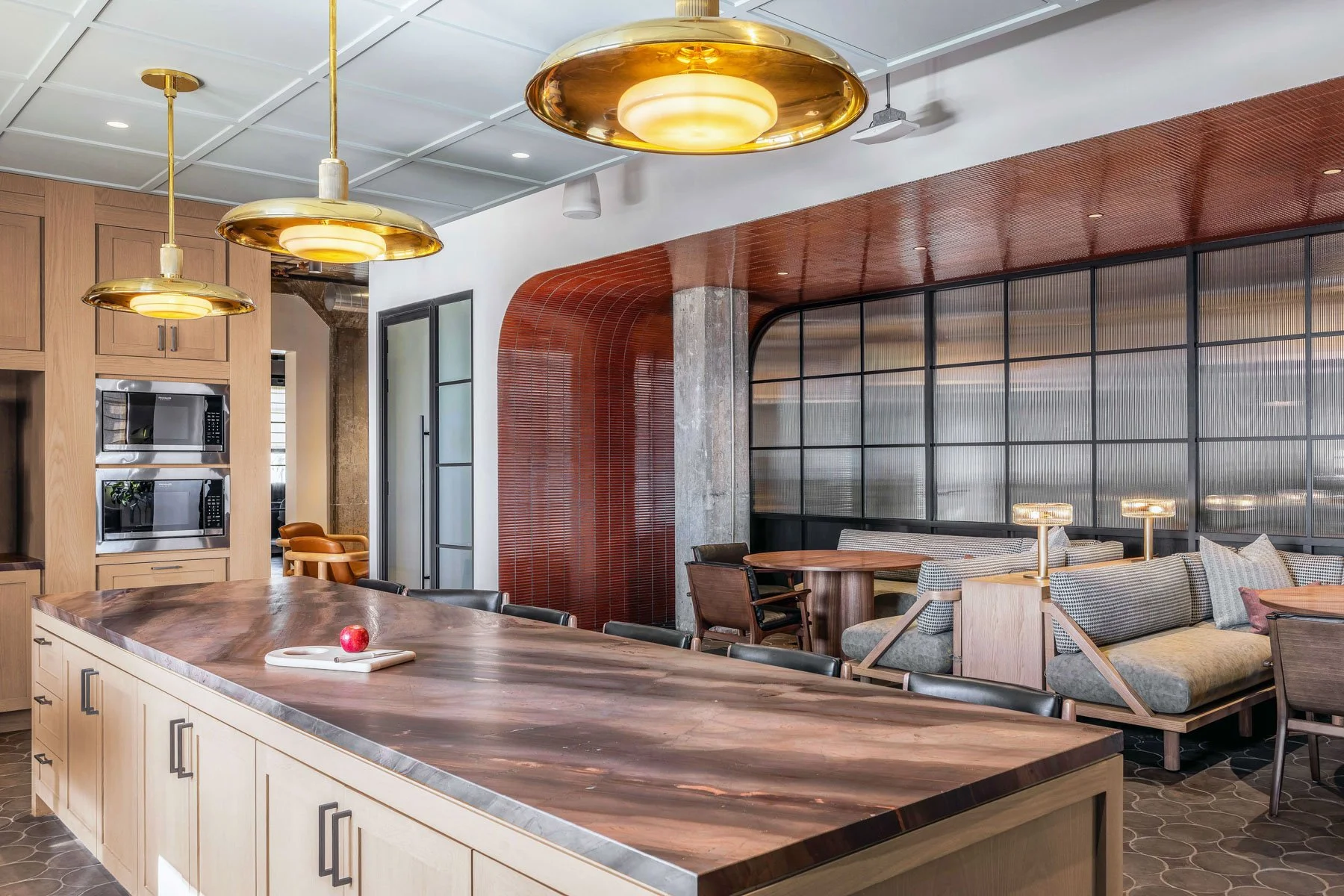
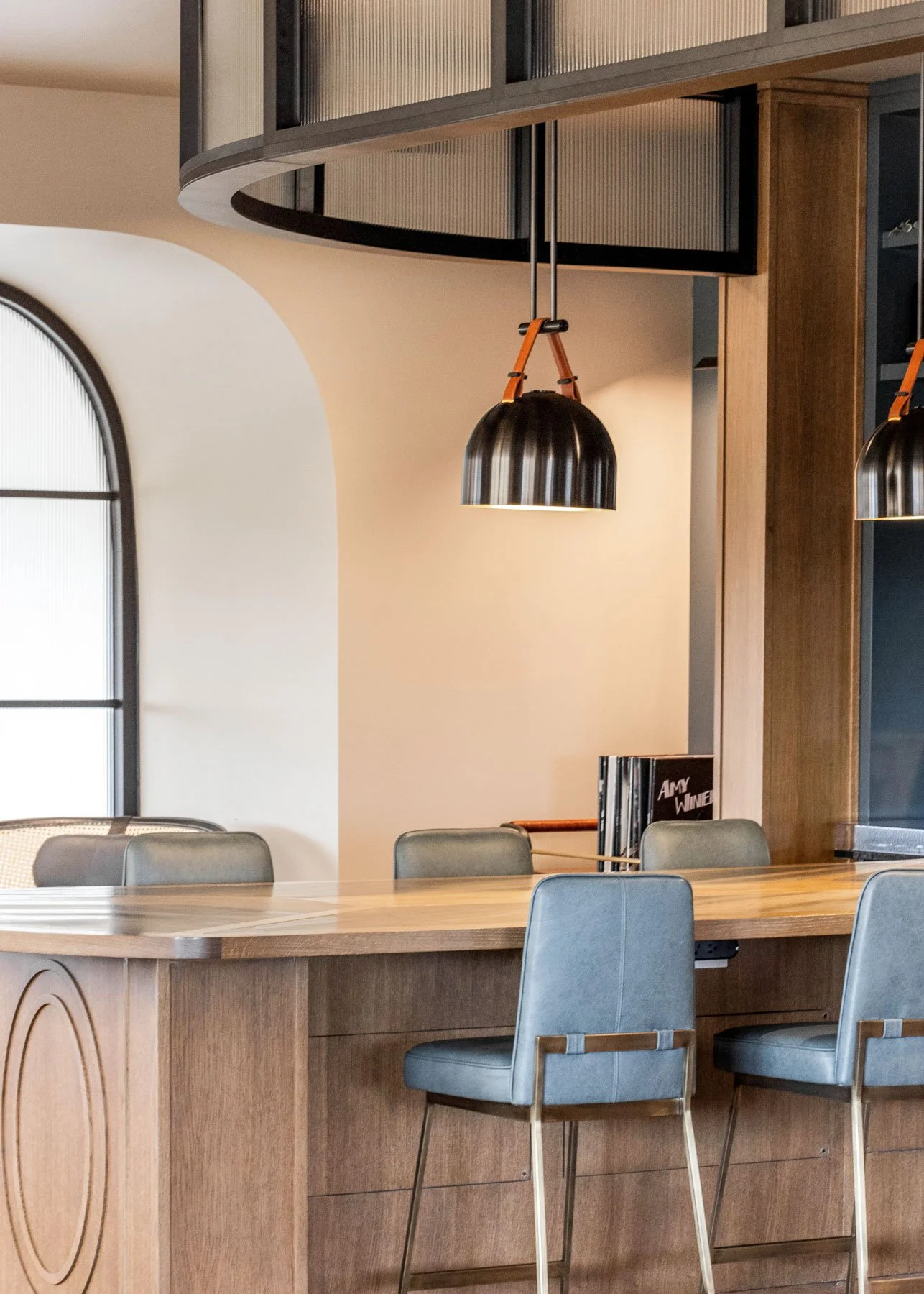
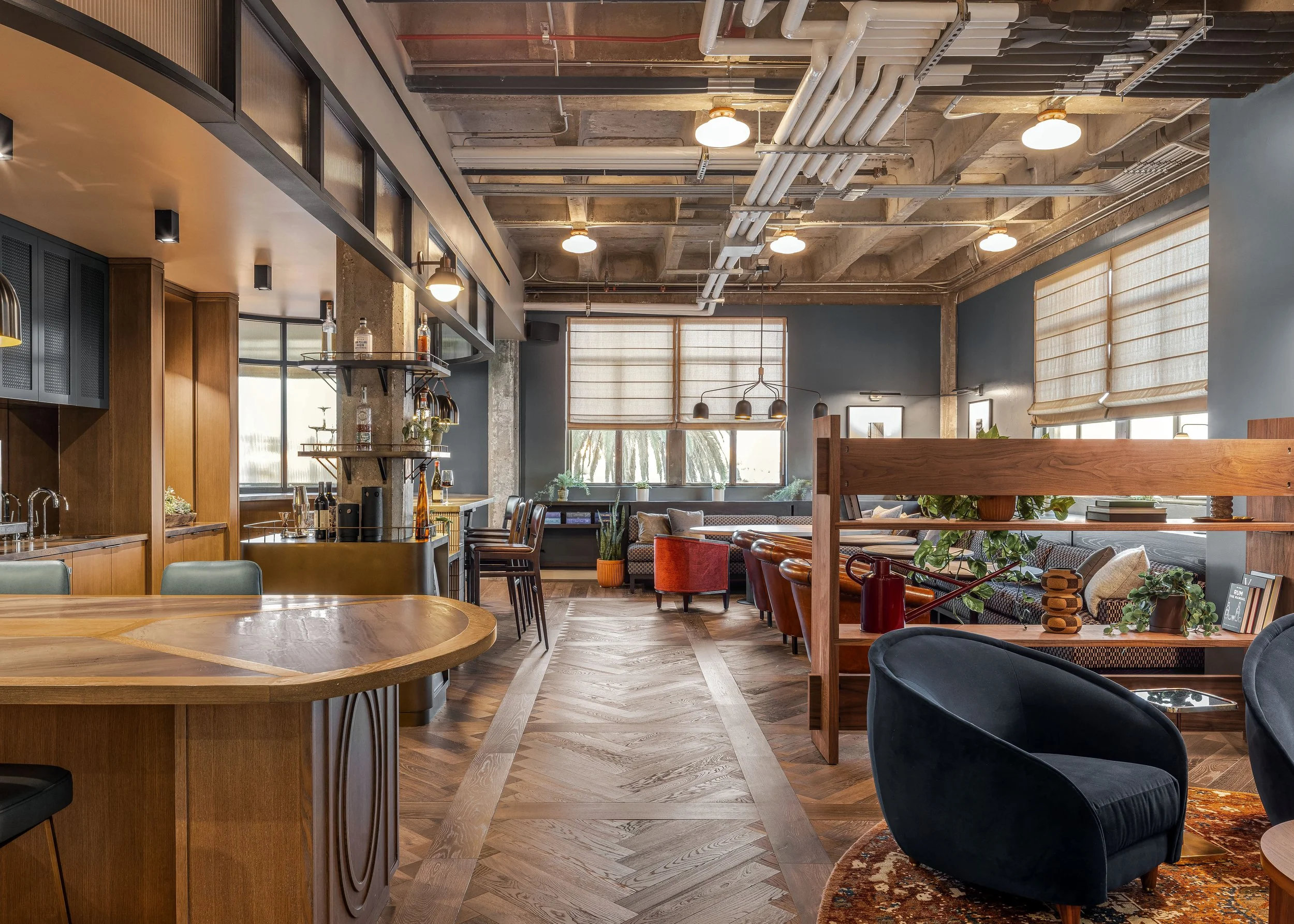

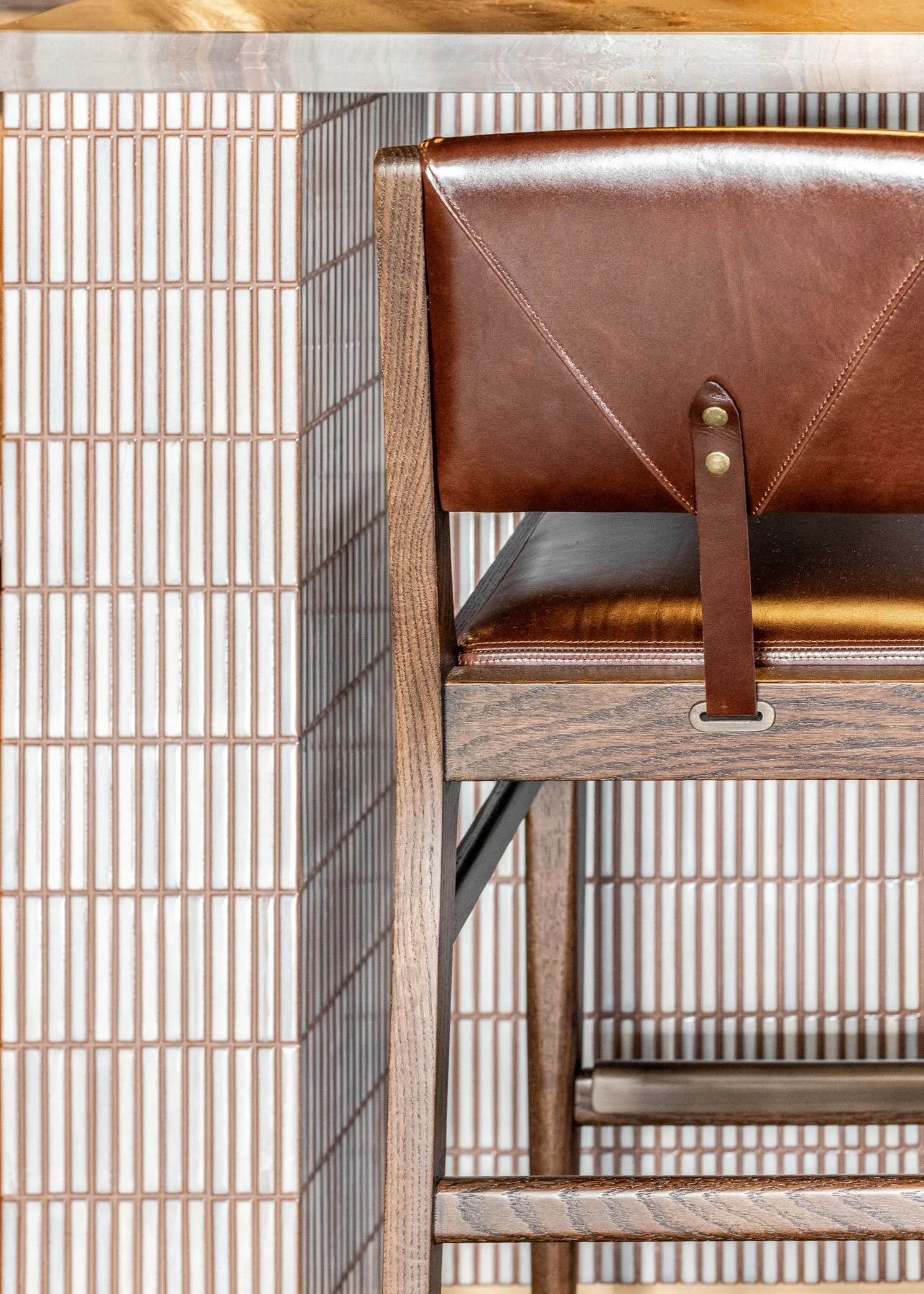
A café and bar bring hospitality into the Santa Monica headquarters, giving teams another place to meet, eat, and spend time together over the course of the workday.
Complementing & softening the industrial shell
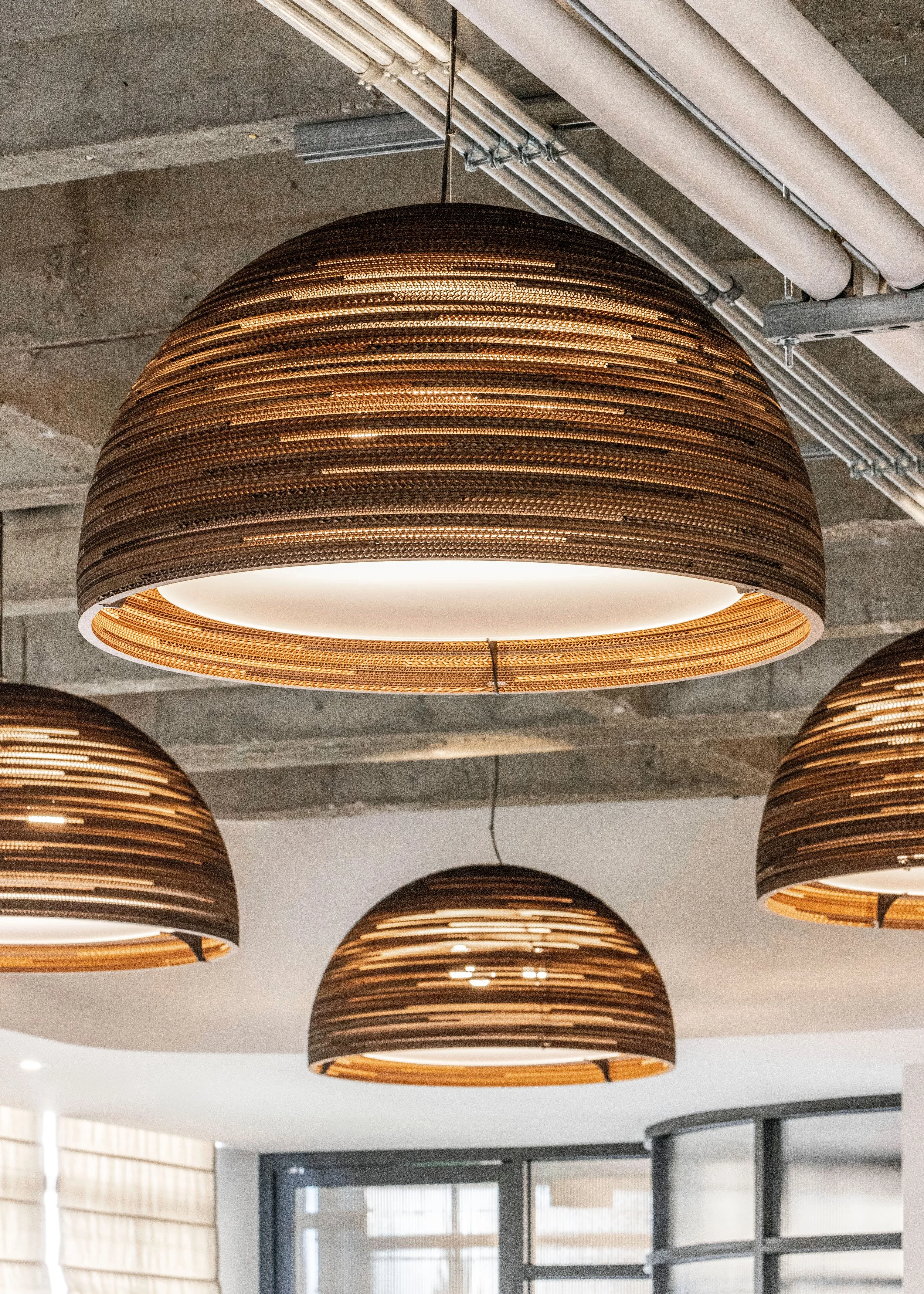
The concrete ceilings, steel framed windows, and exposed building systems were kept visible. New elements were introduced at the scale of the places people occupy beneath them.
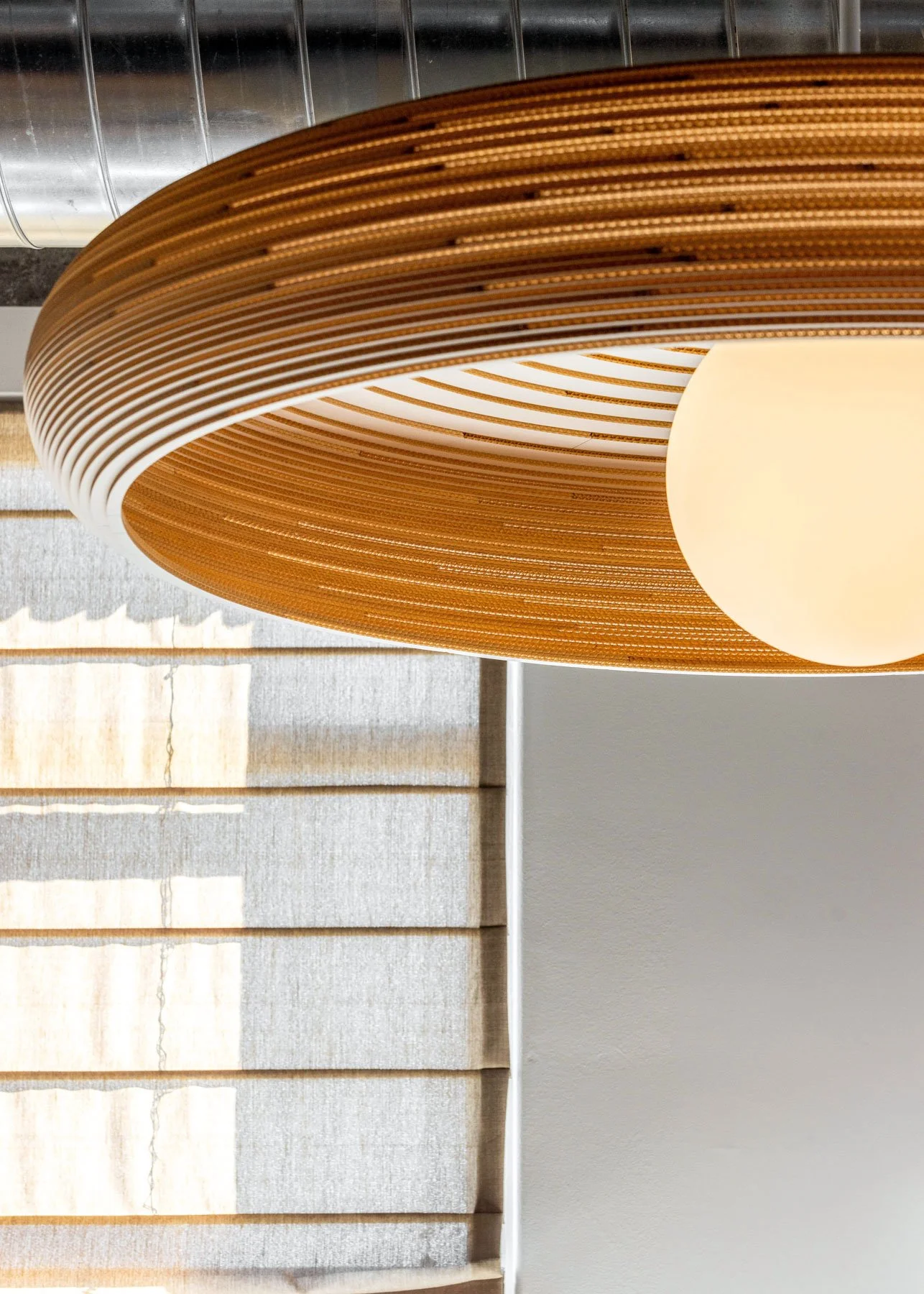
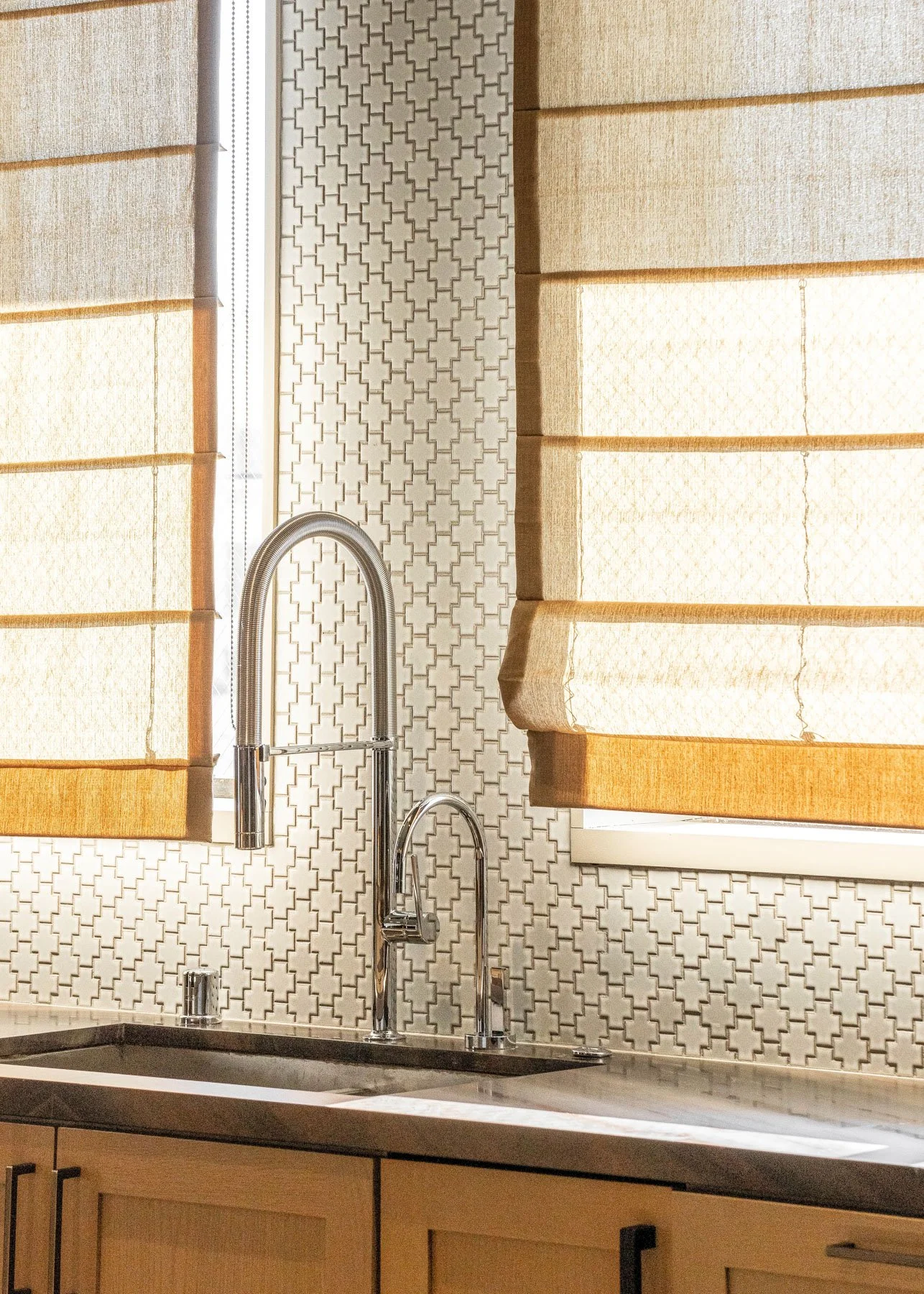
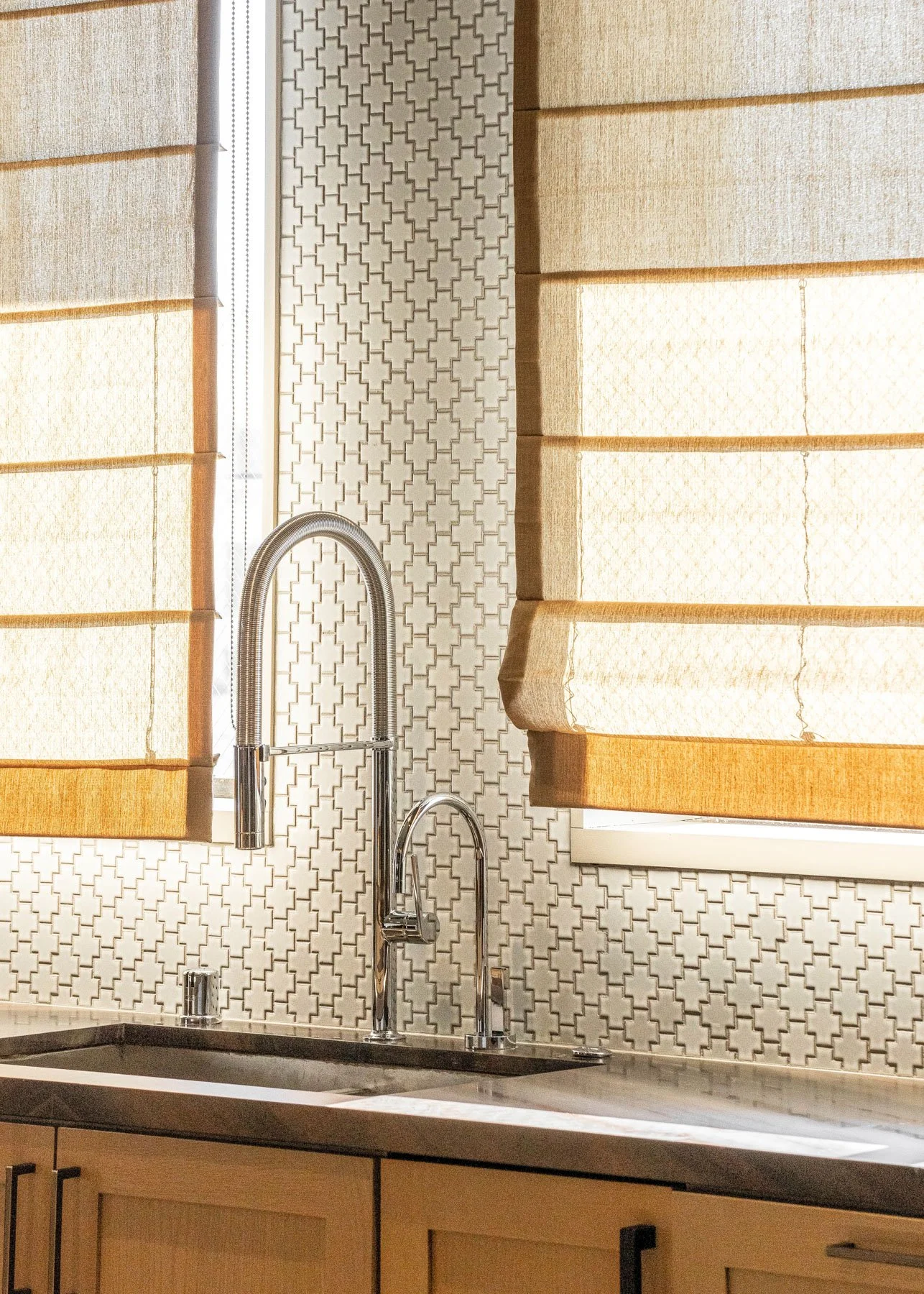
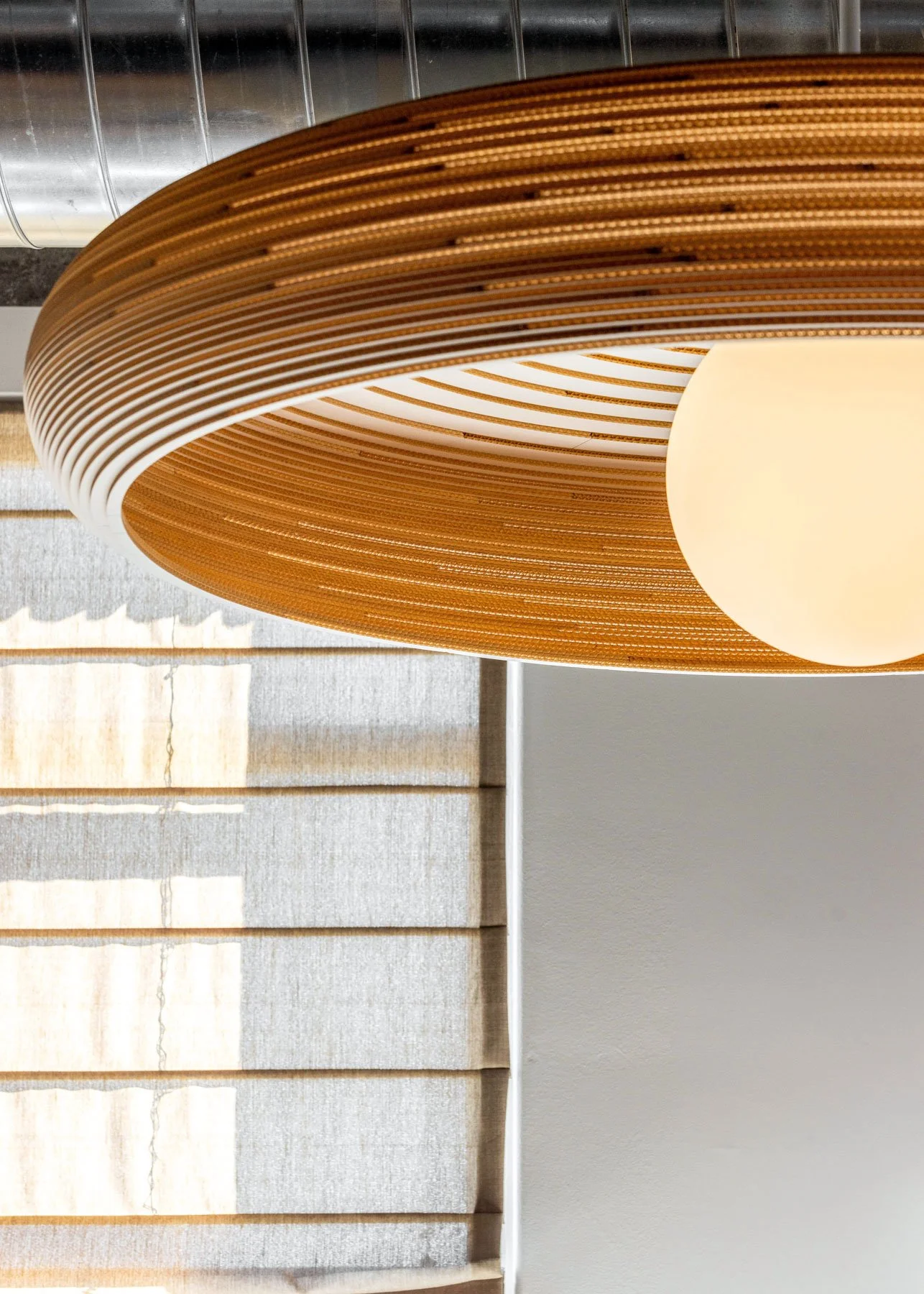
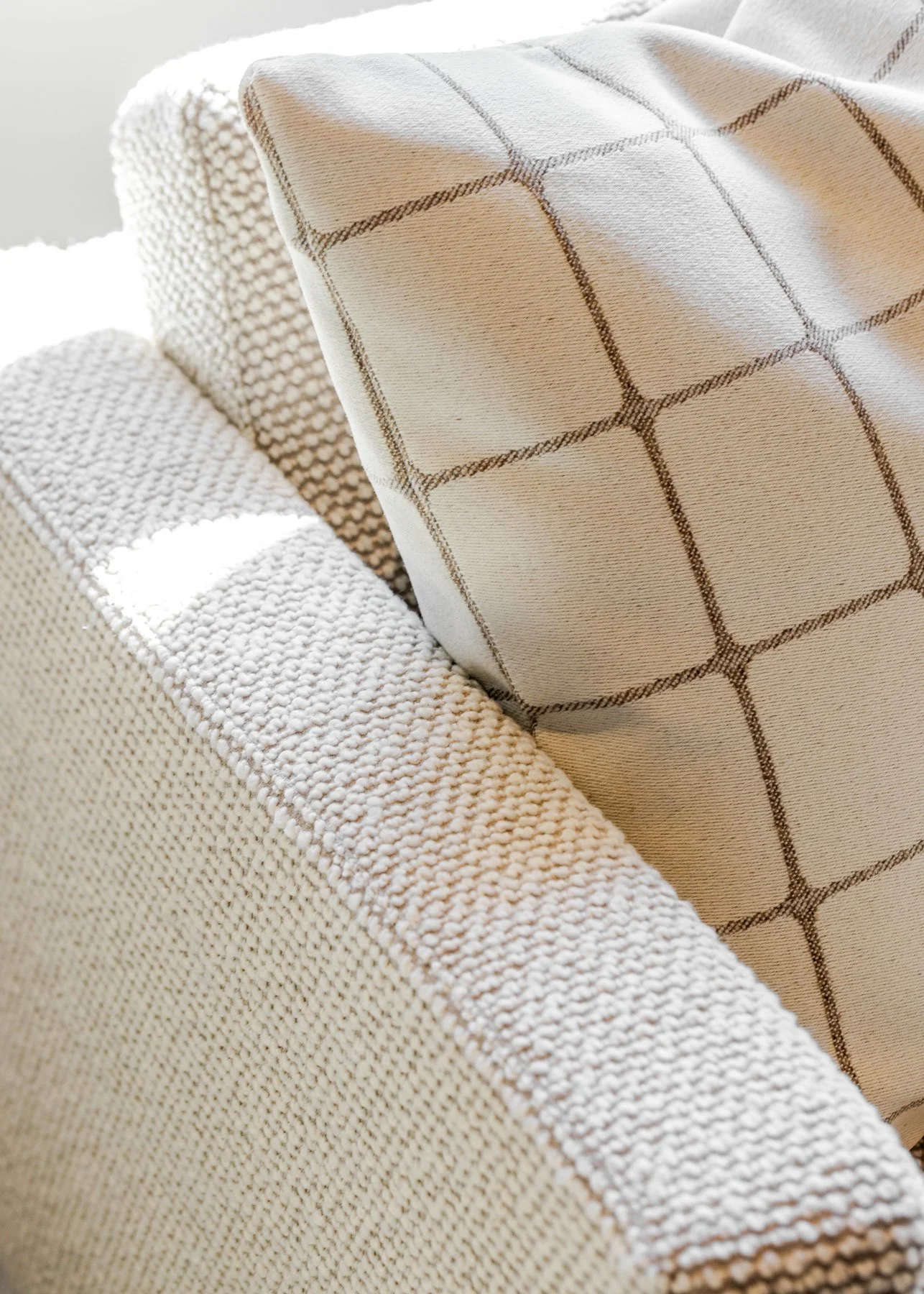
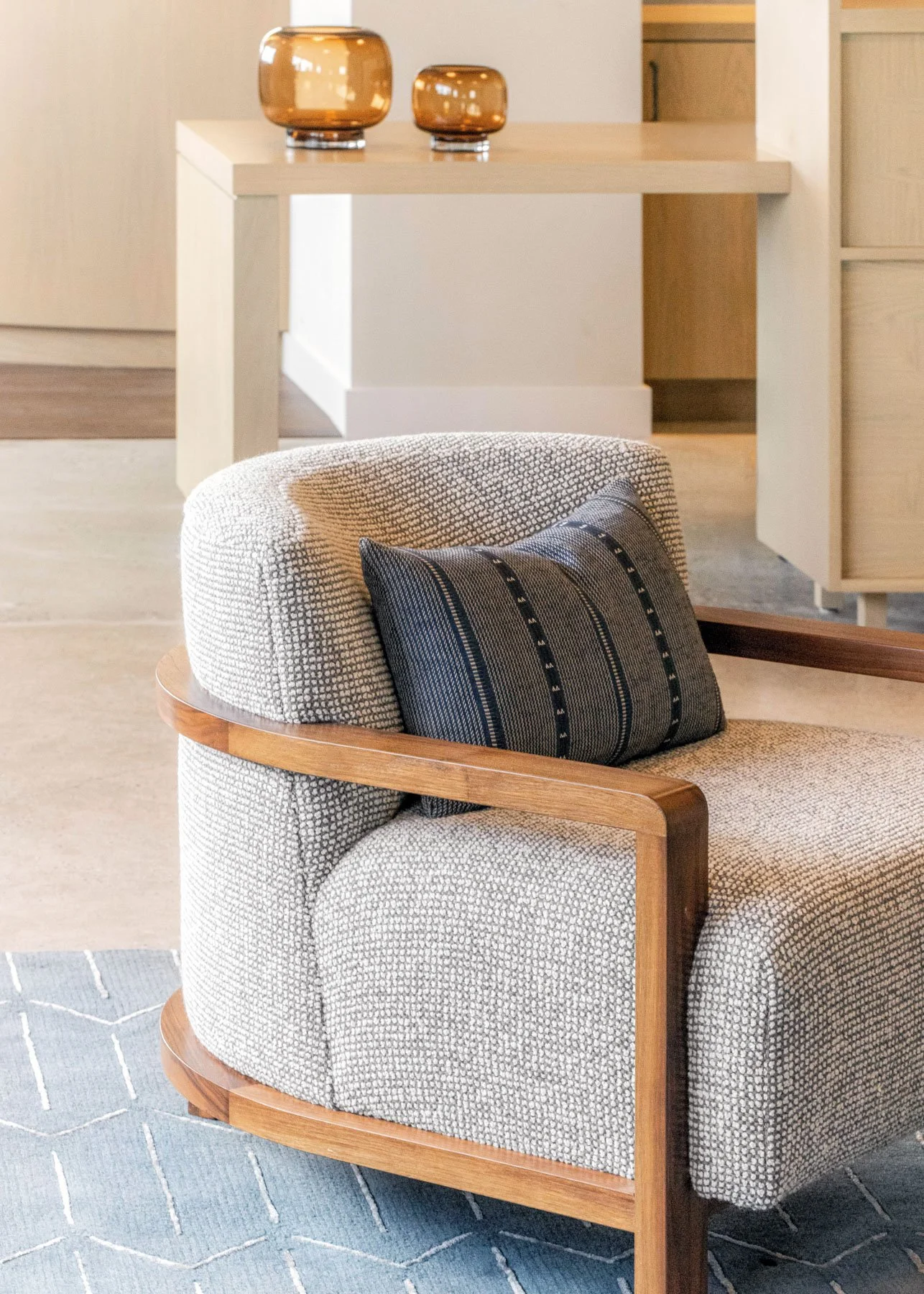
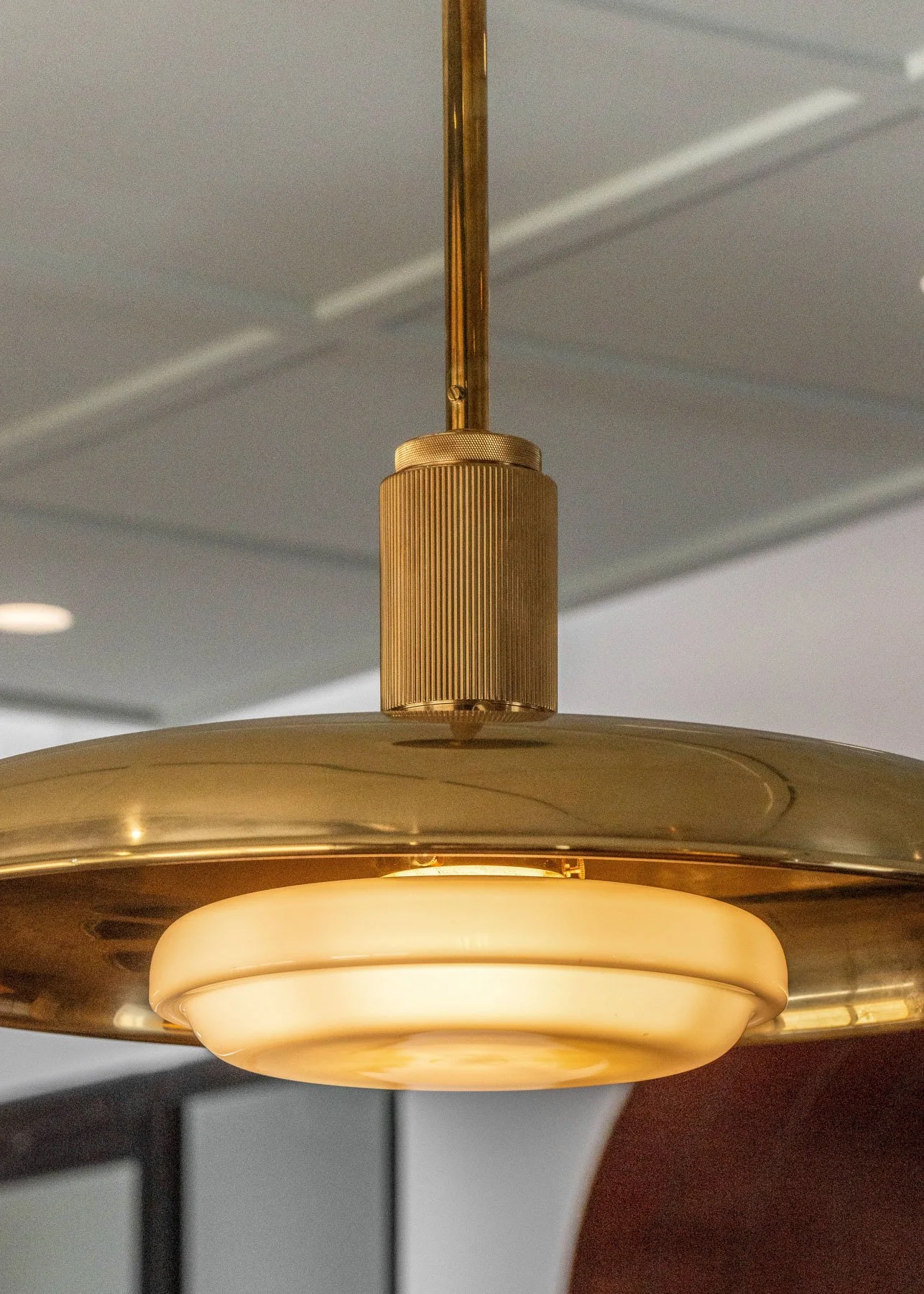
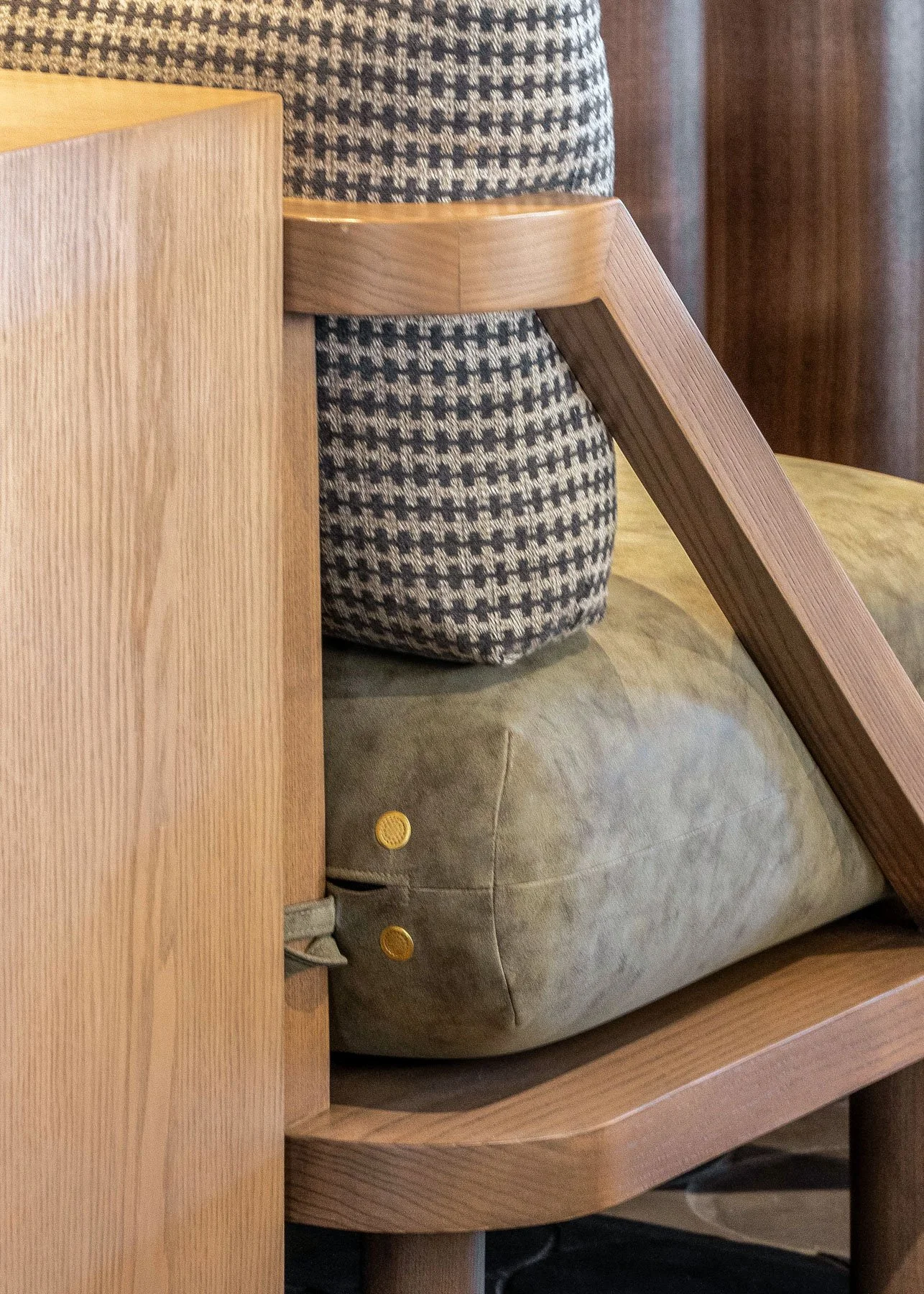
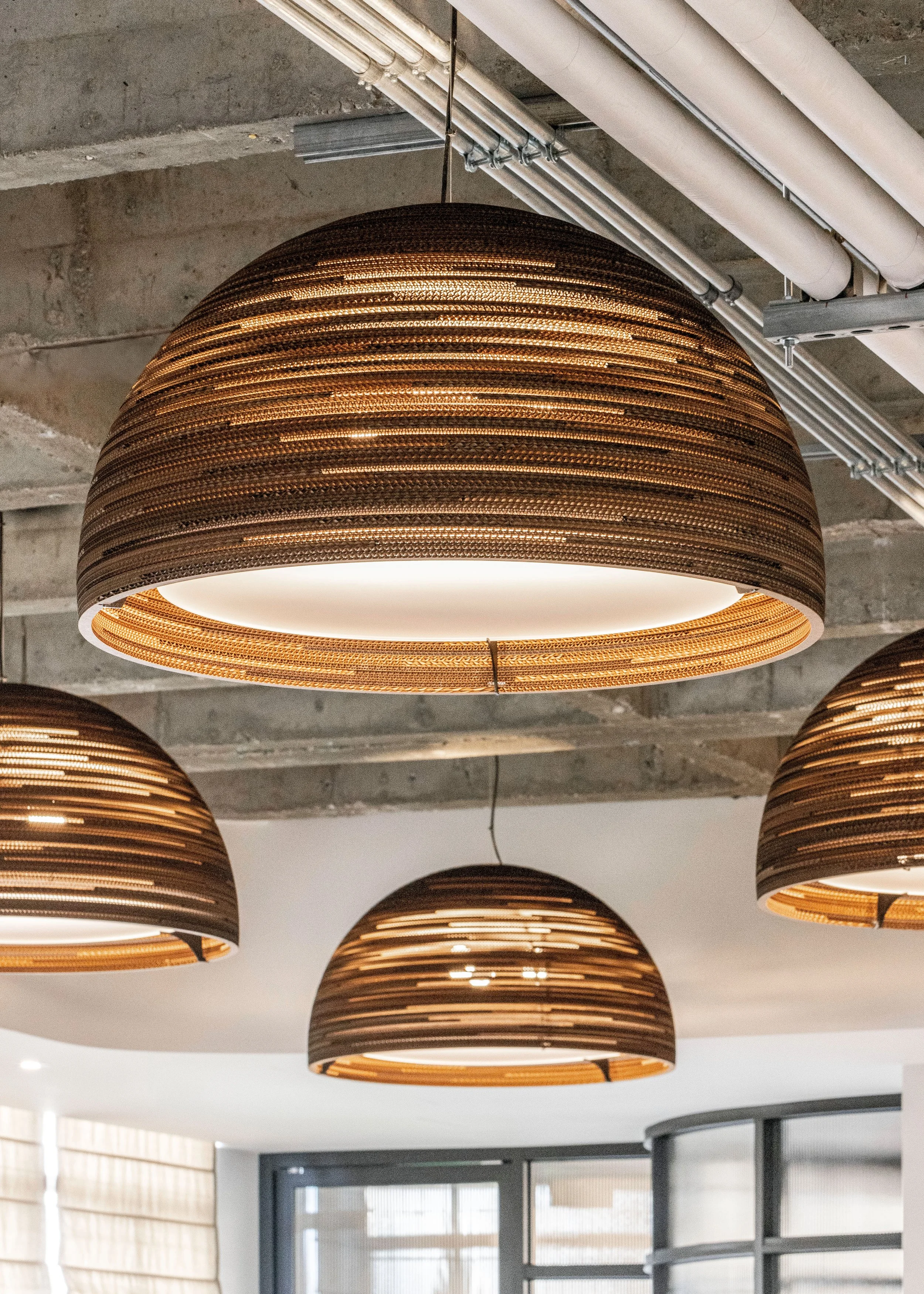
Large recycled cardboard lanterns hang below the concrete ceiling. Fabric wrapped pendants bring light closer to tables and seating. Roman shades filter daylight at the windows, while pale woods, woven fabrics, and upholstery add softer surfaces throughout the office.
The contrast lets the original shell remain legible without asking people to work in a space that feels unfinished.